Urumqi Night Markets: A Food Crawl Through the Capital After Dark
Urumqi does not really wake up until the sun goes down and the grills fire. I’ve done the capital’s after-dark food circuit a dozen times, and the formula is the same: start with lamb skewers, pivot to noodles, end on something sweet, and walk between bites. The night-market culture guide sets the scene; this is the crawl.
Where to Go
International Grand Bazaar Back Streets
The postcard bazaar has a busy food lane, but the alleys behind it are where locals actually eat — cheaper, faster, better. Come 8–11 pm.
Hongshan (Red Hill) Area
A classic kebab district with decades-old stalls. The Urumqi food map marks these; trust the longest queues.
Erdaoqiao
More Central Asian, with koumiss stands in summer and naan fresh from the oven. Mix of Uyghur, Hui, and Kazakh stalls.
The Crawl, Course by Course
1. Lamb Skewers (5–8)
Order yang rou chuan by the stack. The kebab culture guide explains the cuts; for a crawl, stick to leg meat with a little fat. 3–5 RMB each.
2. A Noodle Interlude
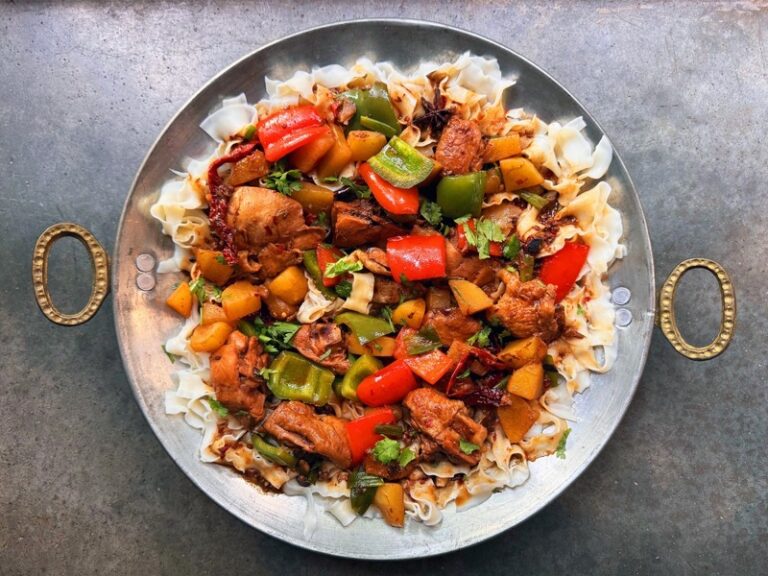
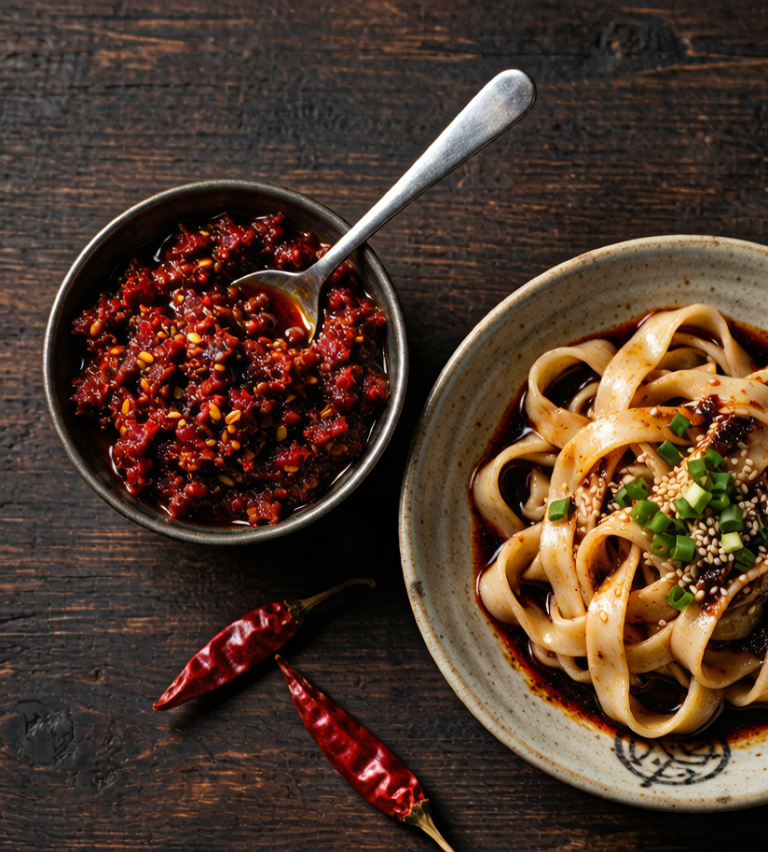
Split a bowl of laghman or chaomianpian (stir-fried noodle slices) to reset the palate. A half-portion between two people is smart.
3. Something Grilled and Weird
Try the göshnan (fried meat pie) or, if brave, the offal skewers. This is where the crawl gets interesting.
4. Sweet Finish
Muzigao (stretchy ice cream) or the baklava-style sweets. In summer, a glass of chilled grape juice.
| Stop | What | Cost (1 person) | Time |
|---|---|---|---|
| Grill row | 6 lamb skewers | 18–30 RMB | 20 min |
| Noodle stall | Half laghman | 15–20 RMB | 15 min |
| Pie stand | Göshnan | 8–12 RMB | 10 min |
| Sweet cart | Ice cream + tea | 10–18 RMB | 15 min |
| Total | Full crawl | ~60–90 RMB | 1.5–2 hr |
Pacing and Safety
Don’t eat everything at the first stall — the point is range. Share dishes. Carry small cash; some stalls don’t take mobile pay (the halal guide notes payment norms elsewhere). The Kashgar street-food guide is a good compare-and-contrast if you’re doing both cities.
What travels home and what does not
The price is lower, the packing is careful, and it stays a week in your luggage as the highlight of the journey. Nuts, dried grapes, an uncut flatbread and vacuum-packed lamb all survive a long-haul flight. What does not work is anything fried or saucy, which turns in transit, and anything you cannot repeat at home. Get your dried fruit in the bazaar rather than at the airport, and request vacuum packing on the spot. If the timing is the question, our [[urumqi-food-map-guide|Urumqi Food Map: Eating by Neighbourhood…]] goes through it properly.
The stall, the teahouse and the restaurant
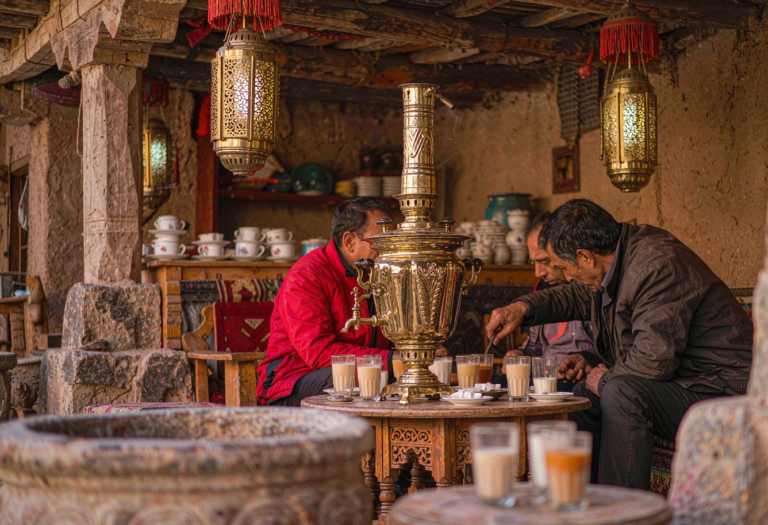
The remainder is right beside it. Three kinds of place sell the same dish in Urumqi Night Market Food, and they are not competing so much as serving different occasions. Go to the teahouse when you want an hour and free refills. It is the stall that is quick, cheap and taken standing.
The restaurant is the pick for a meal with someone you want to impress. You get the same food for a noticeably different outlay. I eat at the first two most days and take people to the third when they ask for somewhere proper. What you lose at the stall is a seat and some shade.
Where most people get the logistics wrong is covered in our [[xinjiang-night-markets-street-food-guide|Xinjiang Night Markets: A Street-Food…]].
How to order, and what a portion really costs
Card and phone payment both work everywhere in Urumqi Night Market Food. Cut your order by one, because the rice arrives in a bowl like a little basin and the second helping is automatic. Small places do not look for tips and served venues appreciate them, though it is hardly a deciding factor. The number on the board is for one, and one here is enough for a European adult if you share two.
How it is actually eaten
Eating alone here is a quiet business and the kitchen knows it. Solo travellers who dislike a room of families should take a stool at the counter in one of the small eateries. In Urumqi Night Market Food the meal is a long one, not a fast one. Bread goes down first, tea arrives without being asked for, and the main dish comes when the people eating together are already sitting properly. The short version, with the numbers, is in our [[kashgar-food-guide|Kashgar Food Guide: The 8 Best Dishes to…]].
What to Skip
Obvious deep-fried novelty on a stick (octopus-shaped something) is tourist bait. Stick to the cumin-charred classics and you’ll eat better and cheaper. If a stall has no local customers at 9 pm, move on.
Timing it right
Spring and early summer
Very. It’s crowded, lit, and family-heavy. Keep your phone secured in a pocket (pickpockets exist in any crowd) and you’ll be fine.
Summer
9–11 pm in summer; 8–10 pm in winter. Arrive hungry and early enough to do a multi-stop crawl rather than one big seat-down.
Autumn
Partly. Cold noodles, naan, grilled vegetables, and sweets work; pure veg skewers exist but are limited. The veg guide has the full picture.
Winter
100 RMB covers a full crawl with room to spare. Mobile pay works at most stalls; cash covers the old-school ones.