Xinjiang’s Tea Houses: Where the Day Actually Happens
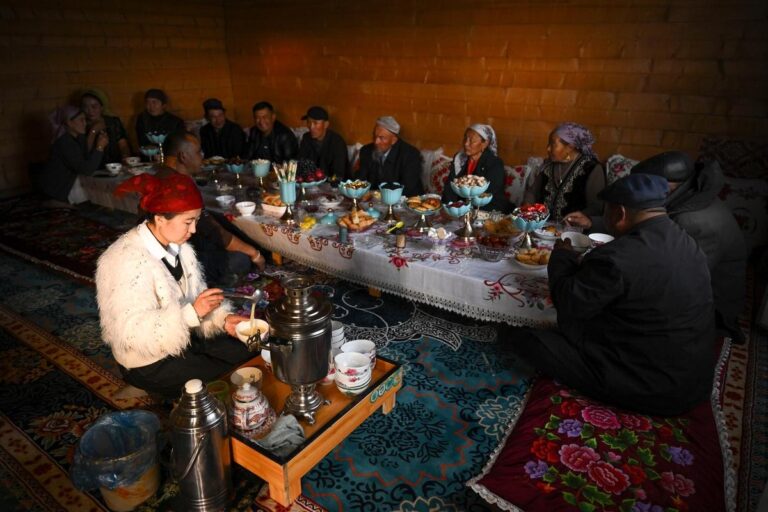
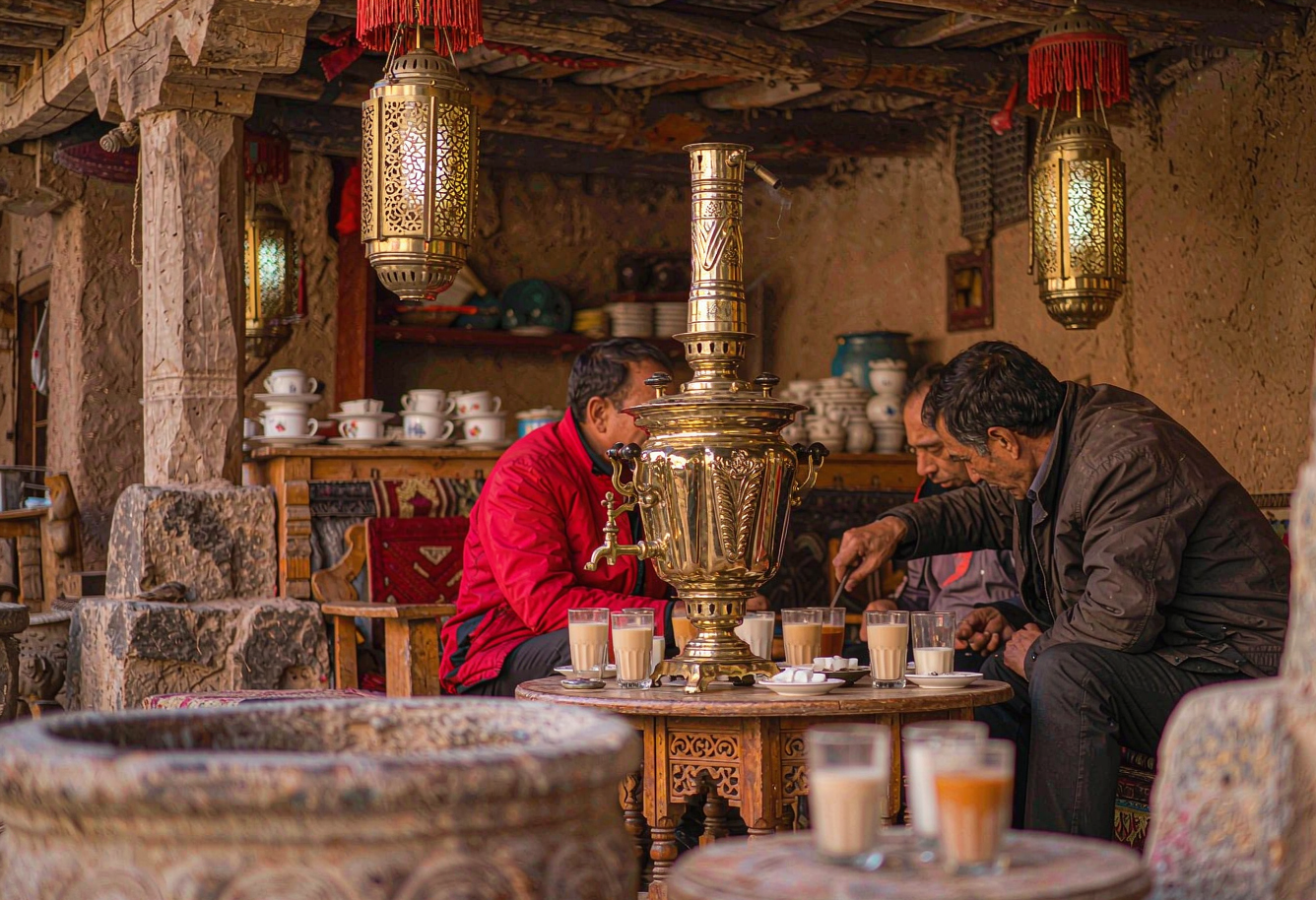
The first tea house I sat in, I ordered like a tourist and got corrected by a seventy-year-old who pointed at the pot, not the menu. There was no menu. In a Xinjiang tea house, you do not order a drink. You sit, and tea arrives, and the rest of the day arranges itself around the glass.
The tea culture ranges from salty suutei to sweet chai, and the house you walk into tells you which. The brick tea tradition is the base most of them pour from, boiled hard rather than steeped, which is why it tastes like an event and not a beverage.
What a tea house is not: a cafe. People are not there to work on laptops. They are there to talk, to make small deals, to rest after the breakfast rush, to argue about horses. The milk tea and yogurt side of the region shows up here too, but the plain black brick tea is the honest everyday pour.
The culture of the region is easiest to read in a tea house because nobody is performing. Sit long enough and the talk turns to you, gently, and you learn more in an hour than in a museum.
Etiquette is small: do not flip the empty glass upside down unless you want no more; let the elder pour; pay what the house asks without haggling, because the price is the price. I leave a little extra when I can. The seat cost me nothing but the time, and that is the most expensive thing in Xinjiang.
The tea house where I learned the rules was run by a man who poured for everyone from one pot and charged no two people the same. He sized you up, he said later, laughing, and the foreigners paid a little more because they could, and the regulars paid less because they came back. I did not love being the mark until I realized the overcharge was also a welcome, a way of saying you belong here enough to be teased. I have since gone back to that same house in Yining and been charged the regular price, which felt like a promotion I had not applied for. The tea houses run on this quiet economy of return, and the cup is just the excuse the accounting uses.
The tea itself: in the south it is often black brick tea, boiled hard with a little salt or nothing; in the north and in Kazakh areas the salty suutei milk tea shows up, and the milk tea page covers that side. The breakfast ritual often starts in a tea house, not a kitchen. Order by sitting; there is no menu worth reading. Pay what is asked without haggling; the price is the price and the seat cost you nothing but time. I go at the edge of the day, morning or late, when the regulars are there and the talk is real. A tea house is the cheapest museum in Xinjiang and the one that remembers you, if you come back to the same seat.
What travels home and what does not
Nuts, dried grapes, an uncut flatbread and vacuum-packed lamb all survive a long-haul flight. What does not work is anything fried or saucy, which turns in transit, and anything you cannot repeat at home. It is cheaper, the staff wrap it properly, and it spends a week in your bag as the best thing about the trip. Buy the dried fruit in the market rather than at the airport and ask for it packed at the stall. That stretch of the trip is described in our [[xinjiang-tea-house-culture-2|Xinjiang Tea Houses: Where the Silk Road…]] too.
The stall, the teahouse and the restaurant
The street stall is fastest, cheapest and eaten standing up. The restaurant is where you take someone you want to impress. The teahouse is where you sit an hour and get refilled. The food is the same and the price gap is not small.
I eat at the first two most days and take people to the third when they ask for somewhere proper. What you lose at the stall is a seat and some shade. Everything else is right there. Three kinds of place sell the same dish in Xinjiang Tea House Culture, and they are not competing so much as serving different occasions.
The evening version of that plan is in our [[xinjiang-doppa-hat-culture|The Xinjiang Doppa: Why Every Traveler…]].
How to order, and what a portion really costs
Order one less than you think, because the rice arrives in a bowl the size of a small basin and the second helping does not need ordering. Card and phone payment both work everywhere in Xinjiang Tea House Culture. The number on the board is for one, and one here is enough for a European adult if you share two. Tips are not expected in the small places and are quietly welcome where there is table service, but do not build the visit around it. I wrote the driving side up in our [[xinjiang-tibetan-culture-guide|Tibetan Culture in Xinjiang: The Plateau…]] as well.