Xinjiang Laghman Noodles: A Regional Guide to Hand-Pulled Belt Noodles
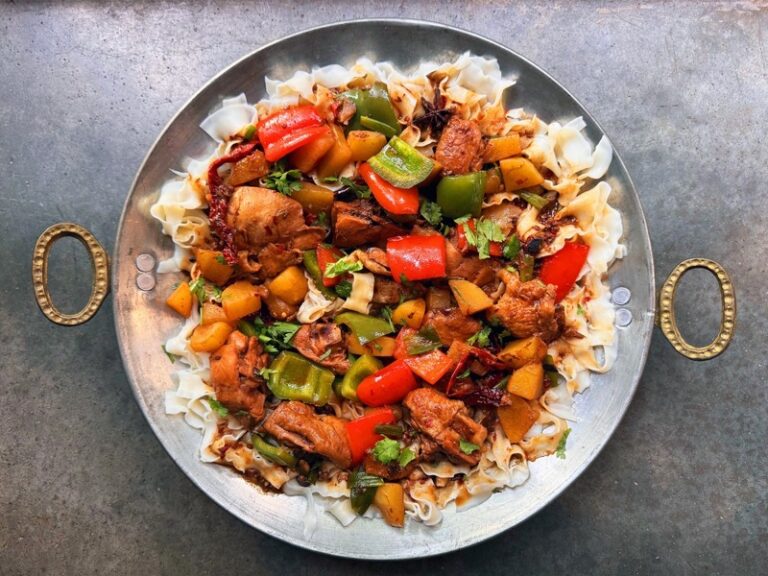
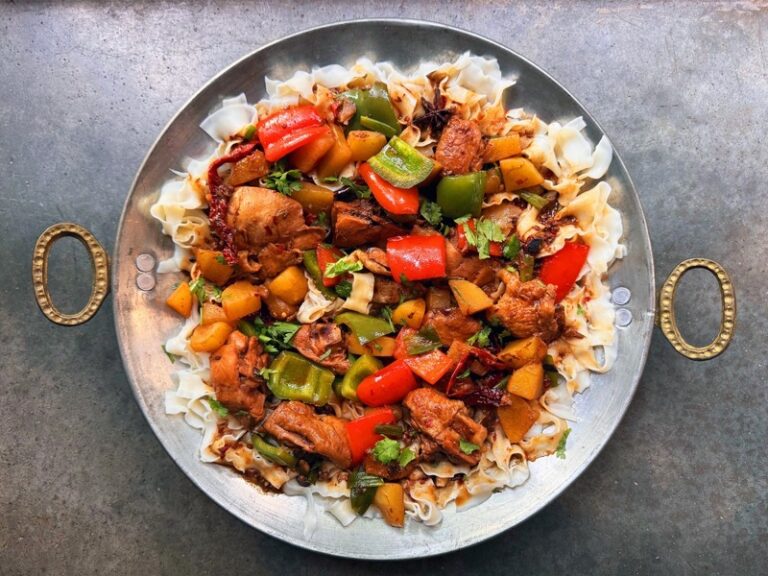
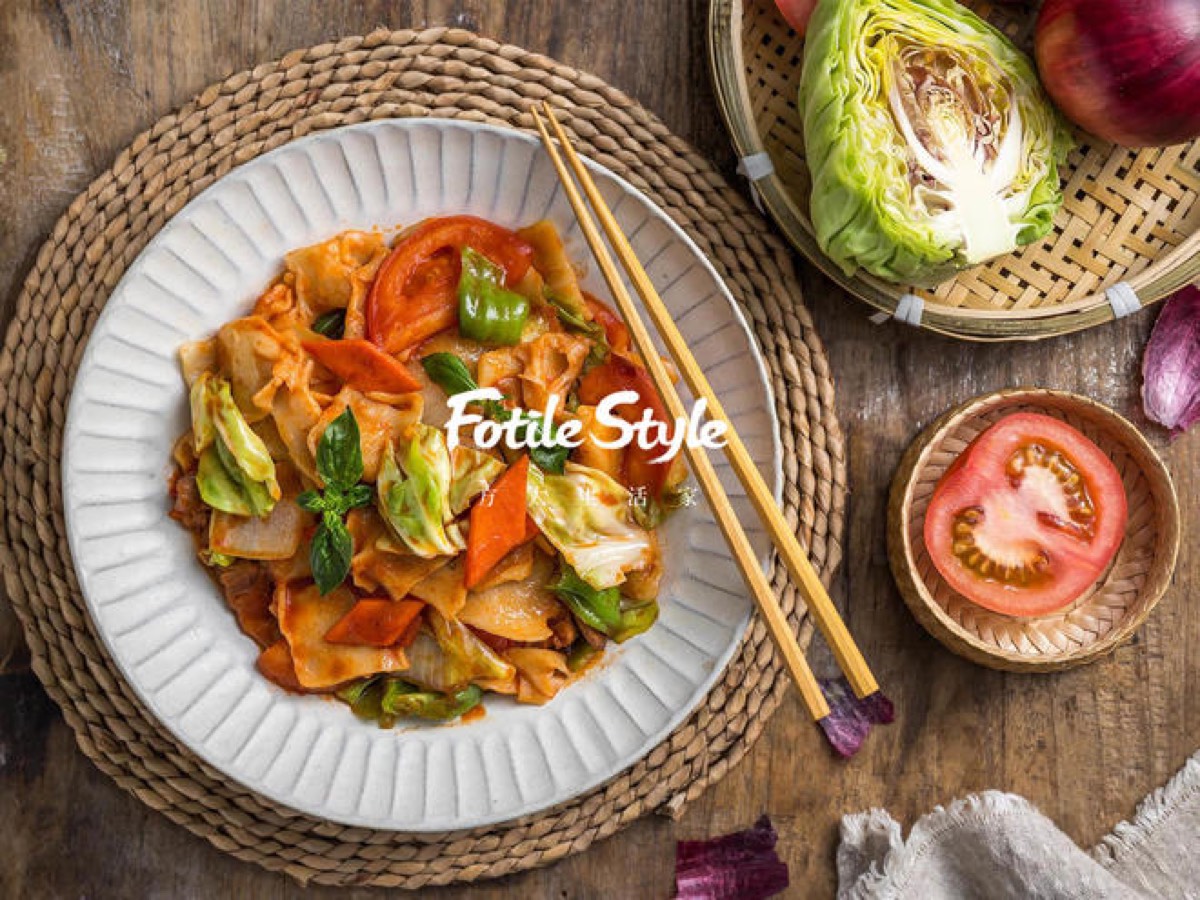
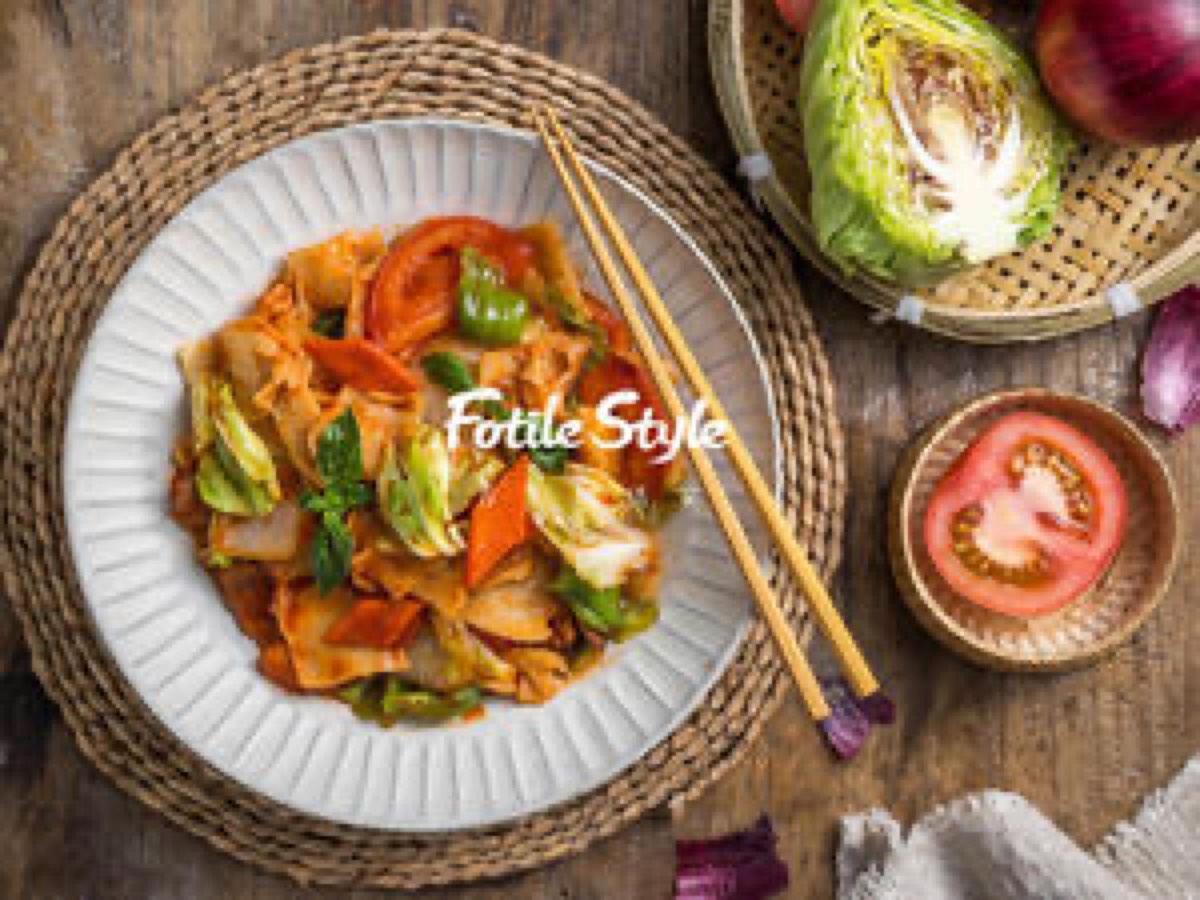
If there is one dish that sums up the soul of Xinjiang cooking, it might be laghman (拉条子): thick, hand-pulled wheat noodles, boiled, then tossed or stir-fried with a vivid mix of tomato, green and red peppers, onion, and usually beef or lamb. It is the everyday food of the region, eaten in homes and hole-in-the-wall canteens from Urumqi to Kashgar, and it is one of the first things any visitor should try. This guide explains the regional styles, what belongs in the bowl, and how to order it well.
What you come for
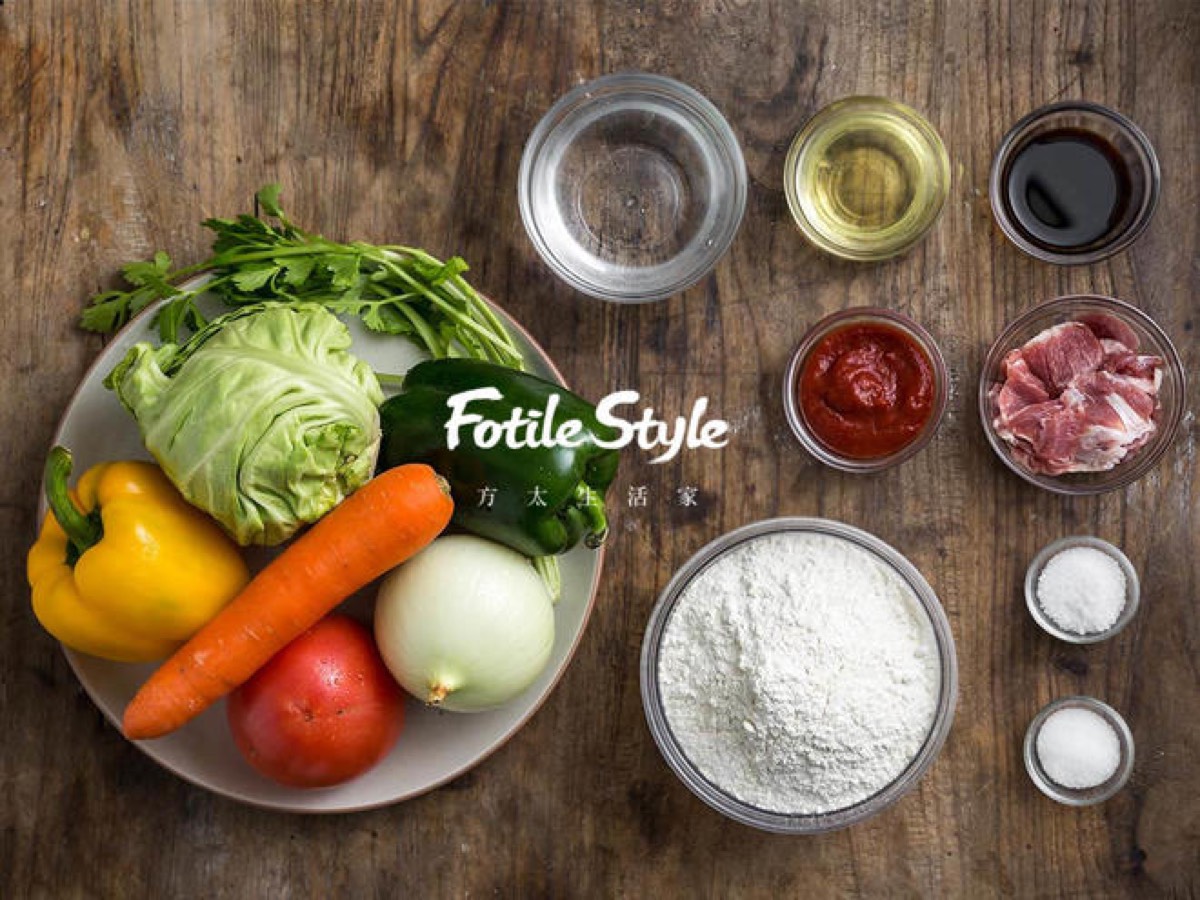
Laghman’s name traces to the Persian ‘laghman’ for noodles, a reminder that Xinjiang sits at the crossroads of Central Asian and Chinese food cultures. The dough is simple: wheat flour, water, and salt, rested, then pulled by hand into long ribbons. A skilled cook snaps a lump of dough into ropes and stretches them with a flick of the wrist until they are the width of a thumb and the length of a table. No machine makes quite the same springy, uneven bite.
Regional Styles
In the north (Urumqi, Ili, the Tianshan towns), laghman tends toward a wetter stir-fry with more tomato and a looser sauce. In the south (Kashgar, Hotan, Aksu), it is often ‘chopped laghman’ (qoruma laghman) with smaller noodle pieces and a drier, spicier coating, reflecting the heavier use of cumin and chili down there. Around Turpan you may get it with more dried vegetables; in the Ili valley, with fresh peppers and herbs in season. None is wrong, and part of the fun is tasting the local accent.
What Goes in the Bowl
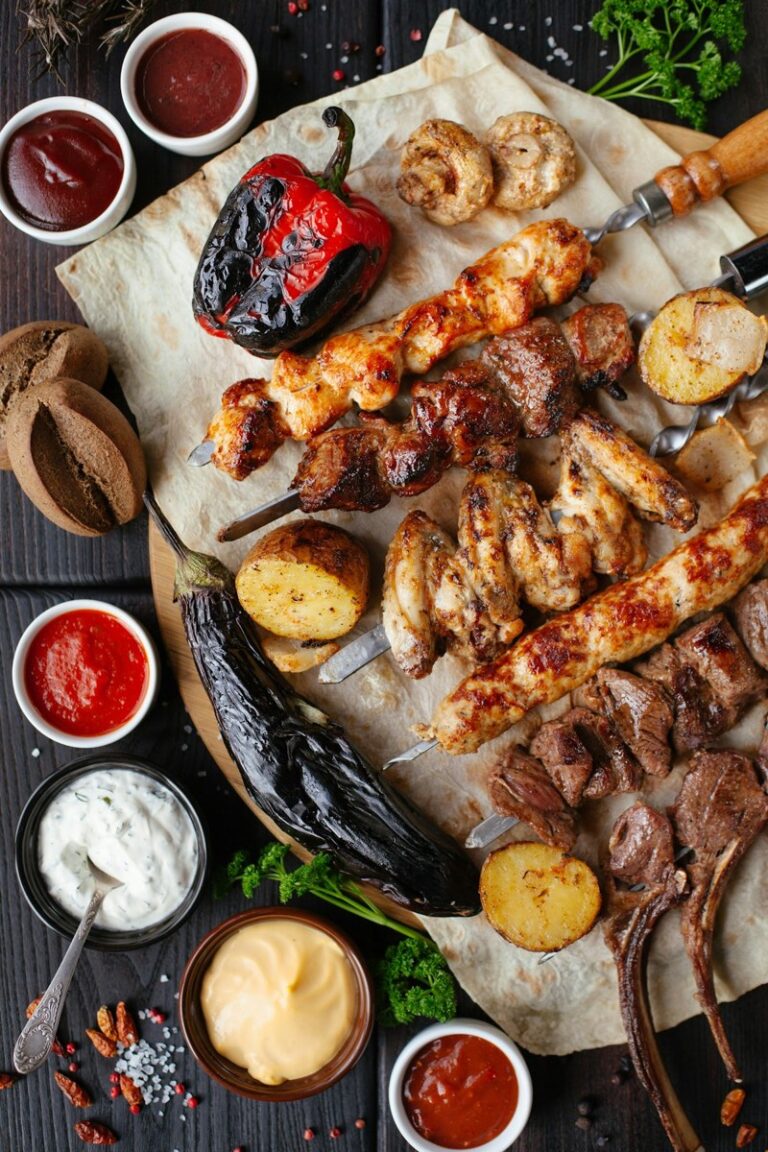
The base is the noodle. The topping, called ‘sai’ (the ‘side’ or ‘stir-fry’), is built on: tomato for acidity, green and red bell peppers for sweetness and crunch, onion, garlic, and a protein. Beef is most common in the north; lamb in the south and west. Cumin, black pepper, and sometimes a dried chili flake finish it. Some versions add potato or eggplant; a good cook balances sauce so the noodles are coated but not swimming. A plate of raw onion or a sharp pickle on the side is traditional.
Best Time and Where to Eat
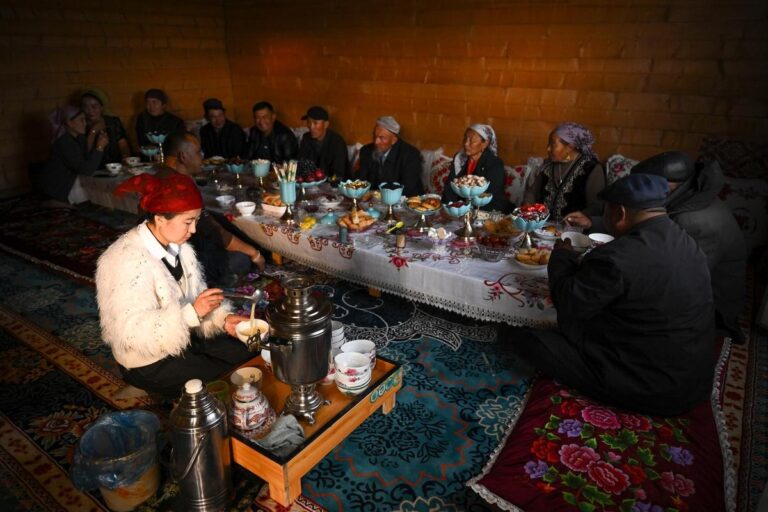
Laghman is an all-day dish, but it shines at lunch when the woks are hottest. Look for busy Uyghur canteens (look for the Uyghur script and a visible noodle station) rather than tourist restaurants; a full plate runs 20-35 yuan. In Urumqi, the areas around the Grand Bazaar and the night market district are reliable. In Kashgar, the old city lanes hide excellent versions. Ask for ‘yeshil laghman’ (with extra greens) if you want more vegetables.
Helpful little details
- Watch the pull: the best places pull to order; if noodles come from a pre-boiled pile, it is still fine but less fresh.
- Spice: say ‘achchiq’ for spicy if you want heat; ‘achchiq emes’ for none.
- Portion: a single plate is a full meal; couple it with a glass of black tea (chay).
- Dietary: nearly always halal; vegetarian versions exist but confirm no meat stock.
Not everyone should build a trip around this
It suits a traveller with a car and a flexible morning. It does not suit a family with a small child who needs a shade stop every forty minutes, and it does not suit anyone in week two of a high-altitude trip still feeling it. The honest version: take half a day if that is all the arithmetic allows, and save the full day for the thing that is genuinely once in a lifetime. I am not going to pretend this is gentle. Who it does not: anyone whose main goal is a relaxed few days, and anyone who has already done this same thing twice here.
There is a lot of unshaded ground, the altitude is real if you came from a low-altitude city, and the swing between the car and the viewpoints is enough to give you a headache on an empty stomach. Who it does suit: someone wanting one strong memory, someone driving the Xinjiang loop anyway, someone willing to be out before breakfast. If you are short on days, this is the thing to cut, and no guidebook will tell you that. Xinjiang Laghman Noodles A is superb, but it is also an hour or more in each direction from everything else you planned, and the drives are what eat the schedule. It suits people who like landscape and can walk a few kilometres at their own pace. If the timing is the question, our [[laghman-noodles-xinjiang-hand-pulled-noodle-guide|Laghman Noodles: The Hand-Pulled Noodle…]] goes through it properly.
The hour I go back for
Everything goes flat, the shade disappears, and the temperature on an open plateau rises in a way that stops you caring about photographs. Go early or go late and the same ground gives you two different subjects. Between the two I would pick the later one, mostly because the early version costs you the rest of the day. Sunrise is the one worth an alarm for. The whole face of Xinjiang Laghman Noodles A turns a colour that does not exist at any other time, and the site is empty enough that you can stand still and hear nothing.
By ten the coaches are here, and by one it is an hour of people shuffling past. The light is only free of company on a Tuesday. I have come to like the last forty minutes before the gate shuts, when the groups have gone and the staff are sweeping, because that is when you can look up properly instead of squeezing a shoulder past strangers. Whatever the guidebook says about golden hour, go on a weekday. Midday is the hour to avoid, not the hour to schedule.
For the part people underestimate, see our [[xinjiang-laghman-hand-pulled-noodles|Xinjiang Laghman: Hand-Pulled Belt Noodles…]].
Nearby Dishes
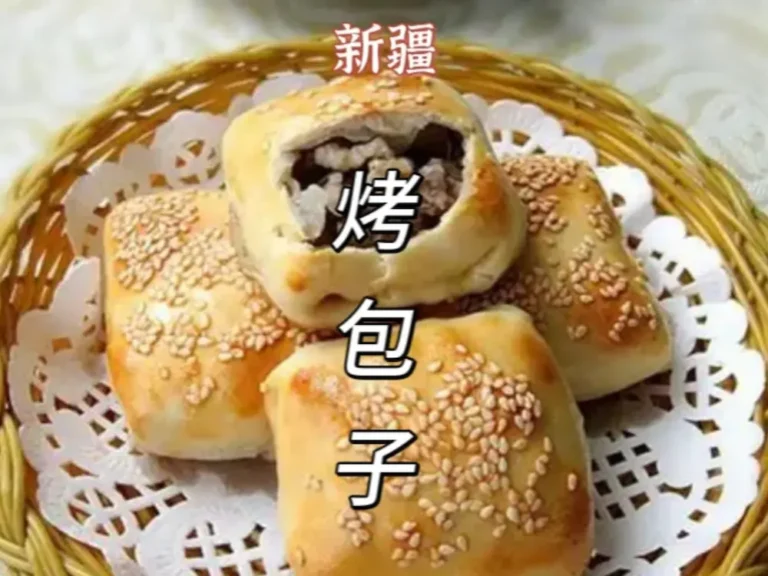
Laghman sits beside its cousins: chaomianpian (stir-fried noodle slices), samsa (baked buns), and dapanji (big plate chicken, which itself is often served over laghman). If you like the noodle, try ban mian and the pulled ‘kawa’ variations across the region.
Keep these, skip that
Laghman is the dish that turns a stranger into a regular: cheap, filling, and endlessly local. Learn to spot a good noodle pull, order it with confidence, and you have a meal you can find in every corner of Xinjiang for the price of a sandwich back home. It is comfort food with two thousand years of Silk Road behind it, and it is one of the truest tastes of the region.