The Chili That Defines Xinjiang Cooking: Lagan and the Red Oil
People ask me if Xinjiang food is spicy. The honest answer is no, not the way Sichuan or Hunan is. But there is one red thread running through almost everything savory here, and once you notice it you cannot unsee it. Locals call it lagan (辣皮子), and it is the reason a bowl of plain noodles can taste like somewhere specific.
What lagan actually is
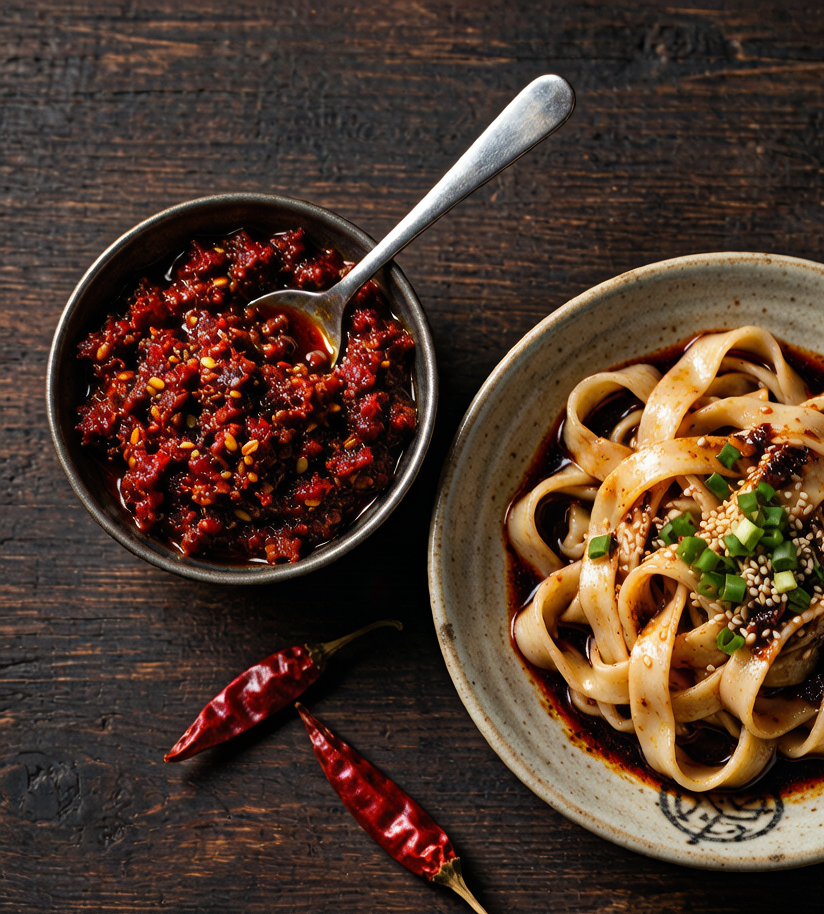
Lagan is a sun-dried local chili, usually fried gentle in oil until it softens into a dark red paste or a scatter of chewy strips. It is not a powder you shake on at the end. It is cooked into the dish, early, so the oil carries the flavor. The heat is low and round, more about aroma than burn. I learned to tell the difference the hard way after assuming “spicy” meant I should brace for it. Xinjiang lagan just tastes like the place.
Where you will meet it
It shows up in laghman, the hand-pulled belt noodles, where a spoon of lagan oil turns the whole bowl red. It sits under the skin of lamb skewers at the night market. It is folded into polo, the rice pilaf, in some homes but not others, which tells you something about how regional this food really is.
How to order without guessing
If you want more, ask for “lagan qoshup” style at a noodle counter, though most places already use it. If you genuinely cannot handle heat, say so, but understand you are asking them to leave out a building block, not a topping. I have watched cooks look confused at the request, then shrug and make a paler version.
Buying it to take home
The dried chili and the fried paste both travel well. I bring back bricks of the fried lagan from the spice stalls and cook with them for months. A small jar of that red oil has fixed more dull dinners at home than I can count.
For the bigger picture of what is on the table, my ten-dish primer lays out the rest. But lagan is the quiet constant, and noticing it is the first step to eating here like you mean it.
Worth pairing with
Ask at the hotel desk the evening before what opened this week, because several of these places shift their hours with the season and the leaflet in the lobby is a year out of date. Xinjiang Chili Lagan sits naturally into a longer Xinjiang day. With a car the combination that worked for us was the site in the morning, a long lunch somewhere with shade, and the other place in the late afternoon, so two half-days covered a full one. The stops most people miss are the small ones between the big names.
The hour I go back for
Everything goes flat, the shade disappears, and the temperature on an open plateau rises in a way that stops you caring about photographs. Go early or go late and the same ground gives you two different subjects. Between the two I would pick the later one, mostly because the early version costs you the rest of the day. Sunrise is the one worth an alarm for. The whole face of Xinjiang Chili Lagan turns a colour that does not exist at any other time, and the site is empty enough that you can stand still and hear nothing.
I have come to like the last forty minutes before the gate shuts, when the groups have gone and the staff are sweeping, because that is when you can look up properly instead of squeezing a shoulder past strangers. By ten the coaches are here, and by one it is an hour of people shuffling past. Whatever the guidebook says about golden hour, go on a weekday. The light is only free of company on a Tuesday. Midday is the hour to avoid, not the hour to schedule.
A note on making it yourself
If you cook, bring a small bag of the dried lagan home and fry it gently in oil with a pinch of salt until it softens, then spoon it over noodles or eggs. The aroma fills a kitchen in a way the powder never does, and it is the closest I have come to recreating a Xinjiang breakfast abroad. Families guard their versions; some add tomato, some garlic, some nothing but the chili and patience. I have eaten three “same” noodle dishes in three cities that tasted nothing alike, and the lagan was why. That local variation is the point, and it is also why a single recipe online will always miss something.
Ordering it your way
If you cook or order, ask for “lagan qoshup” and most places add the chili oil; if you want it on the side, say so and they often bring a small dish. For kids or anyone who truly cannot handle heat, say it before cooking, because the oil is mixed in early and cannot be picked out. I have watched a cook nod and then make a paler plate that still tasted of the region, just without the burn. The point is that lagan is a choice, not a fixed rule, and treating it as one opens the table. Once you can name it, you can tune your own Xinjiang food instead of taking what comes, and that is most of the fun of eating here.