Xinjiang Sweets & Desserts: Baklava, Walnut Cakes, and Ice Cream
Xinjiang’s desserts sit at the crossroads of Central Asia and China — nutty, floral, and dairy-rich rather than chocolate-sweet. After a heavy lamb meal, the local sweet tooth turns to baklava-style pastries, walnut cakes, and a thick milk ice cream that’s closer to frozen cheese than a cone. It’s a small but distinctive board, and worth exploring between the skewers.
Here’s what to look for.
Baklava and Pakhlava
The Uyghur version of baklava — layers of thin pastry, crushed walnuts or pistachios, and syrup — is less sweet than the Turkish and found at every bazaar sweet stall. Buy a few pieces, not a box, unless gifting. It pairs perfectly with the sweet southern chai. The nut-to-pastry ratio is the tell of a good one; skimp on nuts and it’s just sugar glue.

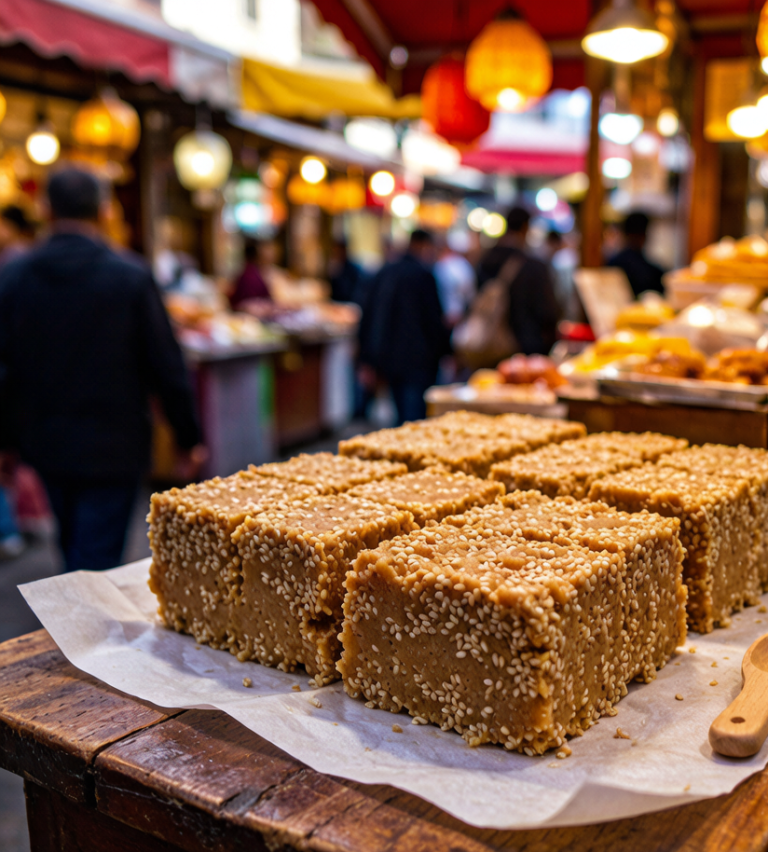
Walnut Cake (核桃糕) and Jams
Dense, chewy walnut cakes and fruit-leaf jams (apricot, rose) show up at markets and as gifts. The Korla walnut and the Ili apricot jam are regional specialties. These travel well and make good souvenirs — sealed, they keep for the trip home. Try a small piece with tea before buying a batch.
What travels home and what does not
Buy the dried fruit in the market rather than at the airport and ask for it packed at the stall. What does not work is anything fried or saucy, which turns in transit, and anything you cannot repeat at home. Nuts, dried grapes, an uncut flatbread and vacuum-packed lamb all survive a long-haul flight. It is cheaper, the staff wrap it properly, and it spends a week in your bag as the best thing about the trip. The short version, with the numbers, is in our [[xinjiang-desserts-and-sweets-from-baklava-to-grapes-biscuits-a-complete-guide|Xinjiang Desserts and Sweets: From Baklava…]].
The one thing I order every time
The sweet version is the one for the market, not for a morning. It is the rhythm of it: someone puts a glass in your hand, another arrives, you sit for ten minutes, and suddenly the rest of the day is sorted. Ask for it plain the first time. In Xinjiang Sweets Desserts Baklava that is the tea, and the reason is not the flavour. The short version, with the numbers, is in our [[xinjiang-walnut-nut-snacks-guide|Xinjiang Walnut and Nut Snacks: A Road-Trip…]].
How it is actually eaten
Bread goes down first, tea arrives without being asked for, and the main dish comes when the people eating together are already sitting properly. In Xinjiang Sweets Desserts Baklava the meal is a long one, not a fast one. Eating alone here is a quiet business and the kitchen knows it. If you are travelling solo and the thought of a room full of families bothers you, the counter seats at the small places are exactly the right answer.
The stall, the teahouse and the restaurant
The food is the same and the price gap is not small. I eat at the first two most days and take people to the third when they ask for somewhere proper. What you lose at the stall is a seat and some shade. Three kinds of place sell the same dish in Xinjiang Sweets Desserts Baklava, and they are not competing so much as serving different occasions.
Everything else is right there. The teahouse is where you sit an hour and get refilled. The street stall is fastest, cheapest and eaten standing up. The restaurant is where you take someone you want to impress.
I wrote the driving side up in our [[xinjiang-kaymak-clotted-cream-guide|Xinjiang Kaymak: The Clotted Cream You…]] as well.
Milk Ice Cream (奶冰淇淋)
Xinjiang’s milk ice cream is dense and only lightly sweet, made from local dairy — closer to a frozen yogurt-cheese than a Western scoop. Sold from carts in summer, it’s the region’s answer to the heat and a nice counter to spicy food. In the north you’ll also find airan (drinkable fermented milk) and thick yogurt as dessert-adjacent options.
Where to Find Them
Bazaar sweet stalls (Urumqi Grand Bazaar, Kashgar) are the best hunt. The night markets have dessert carts too. For a sit-down, the Uyghur restaurants often list a baklava or fruit plate. Keep it light — the main meals are rich enough; dessert here is a accent, not a course. And the fresh fruit, always, is the healthiest sweet in the region.