Naan (Flatbread): The Essential Xinjiang Bread You’ll Eat Every Day
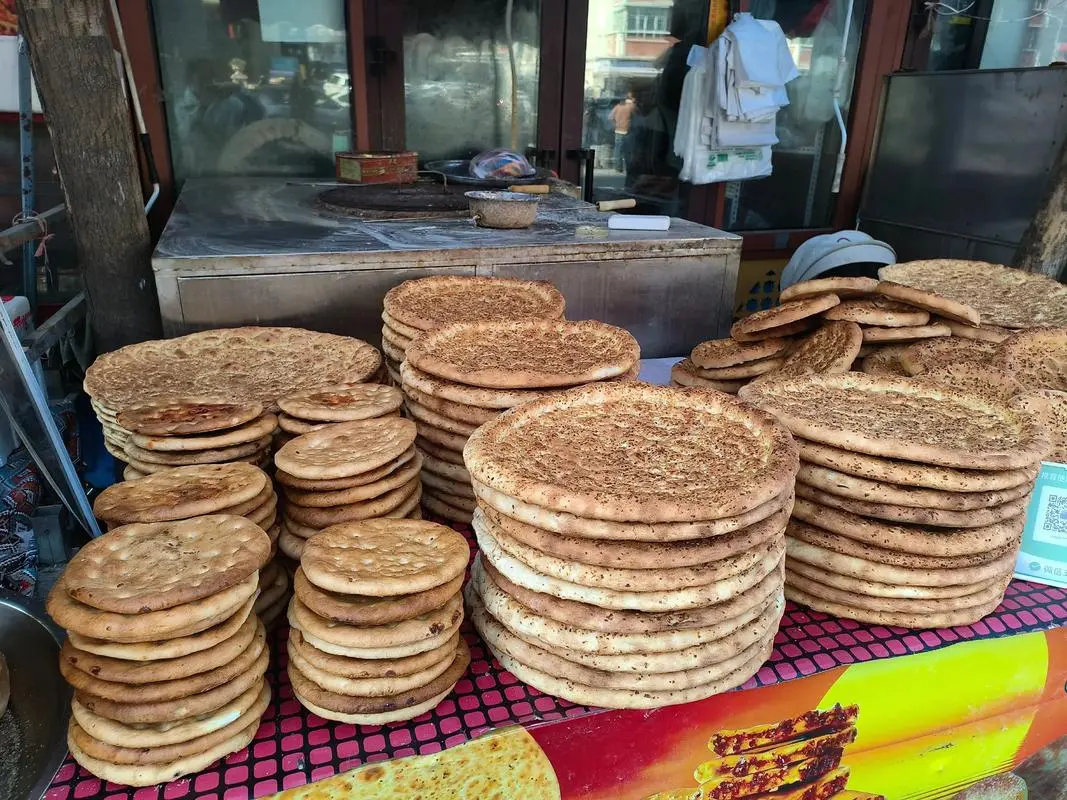
If you spend more than two days in Xinjiang, you will develop a habit: spotting the round, flat bread called naan (馕). It is everywhere — stacked in baskets at street corners, tucked under arms of bicycle riders, served alongside every meal, and even used as a plate in some rural areas.
Last updated: July 15, 2026 · Written by Karl Huang, a Xinjiang travel specialist who has spent time across the region. Practical details are cross-checked against official tourism, transport, and border-regulation sources.
Naan is not just food in Xinjiang. It is the daily staple, the equivalent of rice in southern China or bread in Europe. And because it is baked fresh multiple times a day in communal ovens, it is always warm, fragrant, and deeply satisfying.
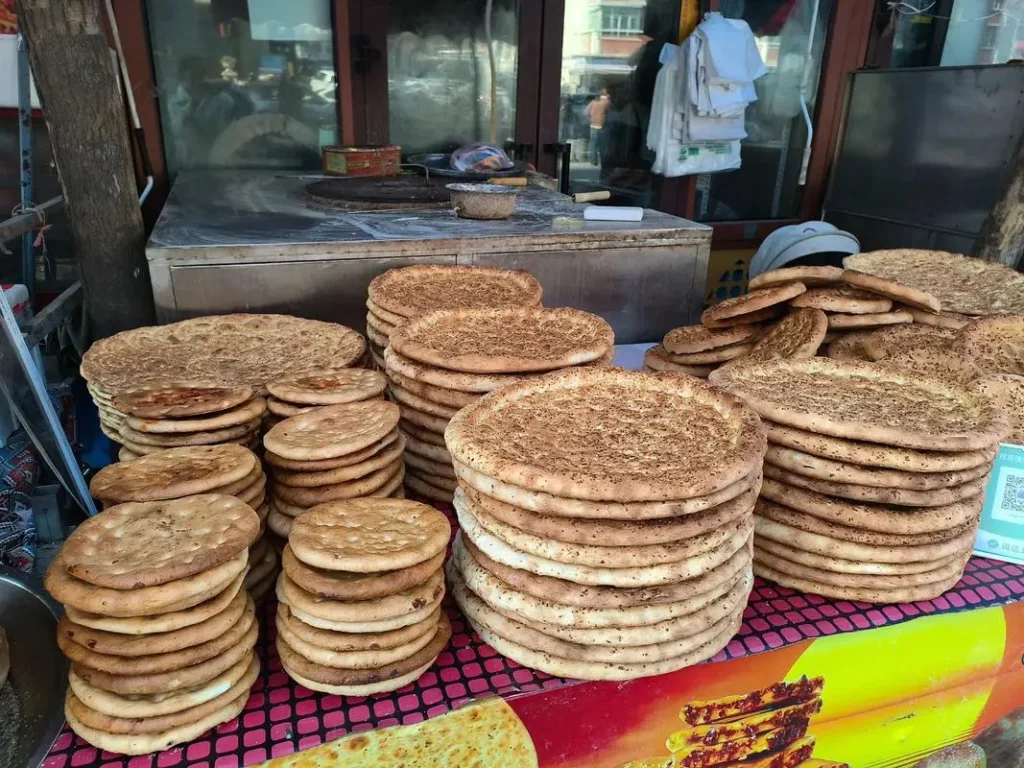
What Is Naan (馕)?
Naan (馕) is a flatbread that is central to Uyghur, Kazakh, Kyrgyz, and other Central Asian cuisines in Xinjiang. It is made from wheat flour, water, salt, and sometimes yeast or yogurt, then baked on the inner wall of a dome-shaped oven called a tandoor (馕坑).
The result is a bread that is crispy on the outside, chewy on the inside, with a slightly smoky flavor from the oven walls. It can be plain, or topped with sesame seeds, onions, or even stuffed with meat.
Types of Naan in Xinjiang
There are dozens of naan varieties in Xinjiang, but here are the most common:
1. Plain Naan (普通馕)
The everyday naan. Round, flat, about 20-30cm in diameter, with a slightly browned top. It is not heavily seasoned, which makes it the perfect accompaniment to lamb dishes, Polo, or just dipped in milk tea.
2. Sesame Naan (芝麻馕)
Plain naan with sesame seeds sprinkled on top before baking. The seeds add a nutty aroma and a bit of crunch.
3. Onion Naan (皮牙子馕)
Naan with finely chopped onions mixed into the dough or layered on top. The onions caramelize slightly during baking, creating a sweet-savory flavor.
4. Meat Naan (肉馕)
Naan stuffed with minced lamb and onion. It is more of a meal than a side dish.
5. Sweet Naan (甜馕)
Naan with sugar or honey brushed on top before baking. Popular as a snack or breakfast bread.

How Naan Is Made
The naan-making process is communal and theatrical:
- Dough preparation: Wheat flour, water, salt, and sometimes yeast are mixed into a dough, which is then kneaded and left to rise.
- Shaping: The dough is rolled into flat rounds. For some types, toppings (sesame, onion) are added at this stage.
- Baking in the tandoor: The baker slaps the dough onto the inner wall of a domed clay oven (the tandoor, or 馕坑). The oven has been heated by a wood fire at the bottom. The dough sticks to the wall and bakes quickly (2-3 minutes) at high heat.
- Removal: Using a long metal hook, the baker pulls the naan off the wall. It is now crispy, puffed, and ready to eat.
Where to Find the Best Naan
Naan is available everywhere in Xinjiang, but some places are legendary:
- Erdaoqiao (二道桥) in Urumqi: The Uyghur district with the highest concentration of naan bakeries.
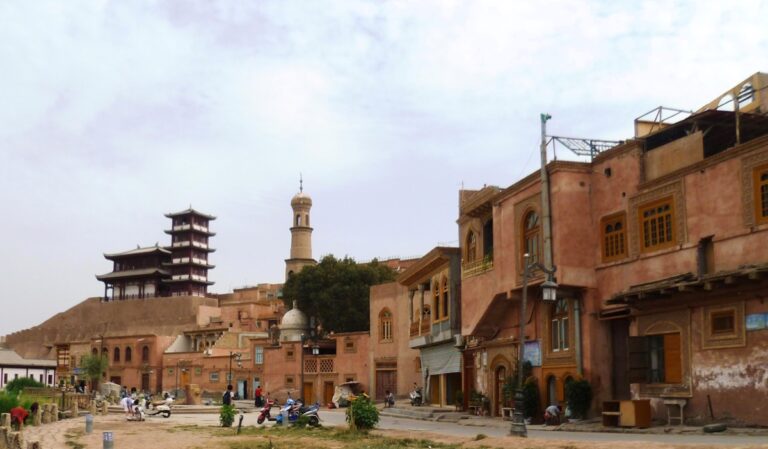
- Kashgar Old City: Many family-run bakeries supply the entire neighborhood.
- Yarkand (莎车): Known for its extra-large naan (up to 50cm in diameter!).
How to Eat Naan Like a Local
- With lamb dishes: Tear off a piece of naan and use it to scoop up meat and sauce.
- With milk tea: Dip naan into salty milk tea for a traditional breakfast.
- As a snack: Plain naan is portable and makes a great on-the-go snack.

Shelf Life and Storage
Fresh naan is best eaten within a few hours of baking. However, it can last 2-3 days if kept in a cool, dry place. In Xinjiang’s dry climate, naan does not mold easily — it just gets harder (which some people actually prefer for dipping in tea).
The durable bits
Naan is not just a bread in Xinjiang — it is a cultural cornerstone. Watching a baker slap dough onto the oven wall, seeing stacks of naan at a street corner, and tearing off a piece to dip into milk tea are all quintessential Xinjiang experiences.
Pro tip: Buy naan in the late afternoon (4-6 PM) — that is when most bakeries do their second or third batch of the day, and the naan is at its freshest and warmest.
Is Xinjiang safe to visit?
Yes, Xinjiang is considered very safe for tourists with strong security presence throughout the region.
Do I need a visa?
Foreigners need a valid Chinese visa. No separate Xinjiang permit needed for most tourist areas.
What currency should I bring?
Chinese Yuan (RMB). Credit cards accepted in hotels; carry cash for markets and rural areas.
Can I find English-speaking guides?
Available in major tourist areas through hotels or travel agencies. Book in advance for best results.