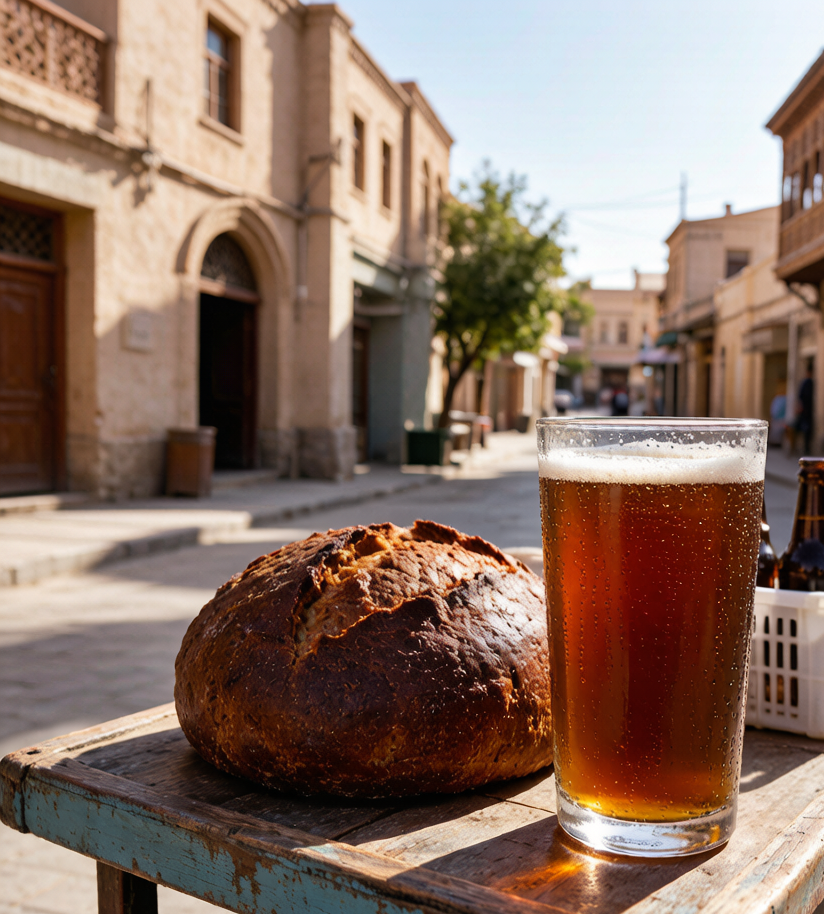
Kvass in Xinjiang: The Russian Fermented Drink You Did Not Expect
The first time I was handed a glass of kvass I expected soda and got something closer to liquid rye bread. It was cold, faintly sour, and a little fizzy, and I liked it immediately. You find it in the Ili valley, where Russian and Ukrainian settlers left behind more than just leba bread.
What kvass is
Kvass is made by fermenting black bread or malt with a little sugar and yeast. The result is very low in alcohol, somewhere under half a percent, so it is a soft drink, not a beer. The flavor is malty and sour with a soft fizz. Think of it as the opposite of a sweet cola. On a 38-degree afternoon in Yining it landed better than anything iced I had tried.
Where to find it
Look for it from street carts and small shops around Yining, often poured from a large tank into a plastic cup. It is a local, everyday thing, not a tourist product, which is exactly why it is worth seeking out. I stumbled on my first cup outside a market and went back the next two days.
How it sits with the rest of the table
Xinjiang has a deeper drink culture than visitors expect. There is the whole family of summer drinks, from mulberry sherbet to salted yogurt. There is milk tea up on the grasslands. Kvass is the odd one out, the Russian guest at the table, and that is its charm.
Should you try it
If you like sour things, yes, without hesitation. If you expect sweet, you may wrinkle your nose at the first sip, then come back to it. I have seen travelers refuse a second cup and others hunt for it the rest of the trip. It is that kind of drink. It also pairs oddly well with pomegranates eaten beside it, the sweet against the sour.
Kvass will not be on anyone’s list of must-tries, and that is fine. The best things I have drunk in this region were the ones nobody warned me about.
A few minutes of background change the visit
Read that the morning before rather than at the entrance, where the boards stand too far from the object to help. The place only makes sense once you know its shape. Xinjiang Kvass Drink was cut rather than built, which is why the walls are solid and the streets are the empty space between them, and why centuries of dust ended up acting as a roof. Knowing what you are standing on turns a pleasant walk into something you actually remember. The history here is layered in a way the official signage compresses into names and dates. Locals in Xinjiang will give you the short version in about a minute if you ask, and it is usually better than the panel at the gate. More on the other end of that day is in our [[xinjiang-pomegranate-juice-drink|Xinjiang Pomegranate Juice (Anar): The…]].
What goes in the day pack
The temperature drops fast once you stop moving and the drop is not hypothetical on an exposed pass. A wind shell. A fleece covers most of the year, a real jacket covers shoulder season. Water, more than you think, a power bank and some cash.
Sunscreen and a brim. Cards work at the gate and in the shops, but the stalls on the approach road and the drivers waiting at the turnoff want cash, and coming up short at the moment you want a lift is the classic way to lose an hour. The light here is serious and the shade is intermittent, so the sunscreen goes on before you leave the hotel, not at the gate. If the timing is the question, our [[xinjiang-chuchura-cold-drink|Xinjiang Chuchura: The Fizzy Yogurt Drink…]] goes through it properly.
How it compares to the other cold drinks
Kvass is not a substitute for anything, it is its own category. Next to the sweet sodas and the salty yogurt drinks it reads as almost serious, like a beer you can hand to a child. I have sat at a Yining curb with a cup and watched the city’s Russian-built blocks across the street and felt the layering of the place in a way the guidebooks flatten. If you want the fuller cold-drink picture, the [[xinjiang-summer-drinks|summer drinks guide]] covers the sweeter end. But kvass is the one I remember when the heat lets up, because it tastes like a specific history, not a generic refreshment.
Finding it and paying
Kvass is cheap, usually a few yuan for a cup, poured from a tank at a street cart or a small shop rather than bottled in a supermarket. The tanks turn up more in the Ili valley than elsewhere, so treat it as a regional find, not a region-wide one. I carry small change because the carts rarely take cards, and I tip the vendor nothing, since that is not the custom, just a thank-you. In summer the tanks are cold and the lines short; in cooler months it thins out. If you like it, buy a second cup for the road, because the next one may be a town away. It is the kind of drink you remember by the place you drank it, which is the highest compliment a regional specialty can get.