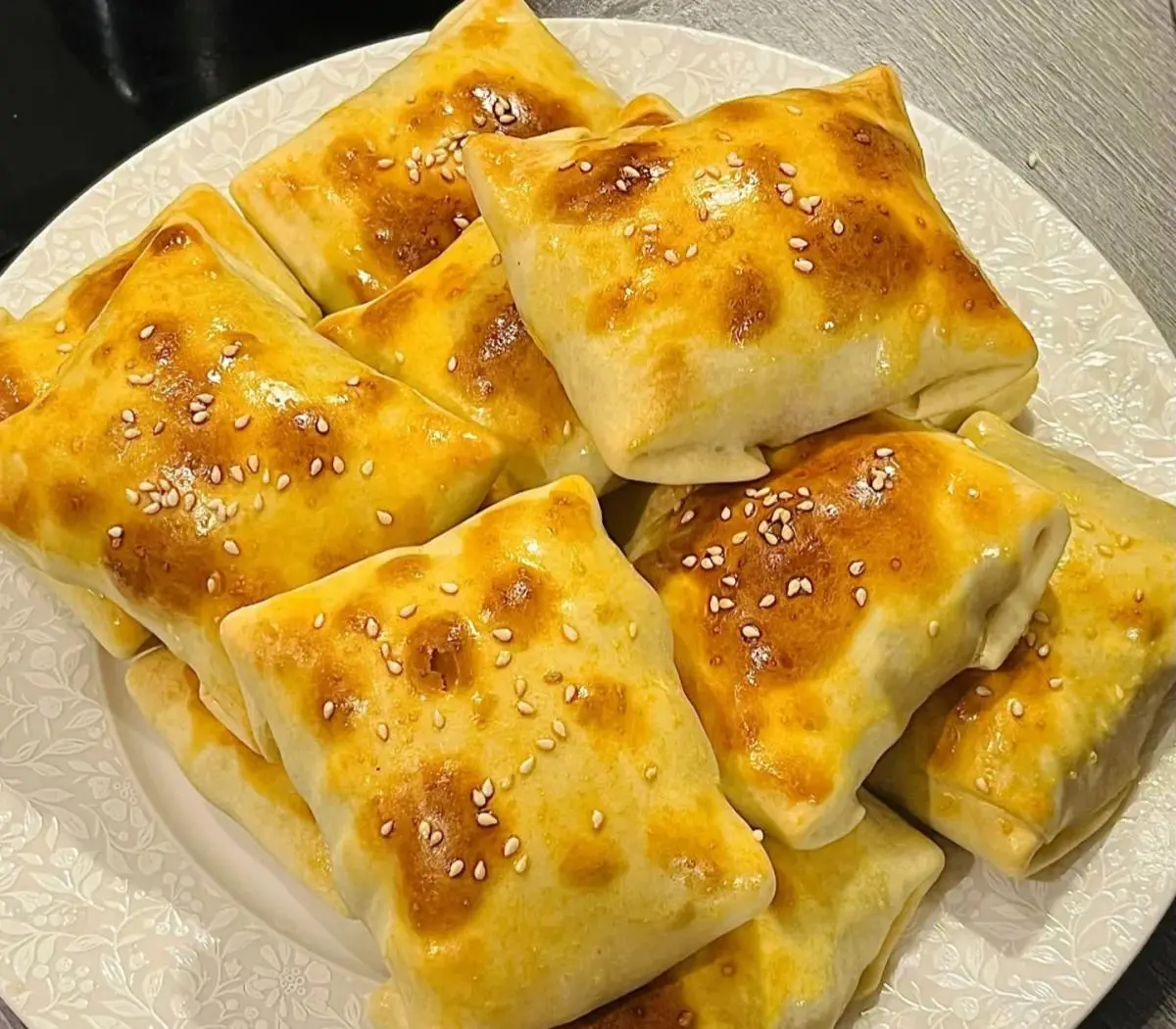
Samsa (Baked Lamb Buns): Where to Find the Best Ones in Xinjiang
If there is a Xinjiang street food that rivals lamb skewers for popularity, it is Samsa (烤包子, kǎo bāozi). These baked buns — filled with spiced lamb and onion, then baked in a tandoor oven until golden — are the ultimate on-the-go snack in Xinjiang.
Last updated: July 15, 2026 · Written by Karl Huang, a Xinjiang travel specialist who has spent time across the region. Practical details are cross-checked against official tourism, transport, and border-regulation sources.
You will see them everywhere: stacked in baskets at street stalls, cooling on trays in bakery windows, and clutched in the hands of pedestrians hurrying to work or school. A good Samsa is flaky, juicy, and intensely aromatic — the perfect embodiment of Xinjiang’s Central Asian food heritage.
What Are Samsa (烤包子)?
Samsa (烤包子) are baked buns with a lamb and onion filling. The name comes from the Persian word “samsa” (meaning “triangle”), though Xinjiang Samsa are usually rectangular or oval, not triangular.
They are closely related to samosas (the fried snack found across South Asia), but Samsa are baked, not fried, and the dough is more like a flaky pastry than a spring roll wrapper.
The Filling: Simple but Perfect
The classic Samsa filling is deceptively simple:
- Lamb: Ground or finely cubed lamb (sometimes with fat included for juiciness)
- Onion: Finely chopped, providing moisture and sweetness
- Salt and pepper: Simple seasoning that lets the lamb shine
- Optional: Cumin, sometimes a bit of pumpkin or squash in the filling
No fancy spices, no complicated marinades. The quality of the lamb is what matters.

How Samsa Are Made
The Samsa-making process is similar to naan:
- Dough preparation: A flaky pastry dough is made (sometimes with layers, like puff pastry).
- Filling: Lamb and onion mixture is prepared.
- Assembly: Dough is cut into squares or circles, filled, and sealed.
- Baking in the tandoor: Like naan, Samsa are baked on the inner wall of a tandoor oven. The high heat makes the pastry flaky and golden in 5-7 minutes.
Regional Variations
While the basic Samsa is consistent, there are variations:
- Uyghur Samsa: The most common, with lamb and onion.
- Kazakh Samsa: Often larger, with more fat in the filling (for cold weather energy).
- Vegetable Samsa: Filled with pumpkin, potato, or greens (less common but available).
- Sweet Samsa: Filled with nuts and sugar (a dessert version).
Where to Find the Best Samsa
Samsa are available everywhere in Xinjiang, but some places stand out:
- Street stalls near markets: The highest turnover (meaning freshest) Samsa.
- Bakeries that also make naan: Samsa are usually baked alongside naan in the same tandoor.
- Kashgar Old City: Many small bakeries specialize in Samsa.
How to Eat Samsa
Samsa are meant to be eaten hot, right out of the oven. Here is the proper way:
- Wait a minute: Fresh out of the oven, the filling is molten hot. Let it cool slightly.
- Hold by the corners: The flaky pastry can be crumbly.
- Eat in 2-3 bites: Samsa are not dainty. They are meant to be eaten hand-to-mouth.
Warning: The first bite may release a jet of hot lamb juice. Angle the Samsa away from your chin!
Nutritional Value
A typical Samsa contains:
- Calories: 200-300 per bun
- Protein: 10-15g (from lamb)
- Fat: 10-20g (from lamb fat and pastry)
- Carbohydrates: 20-30g (from pastry)
It is energy-dense food, perfect for Xinjiang’s cold winters and active outdoor lifestyle.
What to bring home
Samsa are more than just a snack in Xinjiang — they are a way of life. Whether you are a local grabbing one on the way to work, or a traveler tasting them for the first time in a Kashgar market, a hot, flaky Samsa is one of the most satisfying culinary experiences Xinjiang has to offer.
Pro tip: Eat Samsa with a cup of milk tea — the combination of hot, savory bun and salty, creamy tea is unbeatable.
Is Xinjiang safe to visit?
Yes, Xinjiang is considered very safe for tourists with strong security presence throughout the region.
Do I need a visa?
Foreigners need a valid Chinese visa. No separate Xinjiang permit needed for most tourist areas.
What currency should I bring?
Chinese Yuan (RMB). Credit cards accepted in hotels; carry cash for markets and rural areas.
Can I find English-speaking guides?
Available in major tourist areas through hotels or travel agencies. Book in advance for best results.