Beyond Naan: The Breads of Xinjiang You Only Meet on the Road
The first time I really noticed Xinjiang bread was not naan, I was in a cramped Urumqi breakfast joint at 8 a.m., still half-asleep from a long drive. The woman behind the counter lifted a stack of something off a steamer and set it in front of me. It looked like a coil of pale pasta, oily and warm. That was youtazi, the oil pagoda, and it changed how I thought about this region’s table.
Naan is only the front door
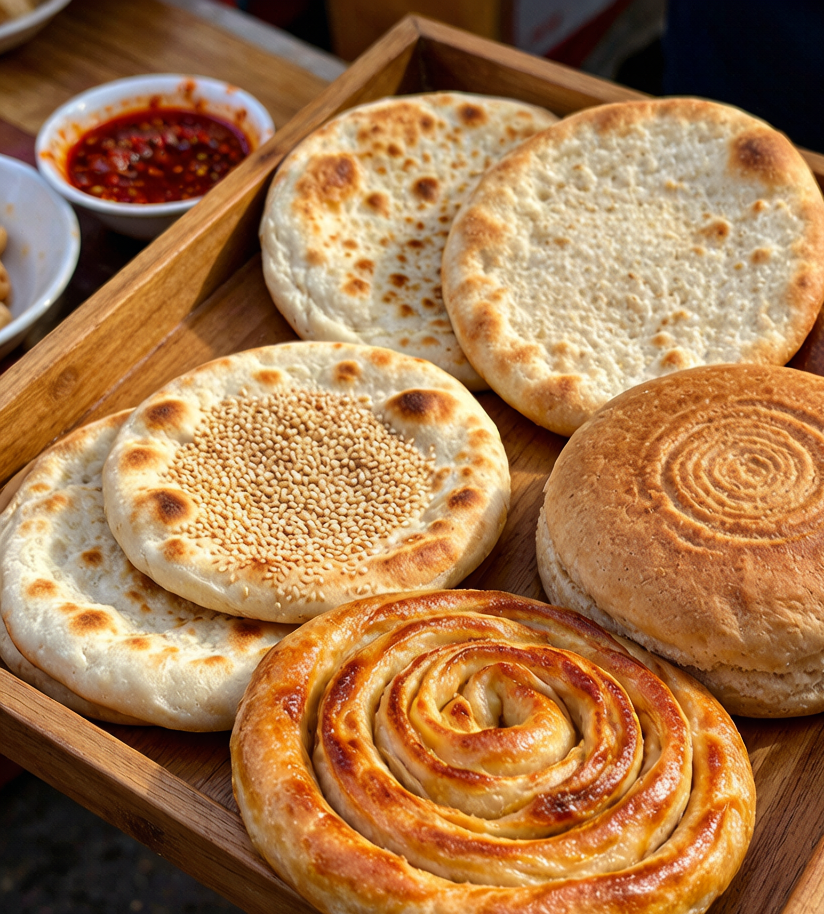
Most travelers meet naan first. It is the round, sesame-speckled flatbread pulled glowing from the naan kang, the tandoor-style oven you see on every other corner. Good naan is worth the hype. But naan is roughly one player on a very deep bench. Walk past the breakfast steamers and the Russian-era bakeries of the Ili valley and you start finding breads that never made it onto a restaurant menu abroad.
Youtazi and the logic of steam
Youtazi (油塔子) is steamed, not baked. Dough is rolled thin, brushed with oil and a little salt, folded into a spiral, then steamed until it lifts apart in greasy, fragrant layers. It is not showy. It is the thing locals eat with milk tea when they want comfort, not spectacle. I have bought them from a stainless tray in a Korla bus-station cafe for less than a snack costs back home, and they were better than anything I had paid ten times for.
Leba, the Russian inheritance
Up in Yining and the Ili valley, the bread story bends Russian. Leba (列巴) is a dense, sour, round loaf brought by the Russian and Ukrainian settlers who arrived in the 19th and 20th centuries. It keeps for days, which is exactly why it suits a road trip. I started buying a loaf near the Kazakh settlements by the mountains and tearing pieces off it for a week of picnics.
What this means for you
Two practical notes. The best breads are rarely in restaurants; they sit in morning bun shops and market bakeries, often gone by late morning. Bread here is also cheap and filling in a way that resets your road budget. I pair a youtazi with brick tea at altitude and it does more for me than any energy bar I have packed.
If you want the savory side of the table, my ten-dish Silk Road primer covers the rest. But bread is where Xinjiang’s everyday genius lives, and you have to go looking for it.
The one thing I order every time
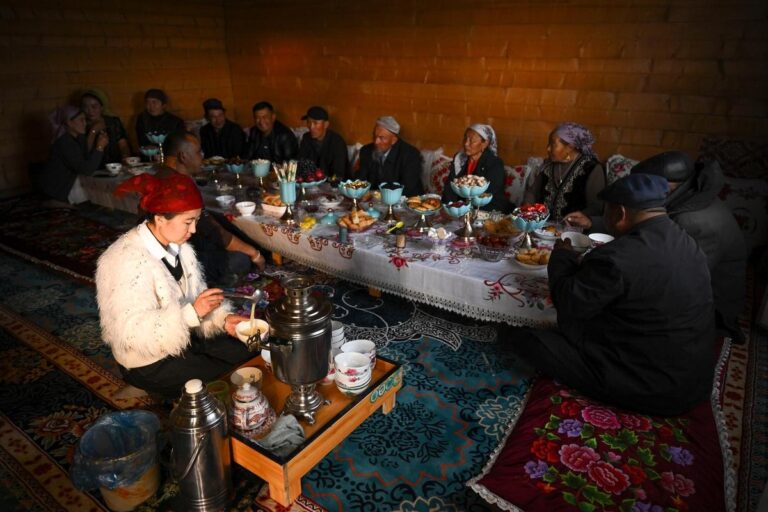
It is the rhythm of it: someone puts a glass in your hand, another arrives, you sit for ten minutes, and suddenly the rest of the day is sorted. Ask for it plain the first time. The sweet version is the one for the market, not for a morning. In Xinjiang Bread Varieties that is the tea, and the reason is not the flavour. For the part people underestimate, see our [[xinjiang-bread-varieties-guide|Xinjiang Breads Beyond Naan: Sangza,…]].
How to order, and what a portion really costs
Card and phone payment both work everywhere in Xinjiang Bread Varieties. The number on the board is for one, and one here is enough for a European adult if you share two. Order one less than you think, because the rice arrives in a bowl the size of a small basin and the second helping does not need ordering. Tips are not expected in the small places and are quietly welcome where there is table service, but do not build the visit around it. If the timing is the question, our [[xinjiang-naan-bread-guide|Xinjiang Naan: The Tandir-Baked Bread That…]] goes through it properly.
Buying and keeping it
One practical thing I wish I had known earlier: buy bread where you see the naan kang out front, not in a supermarket sealed pack. The fresh stuff goes stale in a day in the dry air, so I learned to buy small and often, and to wrap youtazi in a clean cloth rather than a plastic bag, which turns it soggy. On long drives I treat naan as a tool, not a treat, breaking it into soup or just chewing it with tea at a roadside stop. The bakers remember faces; after a week in one town the same woman would push an extra warm one across the counter without me asking. That small routine did more for my sense of the place than any sight.
Reading the naan
Not all naan is the same. The plain round one with dimples is the daily workhorse; the sesame-covered version is for guests and festivals; the smaller, oilier one is a road snack. I learned to tell them by size and topping, and to accept the sesame one when offered because refusing the good version reads as refusing the honor. At a market you will see stacks in sizes from a plate to a wagon wheel, and the big ones are for families and gatherings, not solo travelers. Buy the small plain one, eat it warm, and you have the real thing without the ceremony. The bread is the baseline of every meal here, and noticing its varieties is the first step to eating like you live here.