
A Food Lover’s Guide to Xinjiang: 10 Dishes You Must Try on the Silk Road
Walking into a Uyghur bakery at 07:00 in Kashgar is like walking into the center of the Earth’s oven. The heat hits you first—then the smell: wheat flour, crushed cumin, and lamb fat rendering over open coals. If you’ve never stood on a street corner in Xinjiang with hot naan in one hand and a skewer of lamb in the other, you haven’t actually eaten yet. This isn’t hyperbole. It’s geography, history, and 2,000 years of Silk Road trade compressed into a single bite.
Why Xinjiang Cuisine Is Unlike Anything Else in China
Xinjiang isn’t just “Chinese food with more cumin.” It’s a completely distinct culinary world shaped by the collision of Chinese, Central Asian, Persian, and Turkic foodways. The region sits at the crossroads of the ancient Silk Road, where merchants from Chang’an (modern Xi’an), Samarkand, Bukhara, and Kashmir all stopped to trade—and cook. The result is a cuisine built on wheat (not rice), lamb (not pork), and dairy (not soy), with spice profiles that lean toward cumin, black pepper, and chili, not the sweet-sour or five-spice you’d recognize from eastern Chinese provinces.
Our Xinjiang travel guide always tells visitors the same thing: come hungry. The food alone is worth the flight.
1. Chuanr (羊肉串) — Lamb Skewers That Redefined “Street Food”

If Xinjiang had a national dish, this would be it. Chuanr are cubes of lamb (never beef, rarely chicken) threaded onto metal or wooden skewers, rubbed with cumin, chili powder, salt, and sometimes a pinch of Sichuan pepper, then grilled over molten-red charcoal. The fat cap on each cube renders as it cooks, basting the meat from the inside. Eat it hot, standing up, with the juice running down your wrist. That’s the correct technique.
In Kashgar’s Old City, the night market (夜市) has rows of grills 20 feet long, each operated by a guy who’s been flipping skewers since before sunrise. ¥3–8 per skewer depending on the city. In Ürümqi, the going rate is higher; in small-town bazaars, ludicrously cheap. Either way, if someone tries to serve you pre-cooked reheated skewers, walk away. Real chuanr is grilled to order.
2. Zafran Polo (抓饭) — The Friday Tradition
Known in Mandarin as zhuafan (抓饭, literally “grab rice”), this is Xinjiang’s answer to Persian pilaf—and it’s arguably better. The dish starts with lamb shoulder or ribs, browned in a heavy-bottomed wok (usually a qazan, a cast-iron cauldron). Then in go long-grain rice, carrots (cut into matchsticks, not cubes), onions, and enough sheep tail fat (qurdiq) to make a cardiologist faint. The whole thing is sealed and slow-steamed until the rice absorbs every drop of lamb stock.
The result: rice that’s yellow from carrot and lamb fat, studded with tender meat and sweet carrot ribbons. Eat it with your right hand (traditionally) or a spoon (modern compromise). In many Uyghur communities, polo is the Friday lunch staple—families gather after prayers to share a communal platter. If you’re invited, say yes. It’s one of the most generous hospitality rituals you’ll experience in China.
Explore more Xinjiang Cuisine articles for deep dives into regional variants of polo—Kashgar style vs. Ili style are genuinely different beasts.
3. Naan (馕) — The Bread That Lasts a Week

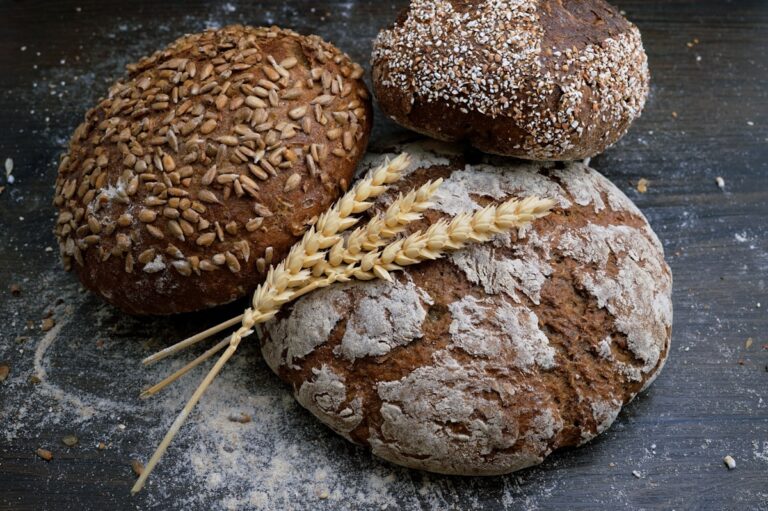
Naan in Xinjiang isn’t the fluffy Indian version. It’s a flatbread slapped onto the inner wall of a tandoor (clay oven) and baked at screaming temperatures until the surface blisters and the edges crisp. The standard version—round, ~30 cm across, sprinkled with sesame—is the daily staple. But there’s also youtazi naan (oil-twisted naan, richer and layered), qoruq naan (crisp-fried shard naan), and shirin naan (sweet naan with raisins or brown sugar).
A good naan stays edible for 5–7 days without refrigeration—a critical feature for a region where people travel long distances across desert. If you’re doing a road trip on the Duku Highway or heading out toward the Taklamakan, buy three naans at a roadside bakery and consider them your emergency ration + breakfast + dinner.
4. Laghman (拉面) — Hand-Pulled Noodles With Attitude
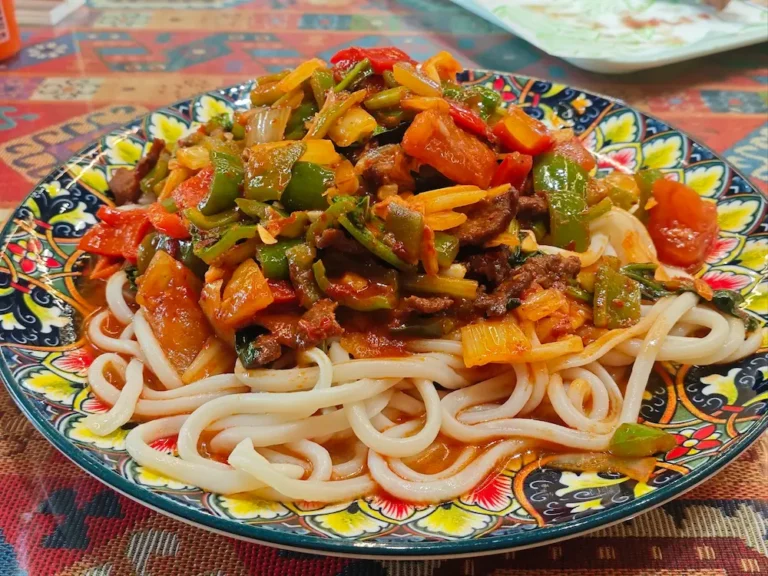
Laghman is Xinjiang’s noodle dish, and the name comes from the Uyghur word for “to stretch.” A skilled cook pulls a lump of wheat dough into thumb-thick ropes, then snaps them into long, irregular noodles that are boiled and served under a mountain of stir-fried toppings: bell peppers, tomatoes, onions, celery, and lamb chunks in a savory sauce that’s part tomato, part lamb stock, part magic.
The best laghman I’ve had was in a basement kitchen in Yining (Ili), where the cook pulled the noodles to order while yelling at the wok assistant in three languages. The noodles should be chewy, not soft. If they’re limp, the cook rushed the pull. Send them back (politely) or just order something else.
5. Dapanji (大盘鸡) — The “Big Plate Chicken” That Feeds Four

This is the one dish that’s crossed over into mainstream Chinese food culture nationwide. Dapanji was invented in the 1980s in Shawan County (north of Ürümqi) by a migrant cook who wanted to feed truck drivers something cheap and filling. The formula: chicken pieces (bone-in, always), potatoes, green bell peppers, dried chili, star anise, and soy sauce, all braised in a spiced tomato-based sauce and served on a plate roughly the size of a tractor wheel.
The proper way to eat it: once the chicken and potatoes are gone, ask for kuai mian (wide hand-pulled noodles) to be added to the remaining sauce. The noodles soak up the gravy and become the best part of the meal. A single dapanji feeds 3–4 people. Don’t try to finish it solo unless you’re training for an eating competition.
Check our Xinjiang travel guide for restaurant recommendations in each city—dapanji quality varies wildly by chef.
6. Samsa (烤包子) — The Uyghur Meat Pie
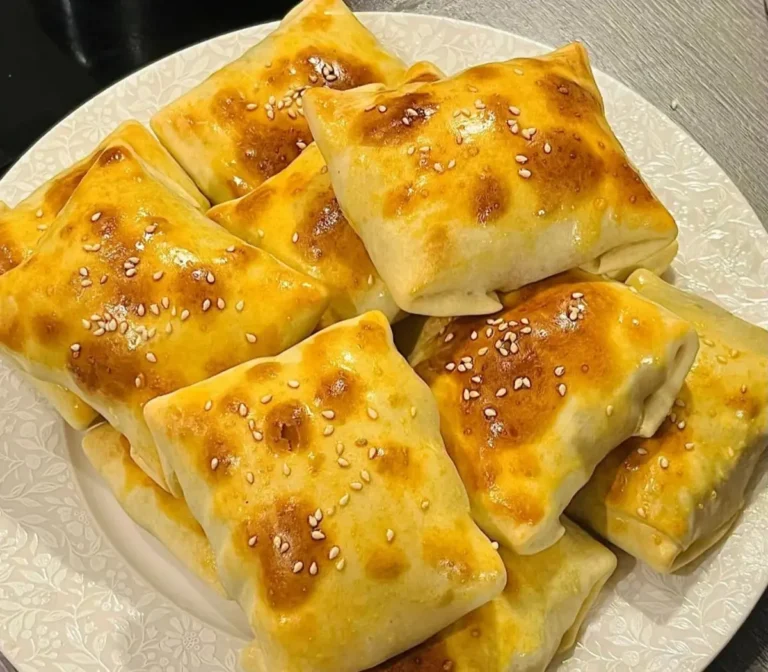
Samsa are Xinjiang’s answer to the Cornish pasty, if the Cornish pasty were filled with spiced lamb and baked in a 500°C clay oven. The dough is thicker than naan—more like a laminated pastry—wrapped around a filling of minced lamb, onion, and cumin, then sealed into a triangular or hexagonal packet and slapped onto the tandoor wall.
Get them hot. The crust should shatter when you bite it. Inside, the filling should be juicy but not soupy. A good samsa vendor in the Kashgar Old City sells out by 11:00 AM. If the pile looks low, buy six and call it breakfast.
7. Göshnan (油塔子) — The Flaky, Buttery Stack
This is a lesser-known dish outside Xinjiang but a staple in Uyghur homes. Göshnan (or youtazi in Mandarin) is a steamed layered bread made with wheat flour, oil (traditionally sheep tail fat, now often vegetable oil), and sometimes a scattering of scallions or spices. The layers are pulled thin, stacked, and steamed until they separate like a savory mille-feuille.
It’s rarely on restaurant menus aimed at tourists. To find it, you need to be in a local market or invited to a home meal. If you see an old woman unloading stacked bamboo steamers at a bazaar, buy one. It’ll cost you ¥3 and change your understanding of what “bread” can be.
8. Yogurt & Milk Tea — The Daily Dairy
Xinjiang’s dairy game is strong. Yogurt here is suan nai (sour milk)—tangy, unsweetened, and often served with a side of honey or white sugar that you stir in yourself. In the pastures of Ili and Bayanbulak, the yogurt is made from sheep’s or yak’s milk and has a funk that’ll wake up your palate.
Milk tea (süt chay) is the daily drink: black brick tea simmered with milk (and sometimes salt instead of sugar—don’t knock it till you’ve tried it) and poured from a height to get a froth. In Kazakh yurts on the steppes, you’ll be handed a bowl within 30 seconds of sitting down. Drink it. Not drinking it is like declining a handshake.
9. Muqam Banquets — When Food Becomes Performance
This isn’t a single dish—it’s a culinary event. In Yarkand (Shache) and parts of Kashgar, the Muqam cultural tradition extends to feasting: multi-course meals where pilaf, noodles, cold cuts, and fruit are served in rhythm with musicians playing dutar (two-string lute) and rawap (Uyghur lute). The food is excellent, but the context is what makes it unforgettable. If your timing aligns with a local festival or wedding, ask around. These banquets are sometimes open to guests if you’re introduced by a local.
10. Seasonal Fruits — The Dessert That Grows on Trees
Xinjiang produces some of the best fruit in China, full stop. The combination of intense sunlight, dramatic day-night temperature swings, and low rainfall produces fruit with concentrated sugars and intense flavor. Key players:
- Grapes (Turpan): seedless white grapes that taste like honey. August is peak season.
- Melons (Hami): Hami melon is to Xinjiang what champagne is to Champagne. Heavy, fragrant, and capable of ruining all other melons for you forever.
- Apricots (Ili/Kuqa): the wild apricot forests in Datong Gorge (Daxigou) produce fruit that’s tangy-sweet and only available for about three weeks in April.
- Figs and pomegranates (Yarkand): available in autumn, often sold roadside by weight.
Where to Eat: Practical Tips for Food Travelers
1. Follow the smoke. The best grills don’t have websites. They have a chimney and a crowd.
2. Learn three words: Naan (bread), chuanr (skewers), polo (pilaf). Say them with a smile and you’ll eat well.
3. Bring cash. Many of the best spots don’t take WeChat Pay or Alipay, let alone cards.
4. Spice tolerance test: Xinjiang chili heat is real but not extreme. If you’re sensitive, say “bú yào là” (不要辣, no spice). If you want the full experience, point to the chili jar and nod.
5. Etiquette: In Muslim communities, don’t bring pork products to a shared table. It’s not just impolite—it’s a serious cultural violation. Also, eat with your right hand when eating polo or naan by hand.
The Bottom Line
Xinjiang cuisine is one of the last great undiscovered food cultures for most international travelers. It’s not polished for Instagram (though it photographs beautifully). It’s not described on Michelin guides. It’s cooked by people whose great-grandparents cooked the same recipes in the same courtyards. If you’re planning a Xinjiang trip, don’t treat the food as fuel. Treat it as the reason you came.
Word count: ~1,850 words