Xinjiang Lamb Skewers (Kawap): The Complete Guide to the Silk Road’s Most Addictive Street Food
If there is one smell that defines a Xinjiang evening, it is lamb fat hitting hot charcoal and releasing a cloud of cumin. Kawap — lamb skewers — are the region’s most democratic food: eaten by students, truck drivers, and families alike, priced by the stick, and cooked in front of you on every night-market grill from Urumqi to Kashgar. No visit is complete without at least a dozen.
The dish is simple, which is exactly why it is hard to get right. Good kawap is about three things: the meat, the fat, and the spice — in that order.

The Meat and the Fat
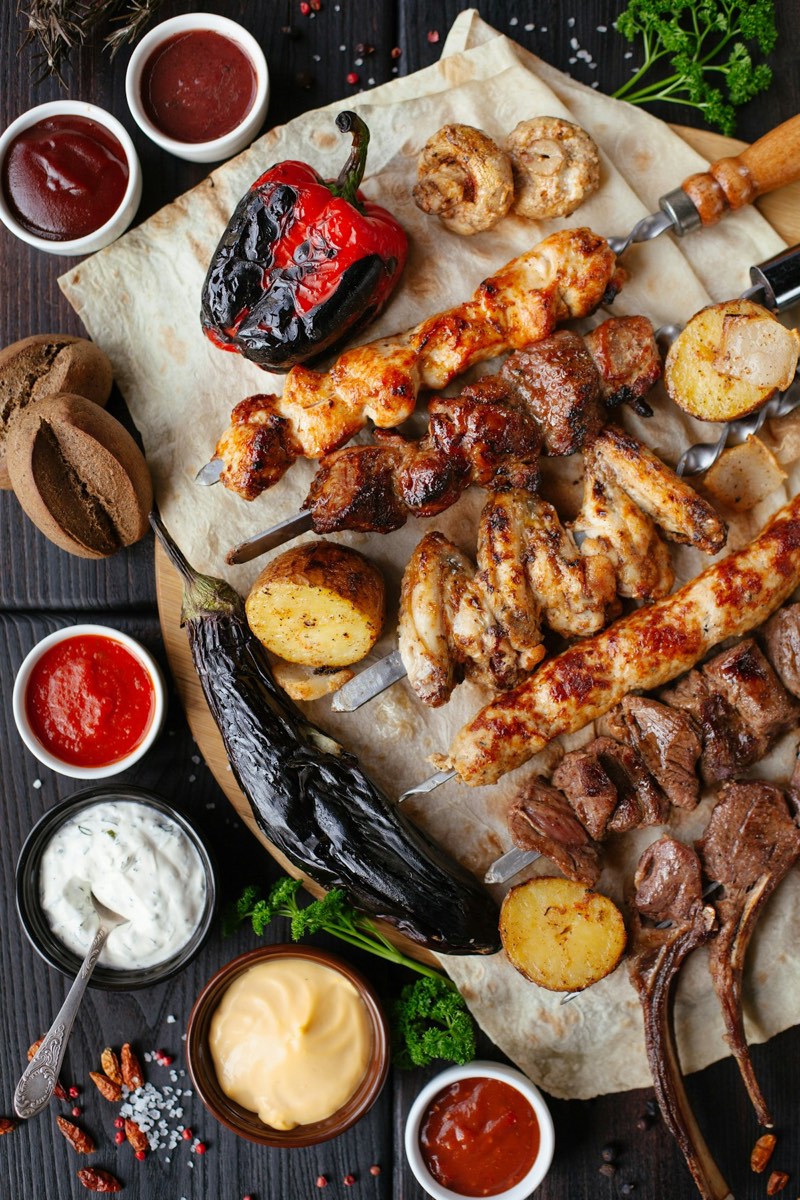
Xinjiang lamb is pastured on grassland and scrub, which gives it a cleaner, less gamey profile than lowland mutton. The classic skewerer alternates lean cubes with small cubes of tail fat (yan you). That fat is not optional — it renders over the coals, bastes the meat, and is what makes the stick worth eating. Skewers that skip the fat are drier and, to a local palate, incomplete.
You will also see variations: ‘tanr’ (a flat iron skewer) for bigger chunks, lamb ribs, and the glorious whole lamb leg or sheep roasted on a vertical spit (called kawap kordak or the big-format ‘tunkawap’). But the everyday pleasure is the small stick, three or four bites, eaten standing up.
The Spice
Two seasonings define the flavor. Cumin (ziran) is applied in two passes — once before grilling and again as a heavy dusting at the end, often from a perforated can that the cook shakes over the coals like a percussionist. Chili (laza jiangmian, coarse dried chili powder) adds heat and a dark red tint. Salt is the only other constant. There is no sauce, no marinade worth mentioning; the meat and the fire do the work.
In the south, around Kashgar and Hotan, the cumin is heavier and the chili sharper. In the north the profile is a touch milder. Either way, ask for ‘la’ if you want more chili, or ‘bu la’ (not spicy) if you want it dialed back.
Where to Eat
Night markets. The International Grand Bazaar in Urumqi, the lanes of Kashgar Old Town, and the bazaars of Yining all have rows of competing grills. Follow the biggest local crowd and the hottest coals.
Street corners. In any town, a single grill outside a halal restaurant after dark is often better than a food-court stall — the turnover is higher and the meat fresher.
Make-your-own. Many travelers buy lamb at a market, rent a grill, and cook at a campsite or guesthouse. It is a rite of passage on a northern road trip.
How to Order and Eat
Kawap are sold by the stick; prices rise with the lamb market but remain among the cheapest filling foods in the region. Order in multiples of five or ten. Eat them hot — they cool fast and the fat sets. Pair with naan (to scrape the last spice off) and a cold soft drink or milk tea.
A note on etiquette: these are finger foods. Tear a corner of naan, use it to pull the meat off the skewer, and discard the stick in the can provided. Don’t be shy about ordering more — the cook takes it as a compliment.
Why It Matters
Kawap is more than fuel. It is the social hour of every Xinjiang town, the thing strangers share at a plastic table while the coals glow, and the clearest expression of the region’s blend of Central Asian technique and Chinese street-food energy. For the food half of any Xinjiang Travel Guide, this is where you start — and where you will keep coming back.