Xinjiang Tea Culture: From Salty Suutei to Sweet Chai
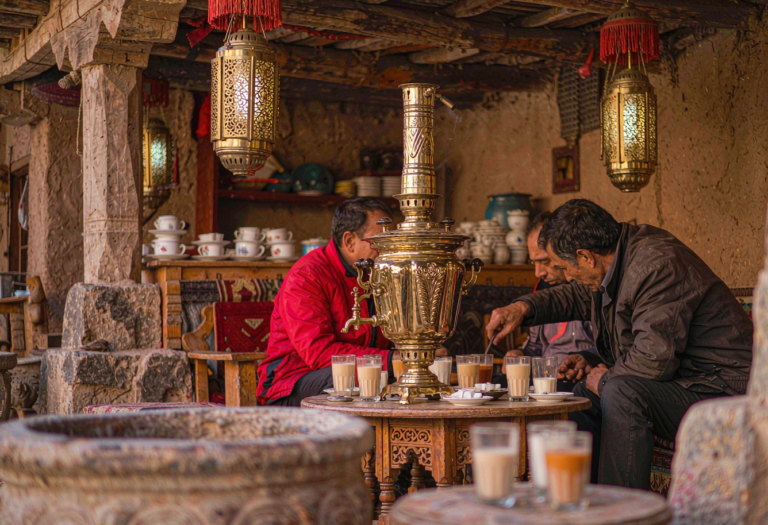
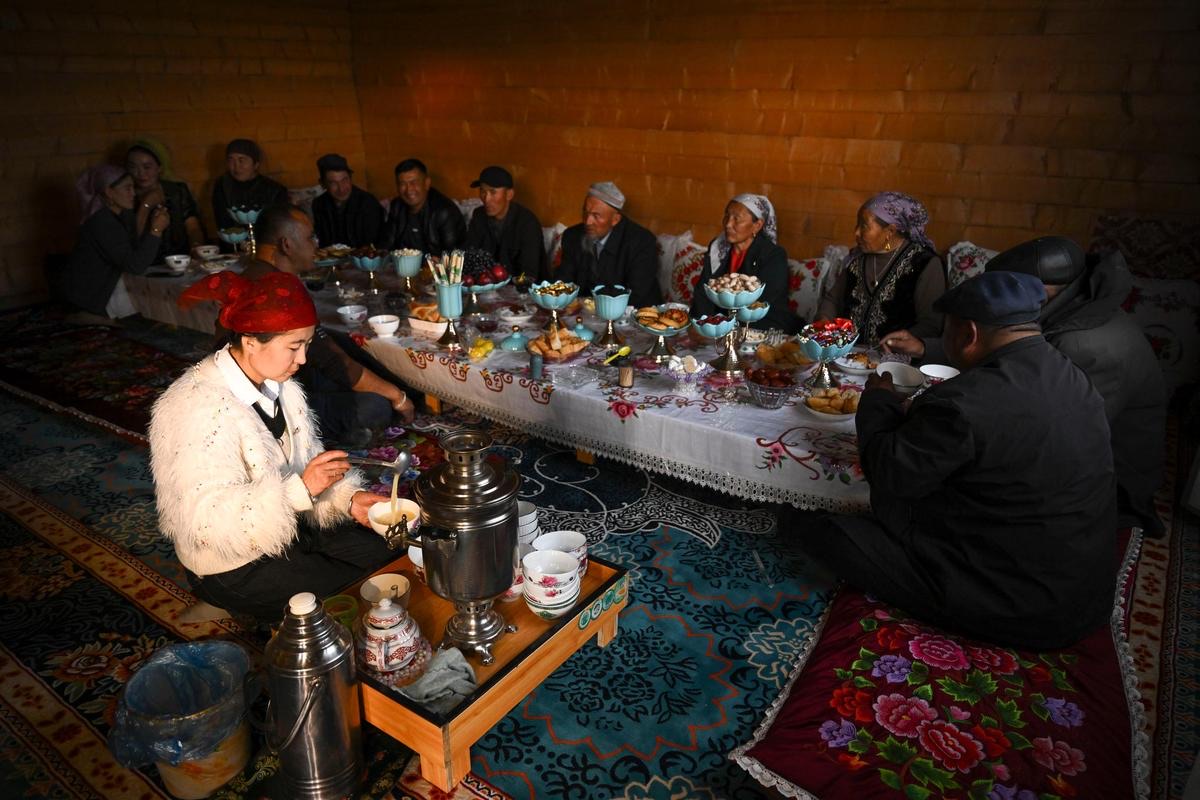
Tea is the constant drink of Xinjiang, but the region drinks two different teas that map onto its geography. In the north’s grasslands, it’s salty milk tea — brick tea boiled with milk and a pinch of salt, the herders’ fuel. In the south’s oasis towns, it’s sweet black chai, lighter and spiced. Cross the Tian Shan and the tea changes; that split is one of the small things that tells you where you are.
Both are more ritual than refreshment.
Northern Salty Milk Tea
The Kazakh, Kyrgyz, and Mongolian version starts with brick tea simmered hard, then milk and salt — no sugar, ever. Served in bowls, often with butter floated on top, it’s warming and mildly savory. In a yurt it comes continuously; refusing the refill is the only mild faux pas. At altitude or after cold, it’s genuinely restorative. The salt replaces what sweat and thin air take out.
Southern Sweet Chai
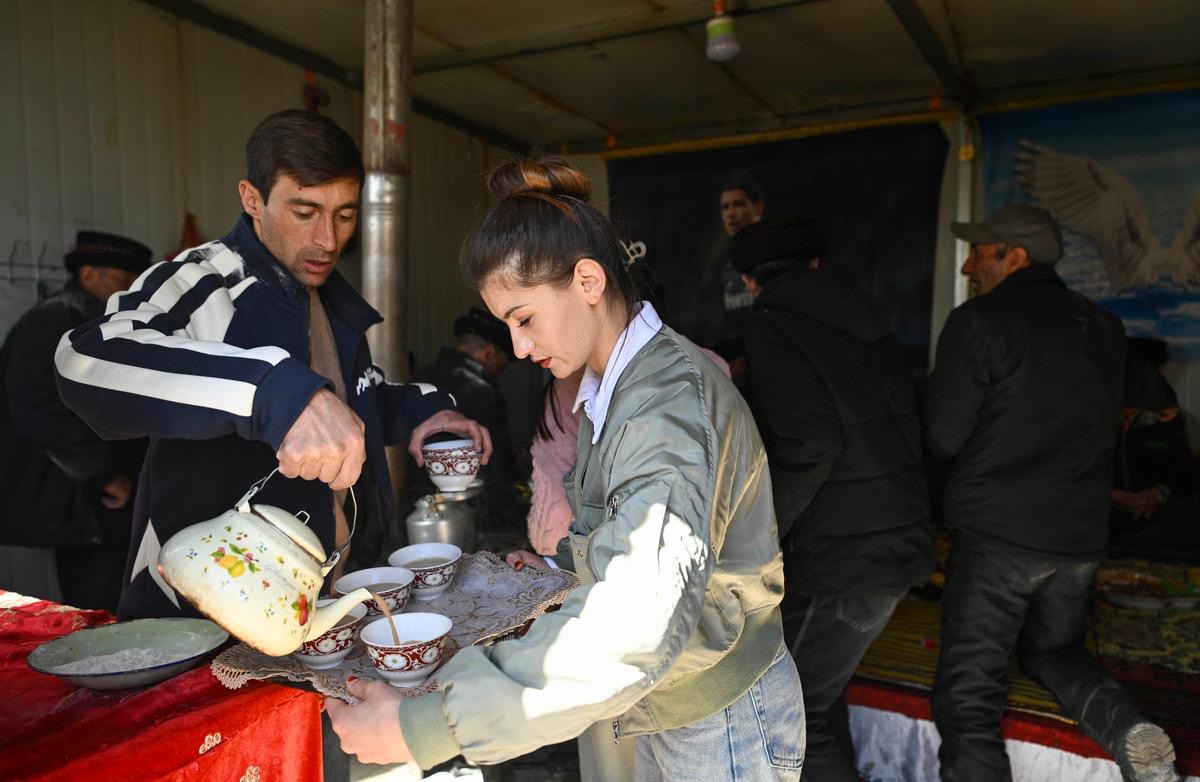
The Uyghur version is black tea with milk and sugar, closer to an Indian chai but usually uns spiced-light. Sold from street carts in Kashgar and Hotan, it’s the everyday counter to spicy grilled food — a small paper cup, a few cents, a moment to stand and sip. Some households add a cardamom or cinnamon hint; most keep it plain to let the tea speak.
The one thing I order every time
Ask for it plain the first time. The sweet version is the one for the market, not for a morning. In Xinjiang Tea Culture From that is the tea, and the reason is not the flavour. It is the rhythm of it: someone puts a glass in your hand, another arrives, you sit for ten minutes, and suddenly the rest of the day is sorted.
How to order, and what a portion really costs
Card and phone payment both work everywhere in Xinjiang Tea Culture From. The number on the board is for one, and one here is enough for a European adult if you share two. Order one less than you think, because the rice arrives in a bowl the size of a small basin and the second helping does not need ordering. Tips are not expected in the small places and are quietly welcome where there is table service, but do not build the visit around it. The short version, with the numbers, is in our [[xinjiang-tea-house-culture-2|Xinjiang Tea Houses: Where the Silk Road…]].
Three words that change the order
You do not need Uyghur. In Xinjiang Tea Culture From that single gesture has never once got me the wrong dish, and it saves you ordering a second plate you did not want. What you need is the phrase for not spicy, the hand signal for a smaller portion, and the knowledge that one word covers what locals drink in winter, which is salt and butter, and what visitors get, which is sweet. Point at what the next table has. I wrote the driving side up in our [[xinjiang-tea-house-culture|Xinjiang’s Tea Houses: Where the Day…]] as well.
What travels home and what does not
What does not work is anything fried or saucy, which turns in transit, and anything you cannot repeat at home. Nuts, dried grapes, an uncut flatbread and vacuum-packed lamb all survive a long-haul flight. Buy the dried fruit in the market rather than at the airport and ask for it packed at the stall. It is cheaper, the staff wrap it properly, and it spends a week in your bag as the best thing about the trip. For the part people underestimate, see our [[xinjiang-halva-sweet|Halva in Xinjiang: The Sesame Sweet That…]].
The Ritual
Tea is how Xinjiang does hospitality. A guest is given tea before business, before food, before anything. The night-market tea stall is where strangers become companions over a shared pot. Sanzi is dunked in it; nuts are eaten beside it. It’s the social lubricant of the whole region, north and south varieties alike.
Where to Drink the Real Thing
In the north, a yurt stay or a ‘哈萨克奶茶’ shop in Yining or Zhaosu. In the south, any cart near the bazaar in Kashgar — watch where the locals queue. Avoid the tourist ‘tea ceremonies’ priced for photos; the real cup is cheap and everywhere. For a Xinjiang Travel Guide, learning to drink the local tea is the fastest way to feel local.