Xinjiang Milk Tea: The Salty, Creamy Drink You Didn’t Know You Needed
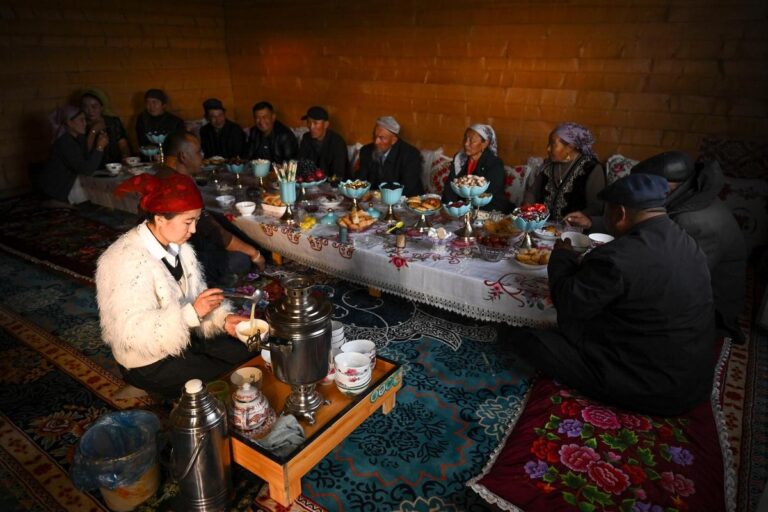
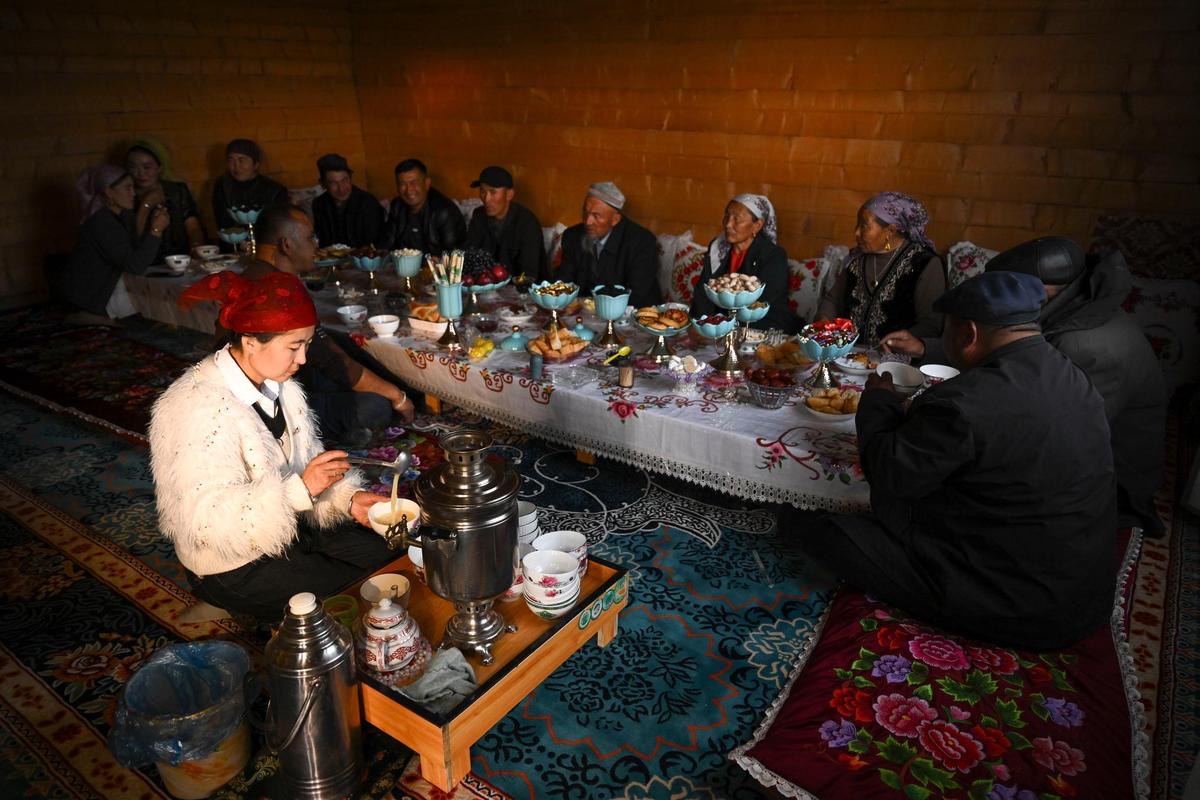
If you have ever sat in a yurt on the vast grasslands of Xinjiang, or walked into a Uyghur home in Kashgar, one thing is certain: a bowl of hot, salty milk tea (奶茶, nai cha) will be placed in front of you within minutes of arrival. It is not a beverage you order off a menu. It is the default state of hospitality across the entire region.
Last updated: July 15, 2026 · Written by Karl Huang, a Xinjiang travel specialist who has spent time across the region. Practical details are cross-checked against official tourism, transport, and border-regulation sources.
Milk tea in Xinjiang is nothing like the sweet, tapioca-pearl-loaded milk tea of modern bubble tea shops. There is no sugar, no flavored syrup, no chewy topping. Instead, it is a simple, soulful mixture of **black brick tea, fresh milk (or sometimes sheep’s milk), and a pinch of salt**, simmered together until fragrant and slightly creamy. The result is warming, savory, and deeply comforting — a drink that fuels nomadic life on the steppe and anchors social gatherings across Xinjiang’s many ethnic communities.
This guide covers everything about Xinjiang milk tea: its deep Central Asian roots, how it differs from sweet milk tea, the traditional preparation method, regional variations, and where travelers can experience the most authentic bowls across the region.
What Is Xinjiang Milk Tea (奶茶)?
Milk tea in Xinjiang goes by several names depending on who is making it. In Uyghur households it is called nai cha (奶茶) or sometimes süt chay (in the Uyghur language). Among Kazakh and Kyrgyz communities, similar versions exist with their own names and slight variations in preparation. What unites them all is the basic formula: tea + milk + salt.
The tea used is almost always brick tea (紧压茶) — aged, fermented tea leaves pressed into hard bricks, which were historically easy to transport along the Silk Road on camelback. The milk is typically from sheep, cow, horse, or camel depending on the region and season. The salt is a small pinch — just enough to round out the flavor, never enough to make the drink taste salty in the way a soup would.
The texture is where Xinjiang milk tea stands apart. It is not thin like a standard cup of English breakfast tea with a splash of milk. It has a gentle creaminess, sometimes with a faint film of milk fat on top. In more rustic preparations, a small piece of sheet butter (酥油) is stirred in, giving the drink a rich, almost velvety mouthfeel that lingers pleasantly.
The History: A Drink Born on the Silk Road
The origins of milk tea in Xinjiang stretch back more than 2,000 years, to the Han Dynasty (206 BCE – 220 CE). As tea traveled westward from inland China along the Silk Road, it encountered the nomadic cultures of Central Asia, whose diets were built around livestock, dairy, and meat. These nomads needed a way to supplement their vitamin intake in the harsh steppe winters — and tea, rich in compounds that help digestion and provide mild stimulation, was the answer.
Legend has it that Princess Jieyou (解忧公主), sent by the Han court to marry the king of the Wusun (乌孙) people in what is now western Xinjiang, brought the habit of tea-drinking with her. The Wusun, a nomadic people, combined the tea with the milk and butter they already consumed daily. The result was the earliest version of Xinjiang milk tea — a practical, nourishing drink suited to life on the move.
Over centuries, the practice spread. As the Silk Road flourished, tea bricks from inland China became a major trade good. Nomadic families across the Altai, the Tian Shan, and the Tarim Basin all adopted the habit. Today, milk tea is consumed daily by Uyghur, Kazakh, Kyrgyz, Mongol, and Han Chinese communities across Xinjiang — each with their own small variations, but all rooted in that same 2,000-year-old fusion of tea and dairy.
How Xinjiang Milk Tea Is Made: The Traditional Method
The traditional preparation of milk tea is a two-step process: brewing the tea, then adding the milk. Every family has its own preferred ratio, but the general method is consistent across the region.
Step 1: Brewing the Brick Tea
A piece of brick tea is broken off and placed in a pot of water. The water is brought to a boil and then simmered for 5 to 10 minutes. The longer the tea steeps, the stronger (and more astringent) it becomes. In many households, the same tea leaves are re-boiled multiple times throughout the day, with fresh leaves added to the pot as the strength fades.
Step 2: Adding the Milk
Fresh milk is poured into the hot tea. The ratio varies: some prefer a tea-forward cup (more water, less milk), while others like a milk-forward bowl (almost like a thin warm porridge). In pastoral areas where livestock is abundant, the milk is often unpasteurized and incredibly fresh — you can taste the difference.
Step 3: The Salt
A small pinch of salt is added. This is the defining characteristic of Xinjiang milk tea. The salt does not make the drink taste “salty” in an obvious way — instead, it enhances the natural sweetness of the milk and balances the bitterness of the tea. It is a subtle, sophisticated flavor balance that a first-time drinker may not expect but will quickly appreciate.
Step 4: Optional Butter or Cream
In Kazakh and Kyrgyz households, a small piece of butter or sheep tail fat is sometimes stirred into the hot tea, adding richness and extra calories — important for people spending long days outdoors in cold climates. In Uyghur homes, butter is less common, but a splash of heavy cream is sometimes used.
Step 5: Straining and Serving
The tea is strained (to remove the brick tea leaves, which can be quite coarse) and poured into bowls. It is served hot, often accompanied by naan bread, which is torn into pieces and dipped into the tea — a classic Xinjiang breakfast combination.
Xinjiang Milk Tea vs. Sweet Milk Tea: What’s the Difference?
If your only experience of “milk tea” is the sweet, often cold versions popular in Taiwan, Hong Kong, or bubble tea shops, Xinjiang milk tea will be a revelation. Here is how they compare:
| Feature | Xinjiang Milk Tea (咸) | Sweet/Bubble Milk Tea (甜) |
|---|---|---|
| Base | Black brick tea | Black tea (loose leaf or tea bag) |
| Milk | Fresh milk (cow, sheep, sometimes horse) | Fresh milk, evaporated milk, or creamer powder |
| Sweetener | None — a pinch of salt instead | Sugar, honey, or syrup |
| Temperature | Hot (always) | Hot or iced |
| Texture | Slightly creamy, sometimes with butter | Smooth, sometimes with tapioca pearls |
| Context | Daily staple, breakfast, hospitality | Treat, snack, café order |
The first sip of Xinjiang milk tea can be surprising if you are expecting sweetness. But give it a moment. The salt enhances the milk’s natural flavor in a way that sugar cannot. It is a drink built for nourishment and warmth, not for indulgence — and that honesty is exactly why it has sustained generations of nomads and city-dwellers alike.
Regional Variations Across Xinjiang
While the core formula is the same everywhere, Xinjiang’s ethnic diversity means there are notable variations from region to region:
Uyghur Milk Tea (Southern Xinjiang)
In Kashgar, Hotan, and other southern cities, Uyghur milk tea tends to be tea-forward — a higher proportion of brick tea to milk, resulting in a thinner, more astringent drink. The salt is noticeable but not overpowering. It is almost always served in small handleless bowls and accompanied by naan. In some areas, fennel seeds or cardamom are added for aroma.
Kazakh Milk Tea (Northern Xinjiang / Altai)
The Kazakh people, concentrated in the Altai Mountains and northern Xinjiang, make a much richer, milkier version. The milk-to-tea ratio is high, and butter or sheep tail fat is commonly stirred in. In winter, some Kazakh families add a pinch of flour to the tea to make it more substantial — almost like a thin gruel. It is intensely warming and calorically dense, perfect for sub-zero steppe winters.
Kyrgyz Milk Tea (Western Xinjiang)
Similar to the Kazakh version but often made with sheep’s milk or goat’s milk, which has a slightly tangier flavor than cow’s milk. In Kyrgyz households, the tea is sometimes mildly fermented — left to sit for a few hours after preparation, developing a subtle sour note.
Mongol Milk Tea (Bortala / Hoboksar)
In areas with Mongol communities, milk tea is often made with sieved brick tea and may include roasted millet or barley added to the pot for texture and nutty flavor. It is the most substantial version of all — almost a meal in a bowl.
When and How to Drink Milk Tea in Xinjiang
Breakfast: The Naan and Tea Ritual
The most common way to drink milk tea is at breakfast. A typical Xinjiang breakfast consists of: a bowl of hot milk tea, a piece of naan (sometimes two), and perhaps some sliced onions, grapes, or a hard-boiled egg on the side. It is a simple, deeply satisfying start to the day. The tea warms you up, the naan provides slow-burning carbohydrates, and the combination is surprisingly filling.
Afternoon Hospitality
Walking into any Xinjiang home — Uyghur, Kazakh, Han, or otherwise — you will be offered milk tea within minutes. It is the foundational gesture of hospitality. Refusing it can be seen as rude; you do not have to finish the whole bowl, but accepting and drinking at least some is important. The host will typically keep refilling your bowl as soon as it is half-empty.
With Meals
Milk tea is not typically drunk during a meal (water or plain tea is more common then). It is a between-meals drink — something to sip while talking, resting, or preparing food. In yurts on the grassland, it is constantly on the fire, and guests are welcome to refill their own bowls throughout the visit.
Where to Find the Best Milk Tea in Xinjiang
Urumqi: Tea Houses and Local Restaurants
In the capital, milk tea is widely available. The Erdaoqiao (二道桥) area has several Uyghur tea houses where you can sit on a carpeted platform, order a bowl of nai cha, and watch the world go by. Some restaurants serve it complementary with your meal; others charge a small fee (2 to 5 RMB per bowl).
Kashgar: The Old City Experience
Kashgar’s Old City (喀什老城) is one of the best places to experience truly authentic milk tea. Small tea houses tucked into the narrow alleys serve it the traditional way — in handleless bowls, sometimes with a side of nang (naan) or dried fruit. The pace of life is slow here; a bowl of tea can easily stretch into an hour-long rest.
Yili (Ghulja): Kazakh-Style Richness
The Yili region, home to many Kazakh families, offers the richest, creamiest milk tea in Xinjiang. Look for small Kazakh-run eateries or ask at a local yurt stay (much like a homestay on the grassland). The experience of drinking milk tea inside a yurt, with the smell of woodsmoke and the sound of wind on the steppe outside, is one of the most memorable in Xinjiang.
Along the Karakoram Highway
If you are traveling the epic Karakoram Highway (喀喇昆仑公路) from Kashgar toward Pakistan, every small teahouse along the way serves milk tea. At high altitudes, that hot, salty, milky drink is not just delicious — it is a lifesaver. The salt replaces electrolytes lost at altitude, and the heat warms you through the thin mountain air.
Practical Tips for Travelers
Is it safe to drink? Yes — the tea is boiled, which kills bacteria. In remote areas, the milk may be unpasteurized, but the boiling process makes the final drink safe for most travelers. If you have a very sensitive stomach, stick to milk tea in larger towns and cities.
Can you ask for it without salt? You can, but it willpuzzle your host. The salt is integral to the drink’s identity. If you genuinely cannot handle salt in your tea, explain politely — most places can make a sweet version on request, though it will not be the authentic experience.
How much does it cost? In local tea houses, a bowl costs 2 to 8 RMB ($0.30 to $1.10). In yurt homestays, it is often included in the accommodation price. In Urumqi or Kashgar restaurants, it may be free with a meal or cost 5 to 10 RMB.
Can you buy it to take home? Yes — brick tea and instant Xinjiang milk tea powder are sold in markets across the region. Brands like “Xinjiang Naicha” powder are available in vacuum-sealed packets. Just add hot water and milk. It is not quite the same as the fresh version, but it makes a good souvenir.
Why Xinjiang Milk Tea Deserves a Place on Your Travel List
Xinjiang milk tea will never win an Instagram-aesthetics contest. It is beige. It comes in a handleless bowl. There are no colorful layers, no artistic foam patterns, no chewy tapioca pearls to photograph. But what it lacks in visual drama, it more than makes up for in cultural depth and emotional warmth.
This is a drink that has sustained nomads through brutal winters, welcomed traders arriving off the Silk Road, and anchored family gatherings for more than two millennia. When you sit in a Kashgar tea house, or accept a bowl inside a yurt on the Altai steppe, you are not just drinking tea. You are participating in a tradition that spans civilizational boundaries and thousands of years of human movement across Central Asia.
So when you travel to Xinjiang, do not justrush past the tea houses on your way to the next scenic spot. Stop. Sit down. Order a bowl of nai cha. Tear off a piece of naan and dip it in. Let the warm, salty, creamy simplicity of it sink in. It might just be the most authentic cultural experience you have in the entire region — and it costs less than a dollar.
Is Xinjiang safe to visit?
Yes, Xinjiang is considered very safe for tourists with strong security presence throughout the region.
Do I need a visa?
Foreigners need a valid Chinese visa. No separate Xinjiang permit needed for most tourist areas.
What currency should I bring?
Chinese Yuan (RMB). Credit cards accepted in hotels; carry cash for markets and rural areas.
Can I find English-speaking guides?
Available in major tourist areas through hotels or travel agencies. Book in advance for best results.