
Xinjiang Winter Foods: The Hot, Heavy Comforts of the Cold Season
Whole Lamb and the Roast
The whole roasted lamb (烤全羊) is a feast dish year-round but peaks in winter, when a gathering around a hot sheep is the social event. More everyday, the lamb hot pot (羊肉火锅) — thin slices boiled at the table in a herby broth — is the cold-month default, shared slow over hours. Both deliver the fat and heat the body wants when it’s freezing outside.

Broths and Noodles
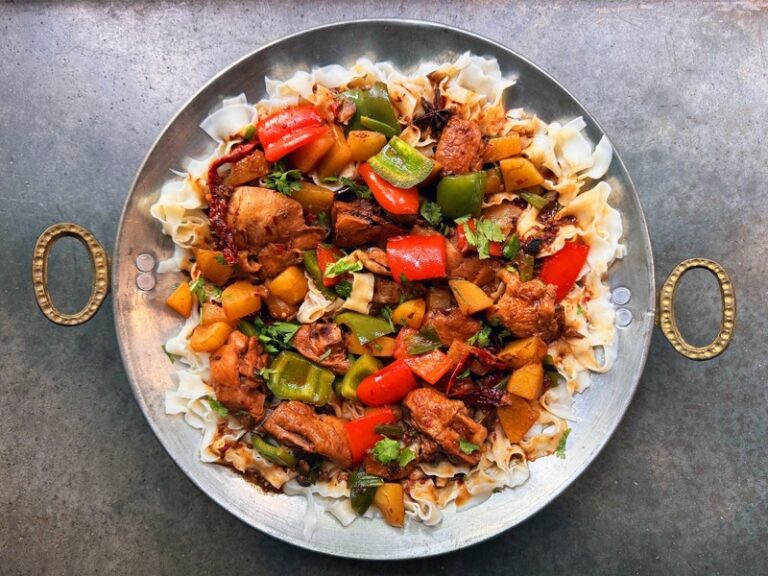
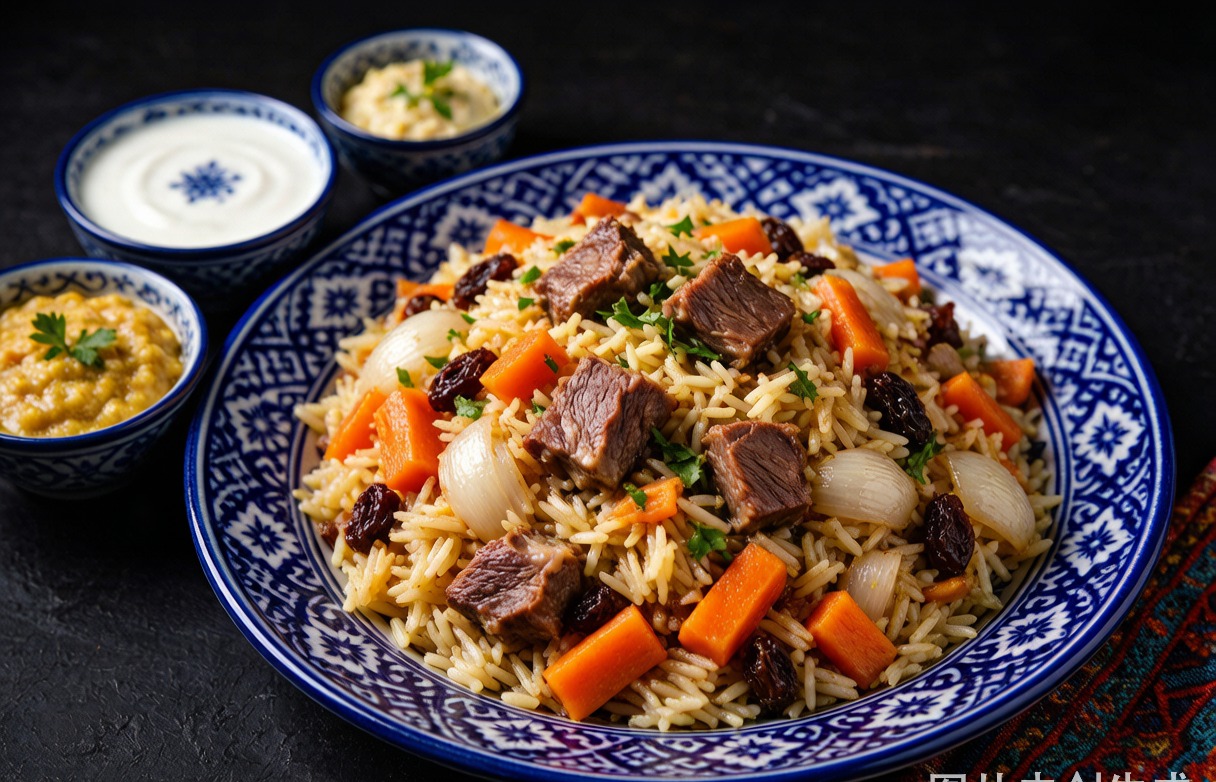
Winter is when the noodle soups (ququ, suytash) and the hand-pulled laghman in hot oil earn their place — warmth in a bowl after a cold walk. Polo, too, hits harder in the cold; the rice and lamb fat is fuel. A market stall selling hot noodle soup is the best five-yuan investment on a January evening.
Tea and the Warmth Ritual
Salty milk tea in the north, sweet chai in the south — both are winter warmers, drunk continuously through a cold day. The night markets stay open (wrapped against the wind) with grills that feel like radiators. A skewer and a tea at a winter market is the local way to beat the cold.
Where to Find the Warmth
City Uyghur restaurants do the lamb hot pot and the roasts; the night markets do the grills and tea. In a yurt on the winter grassland, the stove and the milk tea are the whole heating system. Embrace the heavy food in season — it’s not indulgence in January, it’s engineering. The cold makes the lamb make sense, and the region’s winter table is the coziest thing it offers.
The Cold-Weather Classics
The whole roasted lamb (烤全羊) is a feast dish year-round but peaks in winter, when a gathering around a hot sheep is the social event. More everyday, the lamb hot pot (羊肉火锅) – thin slices boiled at the table in a herby broth – is the cold-month default, shared slowly over hours. Both deliver the fat and heat the body wants when it’s freezing outside, and a market stall’s hot noodle soup is the best few-yuan investment on a January evening.
The one thing I order every time
The sweet version is the one for the market, not for a morning. In Xinjiang Winter Foods The that is the tea, and the reason is not the flavour. Ask for it plain the first time. It is the rhythm of it: someone puts a glass in your hand, another arrives, you sit for ten minutes, and suddenly the rest of the day is sorted. For the part people underestimate, see our [[winter-driving-in-xinjiang-chains-cold-and-the-quiet-season|Winter Driving in Xinjiang: Chains, Cold,…]].
What travels home and what does not
Nuts, dried grapes, an uncut flatbread and vacuum-packed lamb all survive a long-haul flight. Buy the dried fruit in the market rather than at the airport and ask for it packed at the stall. It is cheaper, the staff wrap it properly, and it spends a week in your bag as the best thing about the trip. What does not work is anything fried or saucy, which turns in transit, and anything you cannot repeat at home. For the part people underestimate, see our [[winter-driving-in-xinjiang-chains-cold-and-the-quiet-season|Winter Driving in Xinjiang: Chains, Cold,…]].
The stall, the teahouse and the restaurant
The street stall is fastest, cheapest and eaten standing up. The restaurant is where you take someone you want to impress. The teahouse is where you sit an hour and get refilled. The food is the same and the price gap is not small.
I eat at the first two most days and take people to the third when they ask for somewhere proper. What you lose at the stall is a seat and some shade. Everything else is right there. Three kinds of place sell the same dish in Xinjiang Winter Foods The, and they are not competing so much as serving different occasions.
If the timing is the question, our [[xinjiang-in-winter-whats-open-whats-closed-and-why-its-worth-the-cold|Xinjiang in Winter: What’s Open, What’s…]] goes through it properly.
Broths, Noodles and Rice
Winter is when noodle soups (ququ, suytash) and hand-pulled laghman in hot oil earn their place – warmth in a bowl after a cold walk. Polo hits harder in the cold too; the rice and lamb fat is real fuel. A plate of polo or a bowl of hot laghman is the reliable comfort when the basins drop below -20°C.