Polo (手抓饭): Xinjiang’s Iconic Pilaf Rice Dish — A Complete Guide
Polo is the one dish in Xinjiang that people either eat every day or have never been offered, and the difference is almost always where they met it. It is rice, carrot, onion, lamb fat or mutton, and enough water to do something none of the components should manage on their own. Done well it comes out loose, slightly sweet, and dark orange in a way that has nothing to do with food colouring. Done badly it is a plate of rice with gravy on it.
How the Cooking Actually Works
The technique is the whole dish. Rice goes in parboiled, drained, then layered over a base of fried onion and carrot with the meat on top, and the pot is sealed and left to steam until the last of the liquid is absorbed from the bottom. The bottom layer turns into a golden crust, lozange in some kitchens, and that crust is not a flaw to be avoided; it is the reason people scrape the pan.
Most of the flavour comes from the fat the meat renders into the rice, which is why a lean cut gives you a worse plate than a fatty one. Kitchens that use the shoulder or the tail fat produce the version locals queue for. If you see a cook skimming rendered fat off the top before serving, you are looking at the short route.
Regional Variations Worth Seeking Out
In Kashgar the carrot is cut thick and the rice stays moist. In Hotan the portion leans sweeter and the meat is often older, which gives a deeper flavour. Around Turpan you get a version closer to the Central Asian polov, with the rice washed more thoroughly and a lighter hand on the carrot. Urumqi has the widest spread, including a few places that add currants and a spoonful of sugar for a sweet-leaning version.
The regional variations guide goes through those differences in more detail, and the hand-grabbed rice piece covers the ritual side of eating it with your right hand, which is still what happens at most tables in the south.
Ordering It Like a Local
Ask for the size, not the name. A small bowl is a real portion for one. A half portion for a table of two is the usual mistake visitors make, because the rice comes in a wide shallow bowl that looks smaller than it is. If you want the crust, ask for the bottom, and be ready for the waiter to bring you the whole pan and let you scrape what you want.
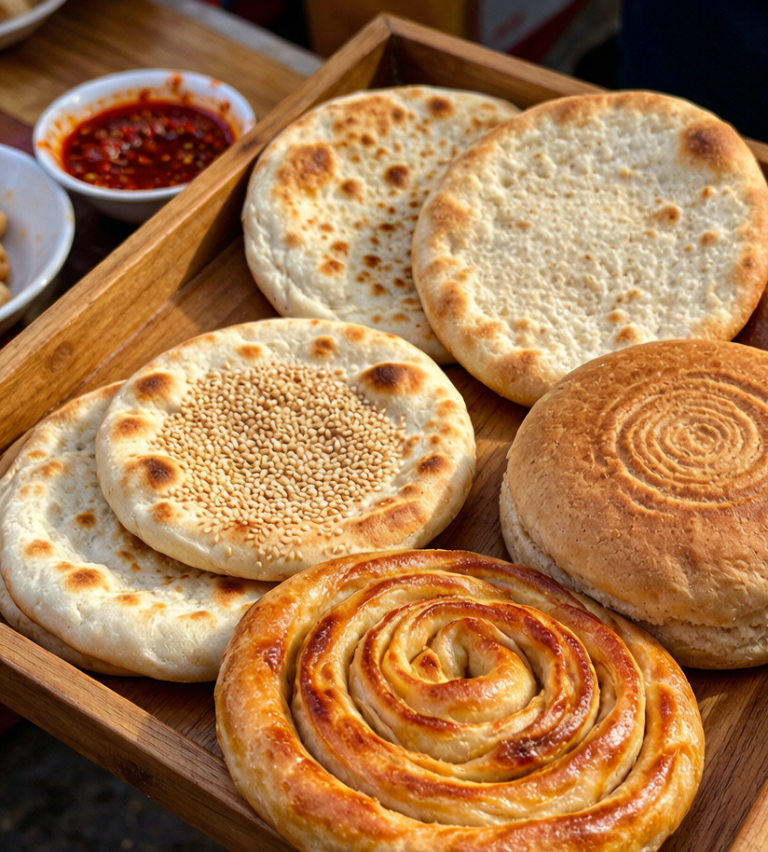
Polo is also the dish that pairs with everything else on a table. A plate of skewers on the side, a bowl of laghman instead if you want noodles that day, and flat bread to mop the pan. For the main treatment of the dish itself, our complete polo guide covers what to ask for and what to expect.
Where the Best Plates Come From
The good ones are rarely the restaurants with a menu in English. They are the places with a queue at one, a pot on all day, and a sign in script nobody reads. In Kashgar the lanes behind the old city hold several. In Hotan the same exists around the fruit market. In Urumqi the northern categories of restaurant do it better than the tourist-facing ones.
The Sunday bazaar has a handful of stalls doing it for a working crowd, which is a reliable signal: if the people queueing are eating, it is right.
What to Know Before You Order
Polo is filling in a way that surprises people, and it is easy to order a second course you cannot finish. It is served with a spoon and, at most southern tables, by hand. It is not usually eaten with naan soaked in it, although that is a good idea if the pan is clean; the bread is better on the side. And it is worth eating at midday rather than late, because the leftovers go greasy fast in the heat.
If you are travelling with anyone who avoids lamb, ask whether the kitchen can do the rice with beef, which some can and some simply will not do. The halal food guide explains where halal rules change what a kitchen can offer, and the food safety tips page covers the practical side of eating rice that has been sitting warm for hours.