
Xinjiang Fruits & Melons: The Sweet Edge of the Desert
There’s a saying in China: ‘Xinjiang’s fruit is the best under heaven.’ It’s not hype. The region’s melons, grapes, and apricots are sweeter than almost anything grown elsewhere in the country, and the reason is the climate — extreme heat, intense sun, and bone-dry air that concentrates sugar instead of rotting it. For travelers, the fruit is a daily pleasure and a cheap one; for the region, it’s a point of pride.
Here’s the lineup worth seeking out.
Hami Melon (哈密瓜)
The famous Xinjiang muskmelon — netted skin, orange flesh, outrageously sweet. Named for Hami, but grown across the region. Eaten chilled, it’s the summer dessert. Buy a quarter from a street cart and eat it with a spoon on a hot Turpan afternoon; nothing refreshes like it.

Turpan Grapes (吐鲁番葡萄)
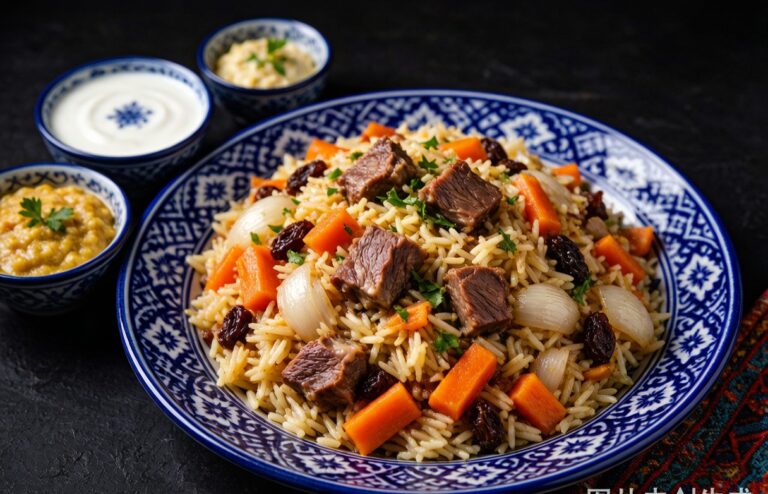
Turpan’s vineyards produce the seedless table grapes and the dried raisins (绿葡萄干) that show up in every polo. The town’s grape festival (August) is the harvest party. Fresh, they’re crisp and sweet; dried, they’re the region’s default snack and a polo essential.

Apricots, Peaches, and Walnuts
The Ili Valley’s wild apricot blossom gets the photos, but the fruit (in summer) is the reward — small, intense, and used in jams and dried snacks. Kashgar and Hotan grow excellent peaches and the walnuts that show up in every bakery. The Korla pear (库尔勒香梨) is a fragrant small pear unique to the region — try it fresh, it doesn’t travel.
How to order, and what a portion really costs
The number on the board is for one, and one here is enough for a European adult if you share two. Tips are not expected in the small places and are quietly welcome where there is table service, but do not build the visit around it. Card and phone payment both work everywhere in Xinjiang Fruits Melons The. Order one less than you think, because the rice arrives in a bowl the size of a small basin and the second helping does not need ordering. I wrote the driving side up in our [[xinjiang-fruits-melons-grapes-and-apricots-from-the-edge-of-the-desert|Xinjiang Fruits: Melons, Grapes, and…]] as well.
How it is actually eaten
Bread goes down first, tea arrives without being asked for, and the main dish comes when the people eating together are already sitting properly. If you are travelling solo and the thought of a room full of families bothers you, the counter seats at the small places are exactly the right answer. Eating alone here is a quiet business and the kitchen knows it. In Xinjiang Fruits Melons The the meal is a long one, not a fast one. The evening version of that plan is in our [[the-gobi-desert-in-xinjiang-gateways-oases-the-taklamakan-edge|The Gobi Desert in Xinjiang: Gateways,…]].
What travels home and what does not
It is cheaper, the staff wrap it properly, and it spends a week in your bag as the best thing about the trip. Nuts, dried grapes, an uncut flatbread and vacuum-packed lamb all survive a long-haul flight. What does not work is anything fried or saucy, which turns in transit, and anything you cannot repeat at home. Buy the dried fruit in the market rather than at the airport and ask for it packed at the stall. For the part people underestimate, see our [[xinjiang-taklamakan-desert|The Taklamakan Desert: Crossing the Sea of…]].
The one thing I order every time
Ask for it plain the first time. The sweet version is the one for the market, not for a morning. In Xinjiang Fruits Melons The that is the tea, and the reason is not the flavour. It is the rhythm of it: someone puts a glass in your hand, another arrives, you sit for ten minutes, and suddenly the rest of the day is sorted. The evening version of that plan is in our [[xinjiang-halva-sweet|Halva in Xinjiang: The Sesame Sweet That…]].
Why So Sweet
The desert does the work: 14-hour summer days, 40°C heat, and near-zero humidity mean plants convert sunlight to sugar fast and lose little to rot. The downside is water cost — oasis irrigation is the region’s eternal balancing act. Eat the fruit knowing it’s the desert’s gift, and buy from the growers at a bazaar for the best and cheapest.
A Note for Travelers
Fruit is safe and a great antidote to heavy lamb meals. Wash it (or peel it); the dry climate means less surface mold, but tap-water rinsing is wise. Carry a few clementines or grapes as trail food — lighter than snacks, sweeter than any bar.