
Xinjiang Long-Distance and Sleeper Buses: The Network Trains Do Not Reach
The Xinjiang sleeper bus remains one of the few ways to reach towns and settlements where the railway has not yet arrived. This guide is compiled from official station information, operator listings and traveler reports, and it is not the author’s personal bus journeys. If you plan to move around the region on a budget or reach a small oasis town, the bus network is worth understanding before you commit.
Why This Guide Is Research-Based, and What It Cannot Promise
Open honesty first: this guide is compiled from official station information, operator listings and traveler reports, and is not the author’s personal bus journeys. The picture below is built from published station schedules, transport operator notices, and accounts that independent travelers have shared about specific routes.
What this guide cannot promise is certainty on any given day. Bus schedules in Xinjiang change often; published departure times are revised seasonally, dropped in winter, or shifted when road conditions close a pass. Official sources state some sleeper services advertised a year ago are no longer listed. Treat every fare and time here as a planning estimate and confirm at the station.
There is also a structural change underway. Published schedules indicate that sleeper buses, the bunk-equipped overnight coaches once common across China, have been progressively restricted and phased out on many routes in favour of seated coaches and rail. Availability varies by prefecture and season. This guide reflects that reality.
Overview and Key Facts: The Xinjiang Sleeper Bus and Coach Network
The Xinjiang sleeper bus and the wider coach network sit beneath the better-known rail and air map. Where the railway connects the big hubs, the road network fills gaps with county seats, township stops and village connections that no train serves.

Station listings show three overlapping tiers. The first is the long-distance sleeper bus, a coach with three rows of bunks for overnight runs between major cities. The second is the seated intercity coach, the workhorse for daytime trips of three to ten hours. The third is the shared minivan or 7-seat car, common for reaching valley villages and mountain settlements on demand.
Official sources state sleeper buses have been withdrawn from many corridors as the railway expanded. Published schedules indicate surviving sleeper services concentrate on longer cross-prefecture routes where rail is slow or absent. Travelers report that on some lines a sleeper is no longer offered at all. The key fact: the Xinjiang sleeper bus still exists, but it is no longer the default.
Operators and departures are managed by regional road transport bureaus and individual passenger stations. Fares are set within government guidelines and posted at the counter. Station listings show neighboring counties may run different vehicle types on the same nominal route.
Getting There: Finding and Using Xinjiang’s Bus Stations
Every prefecture-level city in Xinjiang has a central passenger transport station, usually labelled 客运站 or 长途汽车站. Station listings show larger cities often run more than one: a main station for long-distance departures and a separate yard for county and minivan services. In Urumqi the main station handles coaches toward the north and east.
At the station the flow is consistent. You buy a ticket at the counter or machine, show ID, then wait until your platform is called. Luggage is weighed and tagged for the hold. Counter staff generally speak limited English, so having your destination in Chinese characters on paper helps.
For smaller towns the station may be little more than a fenced yard with a few coaches. Published schedules indicate these rural stations run fewer departures, often one or two a day. Plan a connection through a small town with hours to spare.
Tickets and Costs on a Xinjiang Sleeper Bus or Coach
Buying a ticket on a Xinjiang sleeper bus or coach starts with identification. Official sources state all passengers must present a valid government ID at purchase and again at boarding. Foreign travelers use their passport; the machine-readable number is recorded against the seat. Station listings show some counters prefer the paper passport over a phone photo, so carry the document itself.
Where to buy: the station counter remains the most reliable channel, especially for rural routes and minivans that never appear in apps. Travelers report that national ticketing apps list major city-to-city coaches but omit many county services. For those, the counter or a local phone booking is the only option. Some stations publish a Chinese-language WeChat mini-program where passport booking can be awkward.
Costs fall into rough bands. Seated intercity coaches between regional hubs are commonly quoted at roughly 80 to 220 RMB as of 2025; confirm at the station. Longer sleeper runs are commonly quoted at roughly 150 to 380 RMB as of 2025 depending on distance and class; confirm at the station. Short shared minivan hops of one to three hours are commonly quoted at roughly 30 to 90 RMB as of 2025; confirm locally.
Booking difficulty tracks the vehicle type. City coaches can be booked a day or two ahead in peak season. Sleeper buses on popular routes sell out for holidays. Minivans fill by demand and rarely accept advance purchase beyond the morning of travel. Official sources state that during Spring Festival and the October holiday, long-distance coaches sell out days ahead, so travelers report buying return tickets on arrival.
Comparison: bus vs train vs flight vs shared car
| Mode | Typical Cost (RMB, 2025) | Duration | Comfort | Booking Difficulty | Route Coverage |
|---|---|---|---|---|---|
| Sleeper bus | 150 to 380 | Overnight, 10 to 18 h | Low to medium, bunk laid flat | Medium, sell out on holidays | Long corridors rail misses |
| Seated coach | 80 to 220 | 3 to 10 h daytime | Medium, reclining seat | Low to medium | Most county seats |
| Shared minivan | 30 to 90 | 1 to 3 h | Low, cramped 7-seat | Low, same-day only | Villages and short hops |
| Train | 120 to 500 | Fast on built lines | Medium to high, sleeper options | Medium, book ahead | Major hubs only |
| Domestic flight | 400 to 1500 | 1 to 2 h plus airport time | High | Low to medium | City pairs with airports |
The table shows the trade. The Xinjiang sleeper bus wins only where rail is absent or painfully slow.
Best Time to Travel by Bus in Xinjiang
Season drives both comfort and whether a route runs at all. Official sources state many high passes and mountain township roads close or become unreliable from late autumn through early spring. The Pamir routes toward Tashkurgan and the Ili valley are most stable from roughly May to October. Travelers report November through March brings ice and cancellations when snow blocks a pass.
Summer is the reliable window but also the busy one. Published schedules indicate June through September carries the fullest coach timetable, yet seat scarcity rises during school holidays. Spring and autumn offer fewer crowds and cooler coaches. The warm months are when a Xinjiang sleeper bus is most likely to operate.
Winter is the season of disruption. Station listings show some rural lines cut to one departure daily or suspend until the road clears. If your plan depends on a bus in December or January, treat it as uncertain and have a rail or flight fallback. More in our best time guide.
A Long Bus Day, Hour by Hour
Here is an hour-by-hour trace of a realistic long seated-coach day on a route where the railway does not reach, compiled from traveler reports. Times are illustrative.
07:15: Arrive, find the counter, buy the ticket and have luggage weighed for the hold.
08:15: Departure. The coach joins the expressway and the first hour is smooth tarmac with open scenery.
09:40: First document check. Everyone steps off with ID or passport in hand, the bus is walked through, and the stop typically runs fifteen to thirty minutes according to traveler reports.
11:20: Comfort stop at a service area. Squat toilets, instant noodles, hot water and a small shop. Drivers rarely wait long, so travelers report keeping the stop under twenty minutes.
13:00: Lunch halt at a roadside restaurant, usually a driver-chosen place serving laghman, rice and tea. Budget roughly 20 to 40 RMB as of 2025, cash useful, and confirm the departure time with the driver before you sit down.
14:10: Back on the road. This is the long middle stretch, often desert or steppe with little to see, and the point at which most passengers sleep.
16:30: Second document check, generally quicker than the first once the manifest is already logged.
18:00: Fuel and toilet stop. On southern routes the coach may be routed through a dedicated fuelling area where passengers wait outside the vehicle.
19:45: The road narrows off the expressway onto a county highway, speeds drop, and the last two hours are the slowest of the day.
21:30: Arrival at the county bus station on the town edge. Taxis and shared cars meet the coach, though supply thins on late arrivals, so travelers report having a hotel booked rather than walking to look.
That single day covers roughly twelve and a half hours of road, several stops, and at least two document checks. A Xinjiang sleeper bus compresses a similar distance into the night, but the stops and checks are the same.

Where to Stay at Either End of a Bus Route
Lodging strategy depends on which end of a bus route you plan. At the departure hub, stay within walking or short-taxi distance of the correct passenger station, not the city centre, because early departures mean a 06:00 or 07:00 start. Travelers report budget hotels near the Urumqi and Kashgar stations fill with early bus passengers.
For routes into sensitive border areas such as Tashkurgan, lodging has an extra rule. You need the border permit covered in our Xinjiang border permit guide, and some hotels ask to see it at check-in. Our Tashkurgan Town guide covers the stay.
What and Where to Eat on Bus Journeys
Food on a Xinjiang bus journey is a self-service affair. The coach sells nothing; the driver stops at service areas and roadside restaurants where you buy your own meal. Travelers report service areas stock noodles, water and snacks, but prices run higher than town.
At the longer lunch stop, the coach pauses at a restaurant serving laghman noodles, polo rice with carrot and meat, or simple stir-fried dishes. Vegetarians should note meat appears in most default orders. Bringing your own supplies is the safe move: nuts, fruit and a full water bottle cover gaps when a stop is shortened.
An overnight Xinjiang sleeper bus gives no hot meal; you eat before boarding and break your fast at the destination. Official sources state stops on overnight runs are brief, so pack cold food. Our what to pack guide lists the kit worth carrying.
Practical Tips for Riding Buses in Xinjiang
These are the field notes that matter more than any schedule. Carry your passport as a physical document; travelers report the boarding check compares the ticket number to the passport, and a phone photo is sometimes refused. Arrive early, because rural departures are final and do not wait.
Pack for the stops. Toilets at service areas are basic squat types with no paper, so carry tissue and sanitizer. Dress in layers; coach air conditioning ranges from off to Arctic, and a sleeper bunk gets cold at altitude.
Expect checkpoints. Published schedules indicate nothing about them, but travelers report long routes, especially toward the south and the Pamir, pass one or more police or highway checks where everyone shows ID. Foreigners should keep the passport accessible. For winter travel, build a fallback: station listings show snow closures cancel mountain coaches with little notice, so confirm the morning of departure.
Finally, do not over-rely on apps. The most complete information is the counter and the phone number posted at the station. Our transportation guide shows how buses fit against trains, flights and car hire.

Xinjiang Sleeper Bus FAQ
Can foreigners buy bus tickets with a passport in Xinjiang?
Official sources state all passengers must show valid ID, and foreign travelers use their passport at purchase and boarding. Station listings show the passport number is recorded against the seat. Carry the physical document.
Do Xinjiang sleeper buses still run, or have they been phased out?
Published schedules indicate sleeper buses have been progressively restricted and phased out on many Chinese routes in favour of seated coaches and rail. They still exist on some longer cross-prefecture corridors where rail is slow or absent, but availability varies by season and prefecture. Confirm at the station.
Are there toilets on board the long-distance coaches?
Travelers report most seated coaches have a small onboard toilet, but on a Xinjiang sleeper bus it is often locked or unusable, so plan around the rest stops. Carry tissue regardless.
What are the luggage limits on a Xinjiang sleeper bus or coach?
Official sources state luggage goes in the hold and is weighed at the counter. A standard suitcase is normally included, but station listings show oversized or heavy items may incur an extra fee. Keep passports, cash, electronics and medication in a small bag on your person, because the hold is handled roughly.
Is an overnight sleeper bus safe for solo women travelers?
Travelers report the coaches are generally orderly and fellow passengers are used to mixed cabins, but the bunk layout means close proximity at night. Practical steps from published accounts: choose a lower bunk near the aisle, keep your day bag as a pillow. Basic caution applies.
What happens at highway checkpoints on long bus routes?
Published schedules indicate nothing about checks, but travelers report long routes, particularly toward southern Xinjiang and the Pamir, pass police or highway checkpoints where everyone presents ID. Foreigners should keep the passport ready; the process is routine and brief. Our Xinjiang safety guide explains the wider picture.
Do buses reach Tashkurgan, Kanas and Nalati, or only trains and tours?
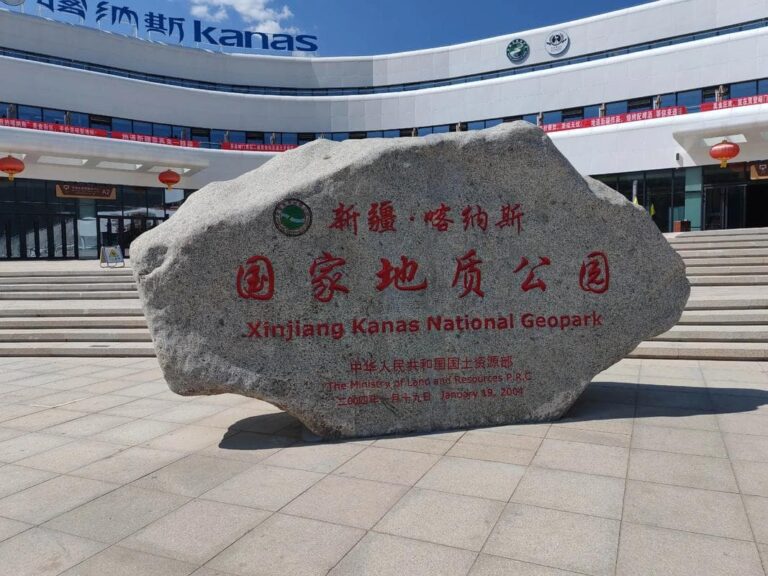
Station listings show coaches do reach Tashkurgan from Kashgar, a key route the railway does not serve, but you need the border permit. Kanas and Nalati are reached by long-distance coach plus a local shuttle from the nearest town or airport, not by train. Travelers report these scenic coaches run mainly in the warm season.
How often are winter bus cancellations, and what is the fallback?
Official sources state mountain and Pamir routes are weather dependent from late autumn to early spring. Travelers report snow closures cancelling coaches with little notice. The fallback is rail or a domestic flight; confirm the departure the morning of travel.