Xinjiang Livestock Markets: Inside the Weekly Animal Bazaars
A Xinjiang livestock market is the oldest kind of commerce still running on its original schedule, a weekly gathering where sheep, cattle, horses and the occasional camel change hands between farmers who have driven in from surrounding villages. These animal bazaars are working trade fairs rather than tourist attractions, and that is exactly what makes them worth an early morning. This guide covers how they operate, which towns hold them on which days, what the haggling rituals mean, and how to watch respectfully as a foreign visitor.
What I Saw in Kashgar, and What in This Guide Is Research
I spent roughly six weeks based in Kashgar Old City, and during that time I visited the city’s livestock market more than once. The observations about Kashgar in this article are first hand: the layout, the early start, the way trading thins out by late morning, and the food stalls nearby are things I actually saw. I can speak to the pattern of a Kashgar market morning with confidence.
Everything about the other markets, and every schedule, price range and animal type listed here, is compiled from public sources and traveler reports. I have not personally stood in the markets of Hotan, Yarkant, Kuqa or Yining. Market days shift from year to year, seasons change the calendar, and local authorities sometimes move a site. Treat the non-Kashgar details as a starting point, and confirm the current day and location with your hotel or a local before you travel. Nothing in this guide should be read as a guarantee of a specific date.
In Kashgar I found the livestock bazaar easiest to reach by a short taxi or shared ride heading out of the old town, and the pattern I noticed was that the trading thins out by late morning, so arriving early matters far more than staying late.
Overview and Key Facts: How a Xinjiang Livestock Market Works
The core transaction ritual is the handshake haggle. Buyer and seller clasp hands, often under a sleeve or jacket to hide the hand movements from rivals, and signal numbers with finger pressure and taps. A middleman or broker may join to bridge the two sides. Prices are rarely shouted. The deal is sealed with a final squeeze and sometimes a small commission paid to the broker.
Inspection is central. For sheep and goats, traders check the mouth and teeth to estimate age, feel the backbone and ribs to judge fat and condition, and look at the wool and hooves. For horses and donkeys, buyers examine the legs, the gait and the teeth. Cattle are walked and turned. This is practical animal valuation, done quickly and without drama.
Transport is part of the spectacle for visitors. Small and mid-size sheep are frequently loaded into the boots and back seats of sedans and SUVs by buyers driving themselves. You will see a family car with three sheep in the trunk pulling away, a sight that surprises first time visitors but is completely normal here.

Getting There: Reaching the Animal Bazaars
Local listings indicate that the notable markets and their rough trade days are as follows. Confirm each before going.
| Market | Day reported | Scale | Animals commonly traded | Access from town | Foreigner friendliness |
|---|---|---|---|---|---|
| Kashgar livestock bazaar (east of city) | Sunday (reported) | Very large | Sheep, cattle, horses, donkeys, camels | Taxi or hire car, 20 to 40 min | Used to visitors |
| Hotan (Hetian) animal market | Sunday (reported) | Large | Sheep, goats, cattle, donkeys | Taxi from city, edge of town | Accepting, less tourist infrastructure |
| Yarkant (Shache) market | Reported weekly, day varies | Medium | Sheep, cattle, horses | Taxi from county seat | Quiet, few foreign visitors |
| Kuqa (Kucha) market | Reported weekly, day varies | Medium | Sheep, cattle, donkeys | Taxi from town | Moderate, on northern route |
| Yining (Ghulja) area markets | Saturday or Sunday (reported) | Large, multiple sites | Sheep, horses, cattle, camel | Taxi or bus to suburbs | Used to travelers in peak season |
Note that the table reflects reported patterns, not a fixed calendar. Ask locally for the week you plan to travel.
Costs, Entry and What Money Changes Hands
Entry to a livestock market is generally free for onlookers. You are walking into a working trade yard, not a ticketed attraction. There is no admission gate at the Kashgar livestock market that I recall, and traveler reports describe the others the same way. Costs for a visitor are transport to and from, plus food and drink while you are there.
Animal prices move with season, weight, breed and festival demand. As of 2025, a mid size sheep commonly changes hands in the low thousands of RMB; a fattened festival sheep near Eid al Adha can run higher. Cattle and horses trade in the several thousands to tens of thousands depending on age and condition. These are wholesale market figures compiled from traveler reports and local listings, and they shift. Confirm locally and do not expect a printed price list, because there is none.
Brokers take a commission, often a small percentage folded into the handshake deal rather than a separate fee. If you are only watching, you spend nothing on animals. Bring cash in small denominations for food and for tipping a broker who helps translate, though tipping is not required.
Best Time to Visit a Xinjiang Livestock Market
The single most important rule is to go early. A Xinjiang livestock market is busiest in the first two to three hours after first light and largely done by late morning. I noticed in Kashgar that by midday the yards were emptying and the best animals were long gone. The early window is when the trading rituals are most active and the yards are full.
Season matters too. Late spring through autumn is the comfortable window, and the period around Eid al Adha is the peak of the year for sheep trading, with far larger crowds and higher prices. The best time to visit Xinjiang guide covers regional weather, and the same mild months suit market trips. Winter markets run but are colder and sometimes smaller.
Weekday versus Sunday depends on the town. The big Sunday markets in Kashgar and Hotan draw the most animals and the most visitors. Smaller county markets on other days are calmer and more purely local, which some travelers prefer for photography and quiet observation.

A Market Morning, Hour by Hour
The following timetable is built from the Kashgar pattern I observed, plus traveler reports from comparable markets. Times are approximate and local.
06:30: Herders and traders begin arriving with animals in pickups, trailers and on foot. The yards are still being organized and the light is low.
07:00: Serious buyers walk the lines, opening mouths to check teeth and feeling backs for fat. Brokers circulate. The handshake haggling starts quietly.
08:00: The yard is full. Sheep, goats, cattle, horses and donkeys are penned by species. This is the peak for inspection and price negotiation.
09:00: Bulk sales accelerate. Buyers load sheep into car boots and tie animals to roof racks. Butchers claim their stock. Food stalls near the gate open.
10:30: Trading thins out by late morning. The best animals are gone. Remaining sellers discount to clear stock.
11:30: Most dealing is finished. Trucks and cars leave with loads. Stalls wind down. By now a visitor is mainly watching cleanup.
I found that arriving by 07:30 gave the fullest experience without standing in total darkness, and leaving by 11:00 matched the natural rhythm of the place.
Neighborhoods and Where to Base Yourself
For Kashgar, the obvious base is Kashgar Old City, where guesthouses and small hotels put you within walking distance of food, the Sunday bazaar complex and transport. From there the livestock market is a morning ride out, and you return to the old town for the rest of the day. I based myself in the old city and found the combination of market access and everyday street life convenient.
In Hotan, base in the city center and take a taxi to the edge of town for the reported Sunday market. Travelers report the Khotan area as a jade and oasis stop with its own animal trade day. Yarkant and Kuqa are smaller; stay in the county or town seat and plan a single market morning. Yining offers several suburban sites, and the city is a comfortable base for the Ili region.
Wherever you stay, pick lodging that can help you confirm the market day in writing. Front desks in tourist towns are used to this request; in quieter counties, a phone call by staff to a local contact is the reliable move.
Where to Eat at and Around the Bazaar
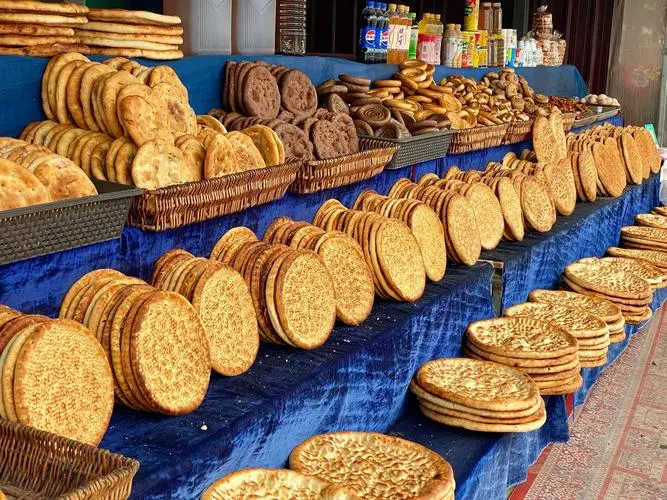
Food is part of the market experience. At the Kashgar livestock bazaar and the general Kashgar Sunday Bazaar, I saw noodle stalls, nan bread vendors and tea sellers set up near the edges. The food is simple and cooked in front of you, which is reassuring for cautious stomachs. A bowl of laghman or a couple of Xinjiang lamb skewers between animal viewing makes for a full morning.
At smaller markets away from Kashgar, food options are thinner. Traveler reports mention basic noodle and bread stalls but not much else, so eat before you go or carry water and a snack. Avoid raw cuts from open tables; cooked and heated food is the safer choice.

Practical Tips and Etiquette
Treat the market as a workplace. Traders are doing business, not performing, and the animals are livestock with value, not props. Ask before photographing people, and step back from the action rather than into it. A long lens from a respectful distance is better than crowding a negotiation.
Wear closed shoes you do not mind getting dirty. The yards are dusty at best and muddy after rain, with manure underfoot. Bring a mask if you are sensitive to dust and smell. The odor is real and some visitors find it strong; that is the honest tradeoff of a working animal market.
Do not handle animals without permission, and never block a loading path. If a buyer is wrestling a sheep into a car boot, give them room. Keep children close; the yards have moving vehicles and large animals. Learn a few Uyghur or Chinese words for hello and permission to photograph, and a smile covers most gaps.
Be candid with yourself about the content. A livestock market involves real slaughter-adjacent trade, live animals being valued and moved, and sights some travelers find confronting. It is not graphic in a violent sense, but it is unsanitized. If you are uncomfortable around working animals, this may not be for you, and that is a reasonable call.
Confirm the day locally, carry cash, and plan your ride back before you arrive. A Xinjiang livestock market rewards the prepared and early visitor and is indifferent to the late one.
Xinjiang Livestock Market FAQ
Do I need permission to photograph at a Xinjiang livestock market?
You should ask before photographing individual traders or close up portraits. Wide shots of the yards are usually tolerated, but pointing a camera at a person mid negotiation is intrusive. A gesture and a smile, or a few words of Uyghur or Chinese, go a long way. Some traders welcome photos, others wave you off; respect the answer.
Is a Xinjiang livestock market distressing or graphic?
It is a working trade market, not a slaughterhouse floor. You will see live animals inspected, valued and loaded into vehicles, and you may see some restraint and shouting during loading. It is unsanitized and earthy, with real smells and dust. Visitors sensitive to animal handling should know it is candid rather than staged, and some find parts of it confronting. Slaughter itself generally happens elsewhere, later.
Can a foreign traveler actually buy an animal at these markets?
In principle yes, but practically it is complicated. You would need to arrange transport for a live animal, likely with a broker’s help, and meet export or transport rules if crossing regions. Most foreign visitors come to watch and photograph. If you want to buy, use a broker and confirm every step, including how the animal leaves with you.
What is the animal welfare situation, and should I be concerned?
These are traditional livestock markets where animals are traded for meat and work. Handling is functional rather than gentle by urban pet standards, and conditions are basic. Welfare regulation and practice vary. Travelers who are uneasy around commercial animal trade should set expectations honestly before going, and choose to observe from a distance.
What should I wear for the dust, mud and smell?
Closed, disposable friendly shoes are essential; the yards are dirty. Long pants protect against brush and dust. A light mask helps with dust and odor, and sunglasses cut the glare on open yards. Dress for the season, since you will stand outside for hours in early morning cold or heat.
Is the livestock market a real trade event or a tourist show?
The major ones, including Kashgar’s, are genuine working markets where local butchers and households buy stock. Tourism is a side effect, not the purpose. Smaller county markets are even more purely local. You are a bystander at a real economic event, which is exactly why the etiquette of not interfering matters.
Is it suitable to bring children to a livestock market?
Older children who can stay close and follow instructions usually manage fine, and many local families bring kids. Toddlers are harder because of moving vehicles, uneven ground and large animals. Keep children within arm’s reach, avoid the loading lanes, and leave if they become overwhelmed by noise or smell.
How crowded does it get around Eid al Adha?
Eid al Adha is the peak season for sheep trading across Xinjiang, and markets swell with buyers and higher prices in the days before the festival. Crowds are substantial and the yards are at full capacity. If you want the fullest spectacle, go then; if you prefer calm observation, pick an ordinary week and a smaller county market instead.