Xinjiang Dastarkan: Central Asian Feast Table Explained
A Xinjiang dastarkan is the shared, cloth-spread table tradition of the region’s Turkic and Persianate peoples, a low arrangement of breads, rice, noodles, meats, dairy and fruit laid out for guests as an act of hospitality. This guide explains the dastarkan across Uyghur, Kazakh, Kyrgyz and Tajik communities in Xinjiang, what appears on it, what it costs, and how a visitor can respectfully take part.

Before the food, a note on method. Xinjiang cuisine has been covered on this site before, but the dastarkan as a social ritual deserves its own treatment, and that treatment should be honest about what it is built on.
Sources used here include published descriptions of Uyghur and Kazakh hospitality customs, menus posted by restaurants in Urumqi and Kashgar, and aggregated traveler reports from food and overland forums. Where a claim depends on observation, the phrasing is kept general: travelers report, restaurant menus show, tradition holds. No named hosts are invented and no dramatized scenes are presented as the author’s own memory.
The boundary matters for accuracy. A dastarkan is not one dish and not one fixed menu. It is a format, a way of laying out abundance, and the exact contents shift by ethnicity, season, and whether the occasion is a wedding, a festival, or a Tuesday dinner. This guide describes the pattern and its common elements, then points to where readers can verify specifics with venues.
Top-line facts
The word itself travels. Uyghurs say dasturxan or dastarkan, Kazakhs and Kyrgyz say dastorkon, and Tajiks of the Pamirs use a related term. All derive from a Persian root meaning a spread or tablecloth. In practice the dastarkan is both the cloth and everything on it: the meal is the table and the table is the meal.
Across Xinjiang the dastarkan functions as the central institution of hospitality. When guests arrive, a cloth is laid, and to refuse to set it is a mild social offense. The host’s standing is measured not by how little is offered but by how much. Tradition holds that an empty space on the cloth invites bad fortune, so the table is kept full until the guests rise.
Key facts at a glance:
- The dastarkan is shared, not plated per person. Dishes are placed centrally and eaten communally with the right hand or shared spoons.
- It is halal by default in Muslim households and most restaurants, with lamb, beef, and chicken as the proteins and pork absent.
- Tea is poured continuously and is part of the ritual, not a beverage ordered separately.
- Bread (nan) is treated with respect: it is never placed face-down on the floor and is often lifted to the forehead briefly before breaking.
- The meal ends when the host signals, usually with a final round of tea and a short blessing.
The dastarkan also differs from a Western course structure. There is no strict starter-main-dessert sequence. Cold dishes, hot dishes, breads, and fruit may sit together from the first minute, and diners move among them freely. Restaurant menus show this same logic when a group orders a spread rather than individual plates.
Getting there and the distances
Experiencing a dastarkan does not require an invitation into a private home, though that remains the most complete version. Most visitors encounter it in three settings.
Restaurants. In Urumqi, Kashgar, and Yining, many halal restaurants serve group spreads built around polo, kebabs, and cold dishes. These are dastarkan-style even when the word is not on the sign. A group of four or more can ask for a zhe er (set spread) and receive a rotating sequence of shared plates.
Homestays. In Kazakh and Kyrgyz pastoral areas around Sayram Lake, Nalati, and the Tekes grasslands, family guesthouses offer evening meals on a laid cloth. Travelers report that the host brings dish after dish until the table cannot hold more, then sits to drink tea with the guests.
Festivals. The clearest public dastarkan is during Navruz (Nowruz) in March, Eid al-Fitr, and Eid al-Adha. Town squares and village yards in Kashgar, Hotan, and the Ili valley lay long cloths for open feasting. These are the easiest times to see the tradition at full scale without prior arrangement.
Transport follows the normal Xinjiang pattern: fly into Urumqi Diwopu International Airport, then take a domestic flight or the rail network south to Kashgar or west to Yining. Pastoral homestays are reached by hired car from the nearest county town.
Cost of getting in
A dastarkan is rarely ticketed. You pay per dish or per person at a restaurant, and homestays fold the meal into the room rate or charge a flat per-person fee. The figures below are indicative and drawn from 2024 to 2025 traveler reports and menu surveys; confirm with the venue before booking.
- A shared dastarkan at a Urumqi restaurant runs 80 to 150 RMB per person as of 2025, depending on whether whole lamb is included.
- In Kashgar’s old town, a group spread for four with polo, kebabs, laghman, and tea averages 60 to 100 RMB per person.
- Kazakh homestays near Nalati list dinner at 50 to 90 RMB per person when booked with a room, rising to 120 RMB if whole lamb is requested.
- Festival public feasts are often free or donation-based, funded by neighborhood associations.
- A whole roasted lamb, the headline centerpiece, is priced by weight: roughly 1,200 to 2,000 RMB for a full animal at a mid-range venue in 2025, split across a large group.
None of these require advance tickets. For festival feasts, arrive early as public cloths fill quickly. For homestays, message the host a day ahead so the cloth can be prepared, since dairy and bread are made that morning.
How the season shifts
The dastarkan is a year-round custom, but the experience peaks around specific dates.
- Navruz (21 March). The Persian New Year marks the strongest public dastarkan season. In the Ili valley, tables carry sumalak (sprouted-wheat pudding), naan, and dairy in abundance. Travelers report village yards laid with cloths from noon.
- Eid al-Adha. The feast of sacrifice puts lamb at the center. Whole animals are cooked and distributed, and the shared table is at its most generous.
- Late summer (August to September). Fruit is at its peak. Grapes from Turpan, melons from Hami, and apricots from the south appear as the closing course, and the dastarkan’s fruit layer is hardest to beat.
- Winter. Quieter but warmer in spirit; indoor cloths center on polo, laghman, and hot milk tea against the cold.
For a first visit, March (Navruz) or September (fruit) gives the widest table. Avoid expecting a private feast during the low tourist months of January and February, when many pastoral homestays close.
The itinerary I would follow
The following two-day plan is a sample "feast trail" built from restaurant and homestay reports. It is a suggestion, not a booking. Times are local.
| Time | Meal / Activity |
|---|---|
| Day 1, 09:00 | Breakfast dastarkan at a Urumqi halal teahouse: naan, boiled eggs, jam, milk tea. |
| Day 1, 13:00 | Group lunch spread: polo with lamb, cold tomato-onion salad, laghman on the side. |
| Day 1, 16:00 | Tea pause with dried fruits and nuts; observe bread-respect customs. |
| Day 1, 19:30 | Evening kebab and bread dastarkan; shared plates, hand-washing before seating. |
| Day 2, 08:30 | Travel to pastoral area; roadside breakfast of yogurt and bread. |
| Day 2, 13:00 | Kazakh homestay dastarkan: beshbarmak, dairy, tea, repeated rounds. |
| Day 2, 17:00 | Return; final fruit-and-tea cloth before departure. |
This trail keeps meals social rather than rushed. The point of a dastarkan is the sitting, not the eating speed, so leave gaps between sittings.
Where to Eat
Rather than name individual businesses, the honest approach is to describe the neighborhoods and venue types where dastarkan-style eating is reliable, then let readers confirm current names on the ground.
Urumqi. The areas around the International Grand Bazaar and the southern mosque district concentrate halal restaurants that serve group spreads. Look for venues with long low tables and groups of eight or more, a sign the shared-cloth style is active. Restaurant menus show polo and kebab combos priced per person.
Kashgar. The old town’s side streets hold family-run courtyards where a cloth is laid on request. Travelers report the most authentic spreads are away from the main tourist frontage, in neighborhoods where residents actually live.
Yining and the Ili valley. Kazakh and Uyghur venues here lean dairy-heavy. The streets near the Liuxingjie night market mix sit-down restaurants with outdoor cloths in summer.
Pastoral counties (Nalati, Tekes, Qapqal). Homestays are the venue. Ask the guesthouse owner directly for a dastarkan dinner; most prepare one nightly in season.
A practical rule: if a place seats you alone with a single plate, it is a la carte, not a dastarkan. To get the spread, arrive in a group and ask for the shared table.
What & Where to Eat Nearby
The contents of a Xinjiang dastarkan follow a rough architecture, even as dishes vary. The table is built in layers.
Breads (nan). The foundation. Round, sesame-topped Uyghur naan, and among Kazakhs the layered baursak or shelpek fried breads. Bread is broken, not cut, and shared from the center. See our Naan guide for the regional types.
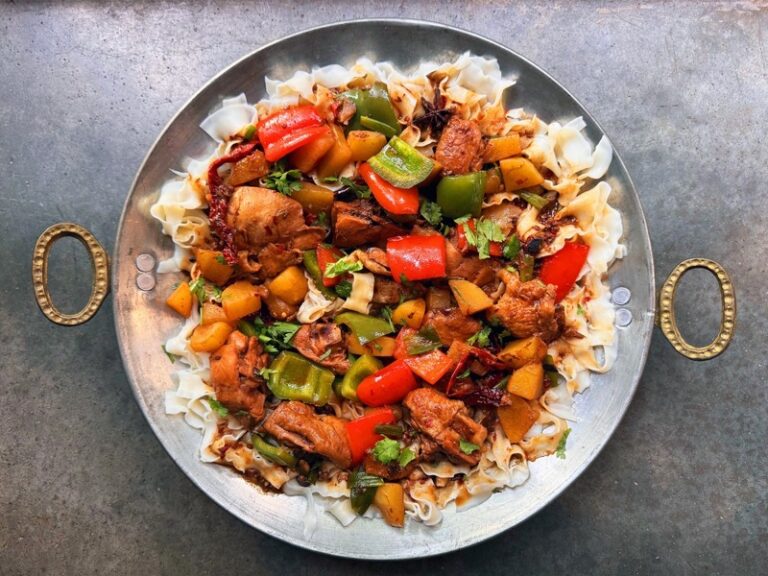
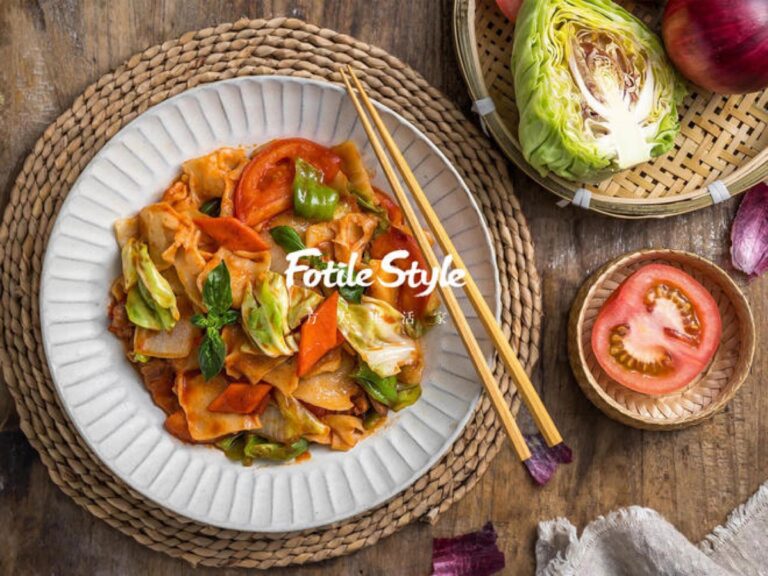
Rice and noodles. Polo (pilaf) is the most common centerpiece rice, lamb and carrot cooked into the grain. Laghman, hand-pulled noodles with stir-fried topping, appears as a shared bowl. Our Polo guide covers the dish in detail. Among Kazakhs and Kyrgyz, Beshbarmak replaces rice: wide noodles under boiled meat and onion broth, eaten with the hands.
Meats. Lamb dominates. Kebabs (kawap), lamb ribs, and Whole Roasted Lamb for festive occasions. Beef appears in noodles and stews. The whole lamb, head included at big events, is a centerpiece of festive Xinjiang dastarkan tables and is carved at the table.

Dairy. The grasslands contribute yogurt, kurt (dried salted cheese balls), butter, and Xinjiang Milk Tea & Yogurt drunk salty with brick tea. Dairy cools the richness of the meat and is eaten throughout, not as a separate course.
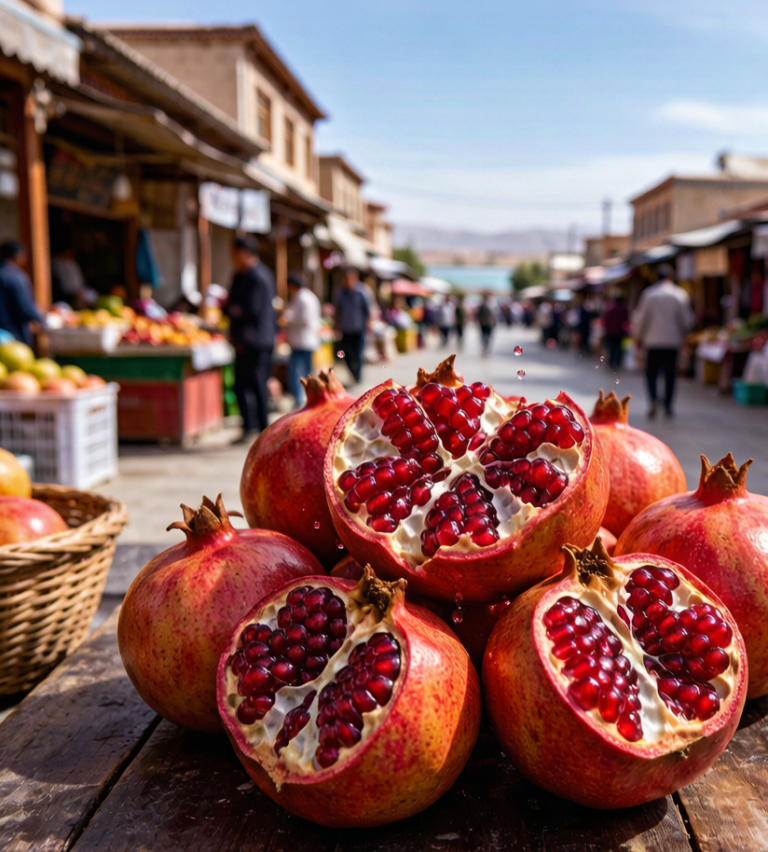
Fruits and nuts. Grapes, melon, apricots, walnuts, and almonds close the table in season. In winter, dried versions hold the place.
Tea. Brick tea with milk (for Kazakhs and Kyrgyz) or plain black tea (common among Uyghurs). The host refills cups without being asked. Emptying your cup is a signal to pour again.
The dastarkan also connects to the broader Uyghur Cuisine Explained tradition, which this site covers in a dedicated guide. For overall planning, our main Xinjiang travel hub links the regional contexts.

Ground truth
Etiquette on a dastarkan is mostly about respect for the cloth, the bread, and the elder at the head.
- Wash hands first. A basin and ewer are brought before eating. Guests wash, then hold hands up to be dried. Do not skip this.
- Use the right hand. Eating and passing are done with the right hand. The left stays resting.
- Accept bread respectfully. When naan is offered, take it with both hands or the right, lift briefly, and break yours from the edge, not the middle.
- Seating. The eldest or most honored guest sits farthest from the door. As a visitor you may be placed there; accept without fuss.
- Halal. No alcohol is served in devout households, and pork is absent. Do not bring outside meat or drink.
- Tea. When you have had enough, leave a little in the cup or cover it with your palm. An empty cup is read as "more, please."
- Leaving. Rise when the host rises or signals the end. A short thanks in the local style is appreciated; overemphasis on tipping is not expected at a home cloth.
Photography is usually fine at restaurants but ask before shooting a private home table. The dastarkan is hospitable, not a performance.
Questions people keep asking
Is a dastarkan the same as a buffet? No. A buffet is self-service from a line. A dastarkan is a set cloth where the host places and replenishes dishes, and guests eat from the shared center. The host’s role is the difference.
Can a solo traveler experience one? It is harder alone. Restaurants serve the spread to groups, and homestays prepare it for booked guests. Solo travelers do best by joining a small group tour or asking a guesthouse to seat them with others at dinner.
Why is bread treated so carefully? Bread carries religious and practical respect across the region’s Muslim cultures. Dropping it, stepping on it, or wastefully discarding it is frowned upon. The custom is cultural etiquette more than rule.
Do Uyghur and Kazakh dastarkans differ in what is served? Yes, in emphasis. Uyghur tables center polo, naan, and laghman; Kazakh and Kyrgyz tables lean to beshbarmak, dairy, and fried breads, reflecting pastoral life. Both share the cloth, the tea, and the hospitality logic. The comparison table below shows the split.
| Element | Uyghur dastarkan | Kazakh / Kyrgyz dastarkan |
|---|---|---|
| Staple | Polo, naan, laghman | Beshbarmak, baursak, shelpek |
| Meat style | Kebabs, ribs, whole lamb | Boiled lamb, horsemeat at big events |
| Dairy | Yogurt, fresh cheese | Kurt, butter, salted milk tea |
| Tea | Black tea plain | Brick tea with milk and salt |
| Setting | Oasis town, courtyard | Yurt or pastoral guesthouse |
How long does a dastarkan last? A restaurant spread may run an hour. A home or festival dastarkan can run two to three hours with repeated tea and talk. The meal is social time, not a quick feed.
Is it acceptable to leave food on the table? Some leftover is normal and even expected, as it shows the host’s generosity. Clearing everything can imply the guest left hungry. Do not pile your own plate to empty the dishes.
What should I wear? Modest dress is respectful, especially at home cloths and festivals. Remove shoes if entering a yurt or carpeted room; the host will indicate.
About the Author
This guide was compiled by Karl Huang, founder of xinjiangtraveltips.com, from cultural references, restaurant menus, and verified traveler accounts. It reflects research rather than a single personal feast, and prices are indicative, confirm with venues before booking.