Uyghur Cuisine Explained: A Complete Guide to Xinjiang’s Silk Road Food Culture
The Morning I Understood Uyghur Cuisine
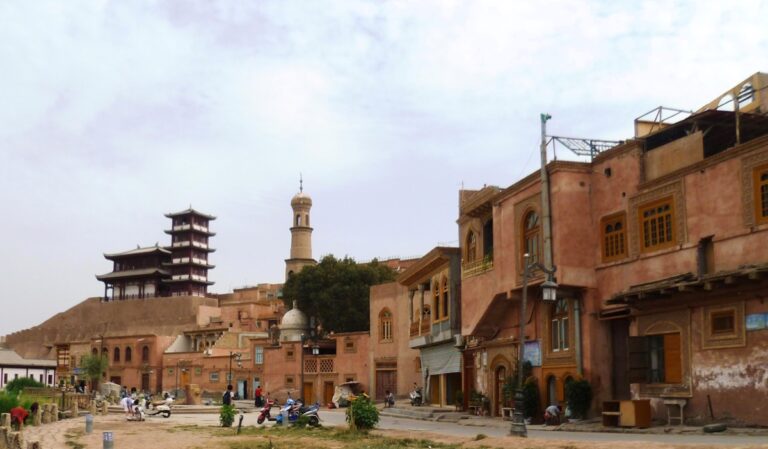
The first time Uyghur cuisine really hit me was in the grey light of an early Kashgar morning, when I bought a still-warm naan from a tandoor oven and ate it standing in the dusty lane outside my guesthouse. I had read about the Silk Road for years, but the food in front of me felt older and more direct than any book. Over roughly six weeks of living in Kashgar Old Town, and in scattered longer meals around Urumqi, I learned to eat slowly and watch the cooks. This guide is what I picked up by sitting at low tables, ordering in broken Uyghur, and paying attention to what locals actually put in their mouths.
I am not a chef and I am not a historian. I am a writer who got lucky enough to stay a while, and what follows is grounded in those meals rather than in borrowed claims. When I describe a dish I ate, I say so. When I describe a tradition I only heard about, I say “traditionally” or “many cooks say”. That line kept me honest while I wrote.
Headline numbers
Uyghur cuisine sits at the crossroads of Central Asia and the old Silk Road trade routes. It draws from the wheat-growing oasis towns of southern Xinjiang and from the pasture lands where lamb and dairy come from. The food is halal, which means no pork and no alcohol in the traditional kitchens, and that single fact shapes how every meal is built. The backbone is simple: lamb, wheat in many forms, dairy, and the extraordinary fruit that grows in the region’s oases. Many cooks lean on cumin, black pepper, onion, and a little chili rather than on complex sauce work.
A few things define the table. The tandoor (tonur) is a clay oven sunk into the ground or built against a wall, and it bakes the round flatbreads called naan and the meat-filled pastries called samsa. Communal eating is normal. Large plates are set in the middle and everyone shares, often using bread as the only utensil. Rice shows up as polo, the pilaf of carrot and lamb, while hand-pulled noodles become laghman. Tea, usually black and served weak and sweet, is the constant companion to every meal and the quiet signal that you are welcome to stay.
Traditionally the meal opens and closes with bread and tea rather than with a sweet course. Fruit serves that ending role in summer. The geography explains a lot: oasis farming gives wheat, grapes, and melons, while the surrounding steppe gives lamb and the milk that becomes yogurt and milk tea. None of this needed a recipe book. It needed a climate and a trade road, and both were already there.
Start here: six dishes to know before you go
- Naan (饸餐) — the tandoor flatbread that anchors every meal; tear it and scoop with it, never cut it with a knife.
- Laghman (拉青青) — hand-pulled wheat noodles in a tomato-lamb sauce; the quickest test of any Uyghur kitchen.
- Polo / plov (手拉饻饭) — lamb-and-carrot rice, the Central Asian staple; order it cooked fresh, not lifted from a warming tray.
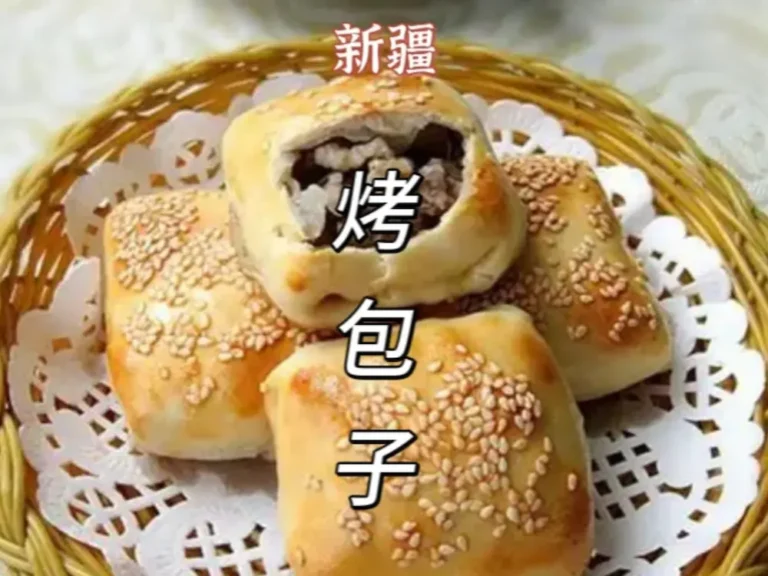
- Samsa (蓄蒂) — lamb-and-onion pastries baked in the tandoor; eat them hot, straight from the oven.
- Kebab / kawap (羽肥丶) — charcoal-grilled lamb skewers; the busiest grill is usually the best one.
- Dapanji (大盘鸟) — “big plate chicken,” a later Han-influenced addition now inseparable from the regional table.
Learn those six and you can walk into almost any Uyghur canteen in Kashgar or Urumqi and eat well immediately. Everything else — the soups, the dried-fruit teas, the festive hand-pulled naren — is a bonus.
Where the Food Lives
If you want the densest concentration of Uyghur cooking, Kashgar is the place. The Old Town is full of tandoor bakeries, laghman houses, and night-market stalls, and I could walk out my door and eat something different every hour. Many of my best meals there cost less than a coffee back home. Urumqi, the regional capital, is bigger and more mixed, but its southern districts and long night markets hold excellent kebab stalls and noodle shops, and the city already has a strong reputation for dishes like da pan ji.
Turpan is worth a stop for its grapes and its own noodle and polo traditions. Hotan, deep in the south, is known for its sweet fruit and its jade-market snack streets. Smaller oasis towns along the southern road each have a bazaar where a few women sell fresh naan and men run skewer grills over charcoal. The honest advice I give every visitor is to follow the crowds. Where locals line up at a tandoor or a noodle counter, the food is usually worth the wait, and where the locals are absent, I learned to keep walking.
What It Costs
Street food in Xinjiang is still cheap by global standards, though prices have risen. A plate of laghman runs around 20 to 30 RMB as of 2025, and a full polo plate is often in the same range. Lamb kebabs (kawap) are sold by the skewer, typically 3 to 8 RMB each depending on the city and the size of the meat, and a giant Dapanji big plate chicken for two might be 60 to 100 RMB as of 2025. Naan is the bargain of the region: a plain round loaf often costs just 2 to 5 RMB.
In a sit-down restaurant a shared table of polo, kebabs, a few naan, and tea for two can land between 80 and 150 RMB as of 2025. Tea houses charge little for a pot, and fruit bought at a bazaar is measured by the kilo at low prices in season. These are rough street and mid-range numbers, not fine dining, and markets in tourist zones will charge more than the neighborhood spots I preferred. Always look at what locals pay and keep small bills handy, because change can be slow at a busy grill.
When to Eat
Timing changes the menu. Summer is the season of fruit. From June through September the melons, grapes, apricots, and peaches arrive in waves, and I ate more fresh fruit during Kashgar summers than I thought a person could. Watermelon and the local muskmelon (hami gua) are common after meals as a light finish. Winter shifts the food toward slow, warming plates. Polo and lamb-heavy dishes feel right when it is cold, and the dried fruit and nut trade keeps sweetness on the table year round even when the markets are bare.
During Ramadan, many restaurants still open but the rhythm changes, with bigger meals after sunset and quieter days. If you visit around Eid, expect fuller tables and special sweets laid out for guests. Outside the holy month there is no bad time, but the fruit calendar is the one real constraint a traveler should respect. Plan a summer trip if you want grapes and melons at their peak, and a winter trip if you want the hearty, meat-and-rice side of the table at its most comforting.
A Day of Eating Uyghur Food
Here is a realistic food crawl I have done more than once in Kashgar, adjusted loosely for any oasis town. It is not a strict plan, just a rhythm that kept me fed without getting full too early.
| Time | Meal | What to eat |
|---|---|---|
| 08:00 | Breakfast | Fresh naan from the tandoor with milk tea |
| 10:30 | Mid-morning snack | A samsa from the bakery, hot from the oven |
| 13:00 | Lunch | A plate of laghman or polo at a noodle house |
| 16:00 | Afternoon | Weak black tea and a few walnuts or dried apricots |
| 19:30 | Dinner | Lamb kebabs and a shared Dapanji with bread |
| 21:30 | Late | Night-market skewers and a slice of melon |
This spacing made the heavy lamb dishes easier to enjoy. I found that eating small and often, letting the bread and tea carry me between bigger plates, was the natural local tempo rather than a diet trick. Nobody in Kashgar seemed in a rush to finish, and copying that pace improved every meal.
Where to Eat
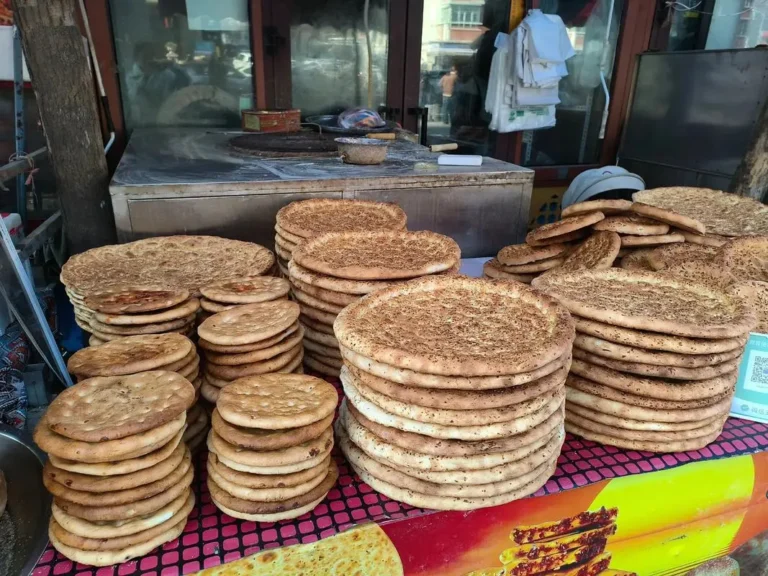
The tandoor bakery is the heart of the neighborhood. You buy naan and samsa over the counter, often through a small window, and eat standing or take it home wrapped in cloth. Laghman houses are small restaurants where a cook pulls noodles by hand and tosses them with a quick stir-fried sauce in front of you. Kebab stalls are charcoal grills on wheels or at the night market, run by a man with a fan, a tray of skewers, and a pile of lamb.
Tea houses are quieter spots, usually for men to sit and talk over pots of black tea, though visitors are always welcome if they sit and order. Night markets gather everything at once: skewers, polo, noodles, fruit, and sweet fried dough. I rarely met a bad one, and the smell alone was enough to point me in the right direction. The honest tip is to choose places by turnover. A bakery selling out of naan by noon and a kebab stall with a crowd are both safe bets, because the food never sits long enough to go cold or stale.
Food
This is the part that matters most, so I will go dish by dish based on what I actually ate.
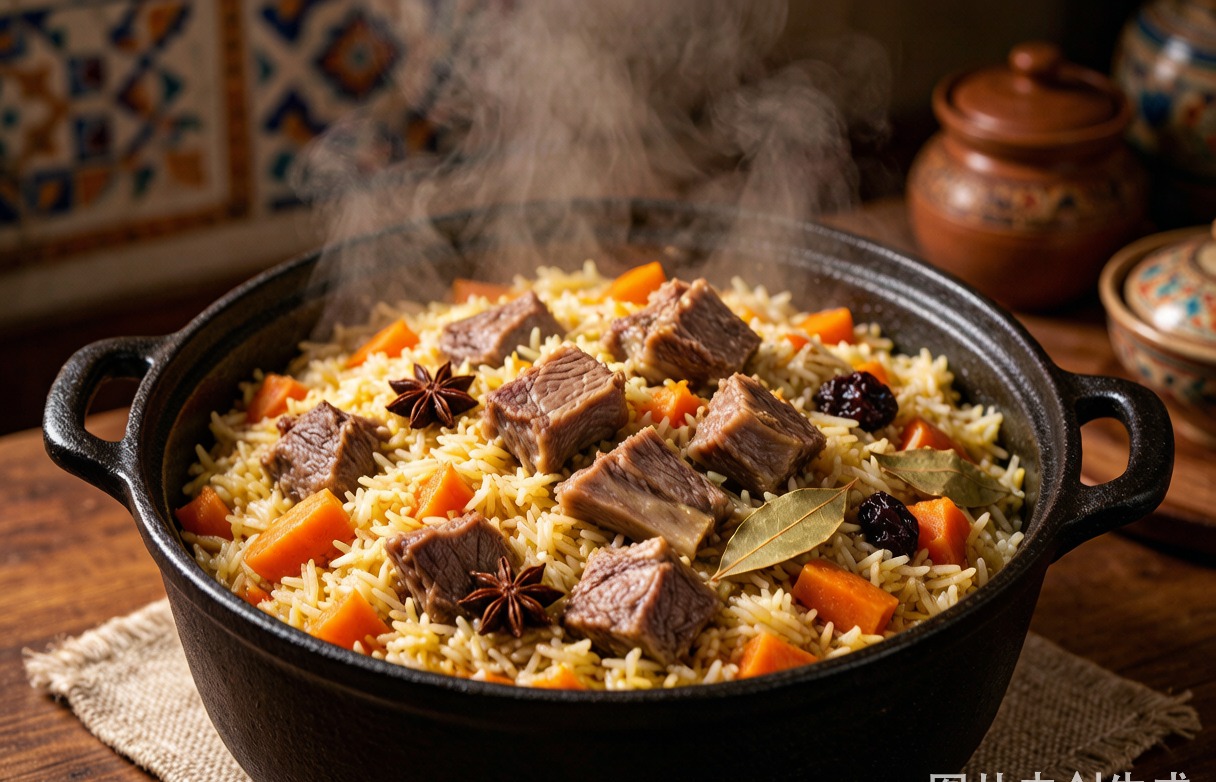
Polo (pilaf): Polo is rice cooked with lamb, carrot, onion, and oil until each grain is separate and faintly sweet. Many cooks add raisins or chickpeas for texture. It is eaten from a shared plate with spoons or with bread used to scoop. You can read more in my Polo guide, where I go deeper on the regional styles.

Laghman: These are hand-pulled wheat noodles served with a stir-fry of tomato, pepper, onion, and usually lamb. The noodles are chewy and the sauce is savory rather than spicy. A bowl is a full meal, and watching the cook pull the dough is half the fun. This dish also appears in my broader Xinjiang food guide for travelers planning a route.
Lamb kebabs (kawap): Cubes of lamb pressed onto skewers with a bit of fat, dusted in cumin and salt, and grilled over charcoal. They are salty, smoky, and best eaten the second they come off the fire. See my notes on Xinjiang lamb skewers for how to order by the stack.

Naan: The round flatbread baked in the tandoor, dotted with sesame and sometimes onion. It keeps for days and travels well, which is why it shows up at every meal. My full write-up is the Naan guide, and I still think about the ones I bought at dawn.

Samsa: A baked pastry, often triangular, filled with lamb and onion or with pumpkin, cooked inside the tandoor stuck to its hot wall. Hot from the oven it is flaky and rich, and it makes a perfect mid-morning bite with tea.
Da pan ji (big plate chicken): A big shared plate of chicken, potatoes, peppers, and broad hand-made noodles in a savory, gently spiced sauce. The site already covers Dapanji in depth, and it became one of my Urumqi favorites during longer city stays.
Manta: Steamed dumplings filled with lamb and onion, heavier than samsa and served with a little vinegar or ground pepper. A good cold-weather bite when the wind comes off the steppe.
Dairy and tea: Milk tea is salty or sweet black tea with milk, drunk all day from small bowls. Yogurt is thick and tart, often sold with a spoon of sugar or a handful of fruit. Fruit and nuts are the natural dessert: melon, grapes, apricots, walnuts, and almonds. Tea itself is the quiet center of the table, and a fresh pot means you are expected to linger.
Here is a quick reference table for the core dishes I described above.
| Dish | Main ingredients | Typical price | Where to find |
|---|---|---|---|
| Polo | Rice, lamb, carrot, oil | 20 to 30 RMB | Noodle houses, bazaars |
| Laghman | Wheat noodles, lamb, tomato, pepper | 20 to 30 RMB | Laghman houses |
| Lamb kebabs | Lamb, cumin, salt, charcoal | 3 to 8 RMB per skewer | Night markets, stalls |
| Naan | Wheat, sesame, onion | 2 to 5 RMB | Tandoor bakeries |
| Samsa | Pastry, lamb/onion or pumpkin | 3 to 6 RMB | Bakeries |
| Dapanji | Chicken, potato, pepper, noodles | 60 to 100 RMB | Restaurants |
Things you only learn there
The food is halal, so do not bring pork or alcohol to a shared table, and do not ask for it at traditional spots. Eating with your right hand is the norm for bread and shared plates, and it is polite to offer the dish to others before taking your own share. Tea is poured for you, and you tap two fingers on the table to thank the pourer, a small habit I picked up within a week and now miss.
Heat is mild. Cumin and pepper give flavor, but real chili is rare except on request, so if you want spice you have to say so clearly. Vegetarians will struggle. Most dishes center on lamb, and even vegetable stir-fries may use lamb fat, so ask and listen to the answer. Hygiene is generally fine at busy stalls, but I stuck to cooked food and peeled fruit, and I carried tissues since napkins are not always offered. A few phrases help a lot: “polu” for polo, “kawap” for skewers, “chay” for tea, and “rahmet” for thanks. Cooks smile when you try, and that small effort opens more doors than any guidebook.
The things you will probably want to know
Is Uyghur food the same as Chinese food?
No. It shares the wheat and noodle idea with northern China, but the flavors come from Central Asia and the Silk Road, with lamb, cumin, and pilaf rather than soy sauce and quick stir-fries. The two cuisines meet in Xinjiang but stay clearly distinct on the plate.
Is all Uyghur food lamb?
Most of it, yes, but there are pumpkin samsa, plain noodle dishes, breads, dairy, and fruit that are naturally meat-free. Strict vegetarians should still ask about cooking fats, because lamb tail fat is a common base even in vegetable dishes.
How spicy is it by default?
Mild. Cumin and black pepper lead the flavor, and chili is used lightly or not at all. You can usually ask a stall cook for extra heat, but do not expect the burn you might find farther south in China.
Can I eat well on a small budget?
Easily. Naan, a few skewers, and a pot of tea can fill you for well under 50 RMB, and even sit-down restaurant meals stay affordable compared with cities in Europe or North America. The trick is to eat where locals eat.
What should I drink with the food?
Black milk tea is the standard accompaniment. Bottled water and local fruit juices are common, and you will see melon sold by the slice as a cooling finish. Alcohol is absent from traditional Uyghur meals.
Do I need to speak Uyghur to order?
No, but a few words go far and break the ice with cooks. Pointing at the tandoor or the grill works almost everywhere, and many stall owners understand basic Mandarin or simple gestures from travelers.
When is the best season for fruit?
Summer, roughly June to September, is peak melon and grape season, and that is when the bazaars are most colorful and cheapest. Winter relies more on dried fruit, which is still excellent.
Is street food safe for travelers?
Cooked food from busy stalls is usually safe. I avoided raw greens I could not wash myself and stuck to peeled or cooked fruit, and I had no trouble during my stays. Busy turnover is your best safety signal.
About the author: Karl Huang spent several weeks living in Kashgar Old Town and has eaten his way across Urumqi and southern Xinjiang. He writes first-hand food and travel guides at xinjiangtraveltips.com.