
Kanas Geopark: The Valley System Behind the Famous Lake
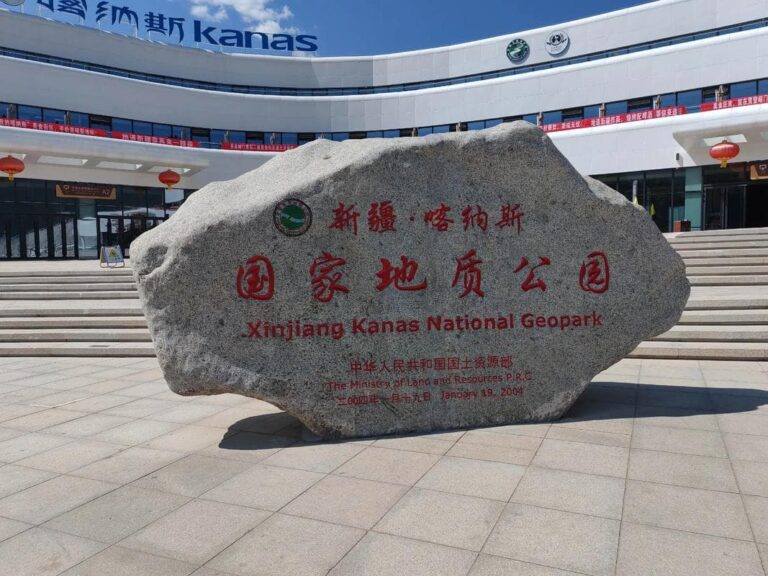
People say ‘Kanas’ and mean the lake, but the lake is just the postcard of a much larger protected valley — the Kanas Geopark, a UNESCO-listed sweep of Altai forest, river, and Tuvan settlement. Understanding it as a system changes your visit: you stop rushing the one overlook and start walking the valleys, where the real quiet lives.
The geopark covers the lake, the Three Bays, the villages of Hemu and Baihaba, and the forests between — a single connected landscape best explored over two or three days.
The Forest and the River
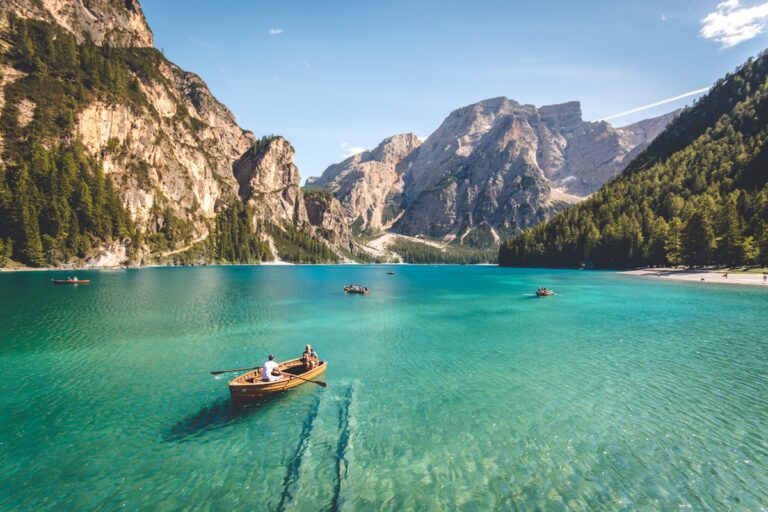
The dominant tree is Siberian spruce, dark and straight, carpeting the slopes above the water. In autumn it goes gold against the green of the larch and the blue of the river — the famous Kanas color triad. Boardwalks and trails run along the Kanas River and up to overlooks; the Fish-Watching Pavilion (观鱼台) climb above the lake is the classic panorama, steep but worth it for the full-length view.

The Villages
Hemu is the timber-cabin village famous for its birch groves and sunrise smoke — photographers’ favorite, and reachable by shuttle or a long scenic drive.
Baihaba sits near the Kazakhstan border (permit required) and is quieter, a working Tuvan settlement rather than a viewpoint.
Both offer yurt or cabin stays and a look at Tuvan life — throat singing, horse culture, and a way of living that predates the tourism. Stay a night if you can; the villages at dawn are the real Kanas.

The hour I go back for
Everything goes flat, the shade disappears, and the temperature on an open plateau rises in a way that stops you caring about photographs. Go early or go late and the same ground gives you two different subjects. Between the two I would pick the later one, mostly because the early version costs you the rest of the day. Sunrise is the one worth an alarm for. The whole face of Kanas Geopark The Valley turns a colour that does not exist at any other time, and the site is empty enough that you can stand still and hear nothing.
I have come to like the last forty minutes before the gate shuts, when the groups have gone and the staff are sweeping, because that is when you can look up properly instead of squeezing a shoulder past strangers. By ten the coaches are here, and by one it is an hour of people shuffling past. Whatever the guidebook says about golden hour, go on a weekday. Midday is the hour to avoid, not the hour to schedule. The light is only free of company on a Tuesday.
That stretch of the trip is described in our [[burqin-to-kanas-the-scenic-approach-to-xinjiangs-famous-lake|Burqin to Kanas: The Scenic Approach to…]] too.
How much time the place really needs
Most first-timers plan two hours and then get stranded. The gates open early and the last entry tends to stop a couple of hours before closing, so the promise of coming back for sunset is not always possible. Budget the full morning. That covers the walk in, the slow look at the main feature, the side trails almost nobody does, and getting back to the car before the light goes flat. Ninety minutes is enough to tick the box.
A full day is what you want when the point of coming was Kanas Geopark The Valley itself rather than a stop on the way. Half a day is enough to understand it. The first time I rushed it and spent the whole visit looking up at the same rock from one spot. My own rule now: if I have to choose between this and an extra evening in Kanas, I keep the evening. The second I gave it a morning and a late-afternoon return and saw two completely different places, because the light moved across the surface and the crowds thinned to nothing.
Reaching {P} on buses, taxis and shared rides
What does exist is an intercity coach leaving the Kanas long-distance station early, a taxi share at the stand that costs a few tens of yuan a head if you are patient, and the tour vans that pick up at hotels. We came twice. The first time we chartered a car for the round trip and it was worth every yuan. The second a driver on a return leg dropped us at the entrance and waited in the car park, which is the cheap way to do it if you do not mind setting your own clock. The trick is finding the vehicle rather than the timetable.
In Kanas the drivers wait where drivers always wait, in the little offices a few hundred metres off the main terminal, and they will put together a half-day for a price the meter would never quote. The last vehicles back leave in the early evening, and after dark on a mountain road the local buses stop running entirely. Leave two hours of slack on the return. Kanas Geopark The Valley sits an hour or two from the nearest town, which sounds close until you work out there is no reliable public bus to the gate. If the timing is the question, our [[kanas-vs-sayram-lake-comparison|Kanas Lake vs Sayram Lake: Which Xinjiang…]] goes through it properly.
Why Autumn Is the Headline
Late September to early October is the narrow window when the birch and larch turn and the weather is still decent. It’s also the busiest — the scenic area caps entries, and the road from Burqin jams. Go the first week of October if you can; the second gets cold fast. Summer is lush and crowd-free by comparison; winter is closed-and-snowy except for a few ice-festival visits.
Planning the System
Base in the scenic area or Burqin town. Use the park shuttle for the lake and bays; hire a car or join a transfer for Hemu. Allow 2–3 days for the geopark proper, more if you add Baihaba. It’s the north’s deep wilderness — worth more time than the single-overlook rush most tours allow.
Want the full Kanas picture? My Kanas Lake: Xinjiang’s Mystical Alpine Gem and the Legend of the Lake Monster ties the bays, the geopark, and where to base yourself into one plan.