Kanas Lake: Xinjiang’s Mystical Alpine Gem and the Legend of the Lake Monster
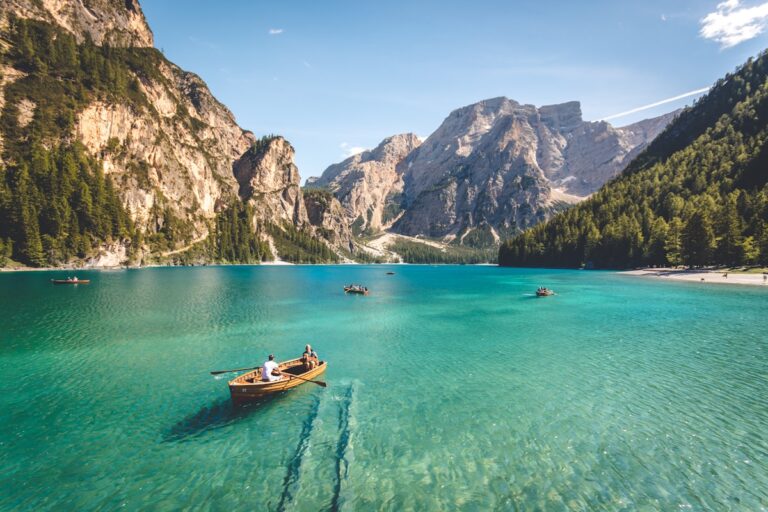
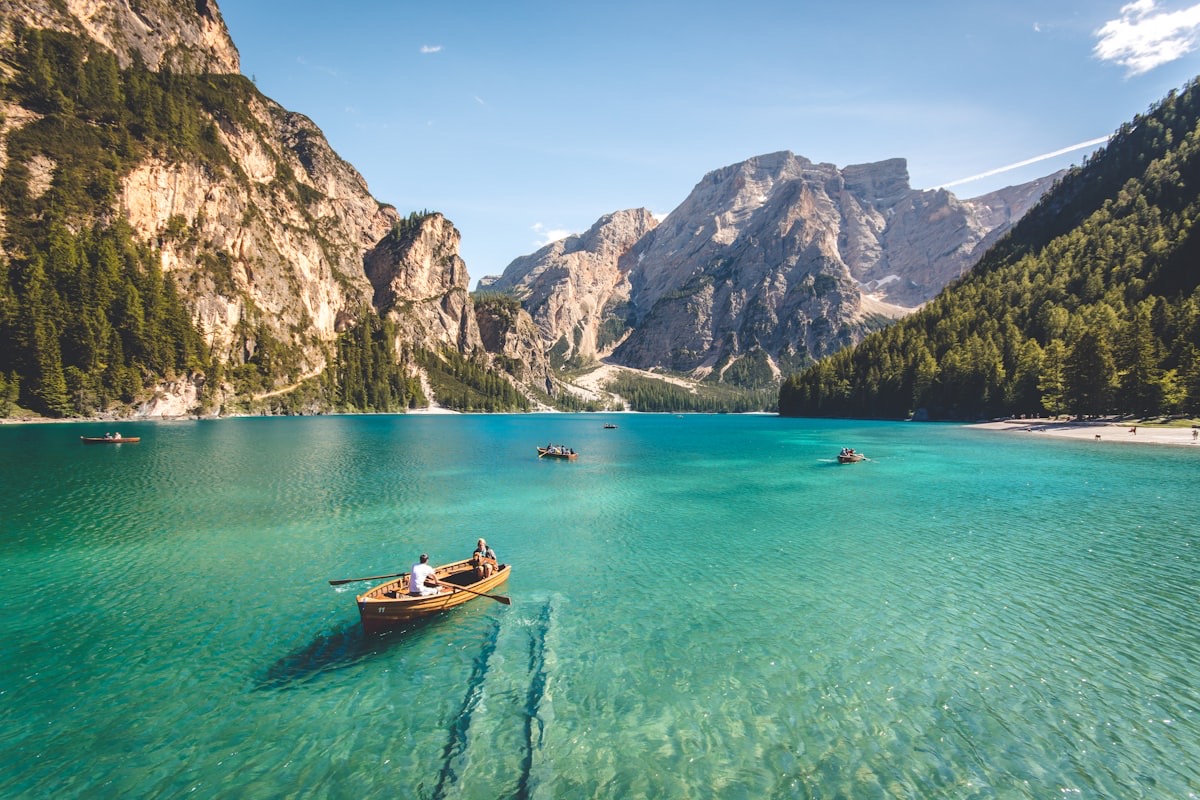
If Xinjiang has a single postcard image, it is probably Kanas Lake: a long, narrow ribbon of glacial water the color of diluted jade, hemmed by Siberian spruce and snow-streaked peaks, with ribbons of mist drifting off the surface at dawn. It sits in the far north of the region, in the Altai Mountains on the border with Kazakhstan, Russia, and Mongolia — about as far from the desert Xinjiang of popular imagination as you can get.
Kanas is also the home of one of China’s longest-runningfolklore mysteries: the ‘Kanas lake monster’ (Kanas shui guai). Since the 1980s, visitors and rangers have reported large dark shapes moving under the surface. The official explanation is usually giant humpback taimen (a kind of enormous trout), but the legend has done more for Kanas tourism than any brochure. Whether or not you believe it, the lake is genuinely uncanny at first light.
The Setting
The Kanas River feeds the lake from glacial melt in the Altai. The water is cold, mineral-rich, and changes color through the day — grey-green in overcast light, electric turquoise when the sun hits it. A wooden boardwalk and viewing platforms line the main shore, and a staircase climbs to a high overlook where you can see the lake’s full length and the river continuing north toward Hemu.
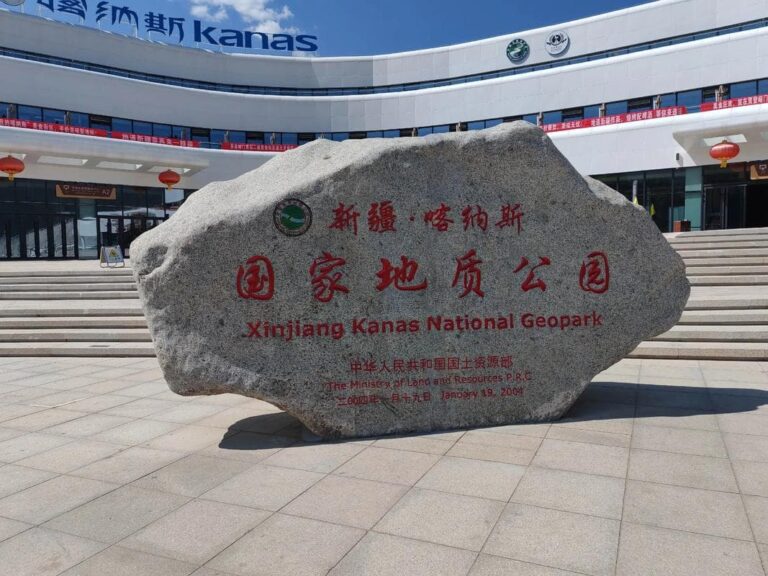
The surrounding area is home to Tuvan people, a small Turkic-speaking group whose timber cabins and throat-singing tradition have made villages like Hemu and Baihaba famous in their own right. Kanas is best understood not as one lake but as a protected valley system — the Kanas Geopark — that includes several villages, rivers, and forest trails.
How to Get There
Most people fly or drive to the nearby town of Burqin, then transfer to the scenic-area shuttle (private cars are restricted inside the park). From Urumqi it is a long haul — fly to Burqin’s airport in season, or drive 7–9 hours. In autumn, when the birch forests turn gold, this is one of the most photographed landscapes in the country, and transport books out weeks ahead.
Inside the park, a hop-on shuttle connects the lake, Hemu, and Baihaba. Buy the through-ticket at the entrance; trying to add segments later costs more and wastes time.
What to Do
Sunrise at the lake overlook. Arrive before the first shuttle crowd. The mist and the shifting water color are the reason people come.
Walk the boardwalk. The lakeside trail is flat and well maintained; the section toward the river mouth is the prettiest.
Visit Hemu Village. Stay overnight if you can. The timber houses, the morning smoke, and the birch forest are the quintessential Kanas photo. Baihaba, on the Kazakhstan border, requires a border permit but is quieter and just as beautiful.
Boat cruise. A short trip across the widest part of the lake gives you the scale and a chance to spot (or imagine) the monster.
Who should think twice about {P}
Who it does not: anyone whose main goal is a relaxed few days, and anyone who has already done this same thing twice here. If you are short on days, this is the thing to cut, and no guidebook will tell you that. Kanas Lake Xinjiangs Mystical is superb, but it is also an hour or more in each direction from everything else you planned, and the drives are what eat the schedule. It suits people who like landscape and can walk a few kilometres at their own pace. It suits a traveller with a car and a flexible morning. It does not suit a family with a small child who needs a shade stop every forty minutes, and it does not suit anyone in week two of a high-altitude trip still feeling it.
The honest version: take half a day if that is all the arithmetic allows, and save the full day for the thing that is genuinely once in a lifetime. I am not going to pretend this is gentle. Who it does suit: someone wanting one strong memory, someone driving the Kanas loop anyway, someone willing to be out before breakfast. There is a lot of unshaded ground, the altitude is real if you came from a low-altitude city, and the swing between the car and the viewpoints is enough to give you a headache on an empty stomach. I wrote the driving side up in our [[sayram-lake-the-last-tear-of-the-atlantic-and-xinjiangs-alpine-gem|Sayram Lake: The ‘Last Tear of the…]] as well.
The hour I go back for
By ten the coaches are here, and by one it is an hour of people shuffling past. The whole face of Kanas Lake Xinjiangs Mystical turns a colour that does not exist at any other time, and the site is empty enough that you can stand still and hear nothing. I have come to like the last forty minutes before the gate shuts, when the groups have gone and the staff are sweeping, because that is when you can look up properly instead of squeezing a shoulder past strangers. The light is only free of company on a Tuesday. Whatever the guidebook says about golden hour, go on a weekday.
Midday is the hour to avoid, not the hour to schedule. Everything goes flat, the shade disappears, and the temperature on an open plateau rises in a way that stops you caring about photographs. Go early or go late and the same ground gives you two different subjects. Between the two I would pick the later one, mostly because the early version costs you the rest of the day. Sunrise is the one worth an alarm for.
That stretch of the trip is described in our [[burqin-to-kanas-the-scenic-approach-to-xinjiangs-famous-lake|Burqin to Kanas: The Scenic Approach to…]] too.
When to Go
Autumn (late September–early October) is the headline season — gold birch against dark spruce, low sun, and still water. It is also the most crowded and the most expensive. Summer (July–August) is green, cool, and good for families. Winter is silent and frozen but much of the park limits access. Shoulder windows (late June, mid-September) split the difference.
Kanas is not a quick stop. Budget at least two nights in the area to see the lake in different light and to reach Hemu without rushing. For a full northern Xinjiang route, link Kanas with Burqin, the五彩滩 (Colorful Beach) at sunset, and then south toward Urumqi or east toward the Ili grasslands.
Practical Notes
Altitude (around 1,300 m at the lake) is mild but the weather swings hard — pack layers. Lodging inside the park is pricey and basic; book early. Cell coverage is patchy. And bring patience: the shuttle lines at peak times are real. None of that diminishes the lake. Stand at the overlook at dawn, watch the mist lift, and the monster story starts to feel less like folklore and more like an explanation.