7-Day Southern Xinjiang Itinerary: Kashgar, the Pamir Plateau & the Silk Road Oases
7-Day Southern Xinjiang Itinerary: Kashgar, the Pamir Plateau & the Silk Road Oases
Last updated: July 15, 2026 · Written by Karl Huang, a Xinjiang travel specialist who has spent time across the region. Practical details are cross-checked against official tourism, transport, and border-regulation sources.
Southern Xinjiang (南疆) is the Xinjiang of the imagination — the true heart of the ancient Silk Road, where mud-brick old cities hum with life, where snow-capped Pamir peaks rise over turquoise lakes, and where the world’s second-largest sand desert stretches beyond the horizon. Where the north dazzles with alpine lakes and grasslands, the south moves you with history, culture, and desert grandeur. This 7-day itinerary is built for first-time visitors who want to experience the essential south without rushing: the living Silk Road city of Kashgar, the breathtaking climb up the Karakoram Highway to the Pamir Plateau, and a taste of the oasis towns and desert that made this region legendary. It balances iconic sights with time to simply wander bazaars, share tea with locals, and watch the light change over the mountains.
Route Overview
This loop is anchored on Kashgar, the natural gateway to the south, and radiates out to the Pamir Plateau and the Silk Road oases before returning. Here is the shape of the week:
- Day 1: Arrive Kashgar — Old City & Id Kah Mosque
- Day 2: Kashgar — Sunday Bazaar, Livestock Market & Abakh Khoja Mausoleum
- Day 3: Karakoram Highway to Karakul Lake & the Pamir Plateau
- Day 4: Tashkurgan — Stone City & Tajik heritage, return toward Kashgar
- Day 5: Kashgar to Yarkand (Shache) — a forgotten Silk Road kingdom
- Day 6: Hotan — jade, carpets & the Sunday market
- Day 7: Desert edge & departure
The itinerary can be driven with a hired car and driver (the most flexible option), joined as a small-group tour, or partly covered by long-distance bus and shared taxi for the budget-minded. Distances in the south are long, so a private vehicle greatly improves the experience.
Best Time to Do This Route
The ideal windows are May to June and September to October. Late spring brings mild temperatures and blossoming oases; autumn offers golden poplars, ripe fruit, and the clearest mountain air of the year. Summer (July–August) is intensely hot in the desert oases — Turpan-like temperatures — though the Pamir Plateau stays cool and is at its greenest. Winter is cold and many mountain services scale back, but Kashgar’s old city has a quiet, atmospheric appeal and far fewer visitors. Whatever the season, remember the Pamir sections are high altitude and cold even in summer.
Day 1: Arrive Kashgar — Old City & Id Kah Mosque
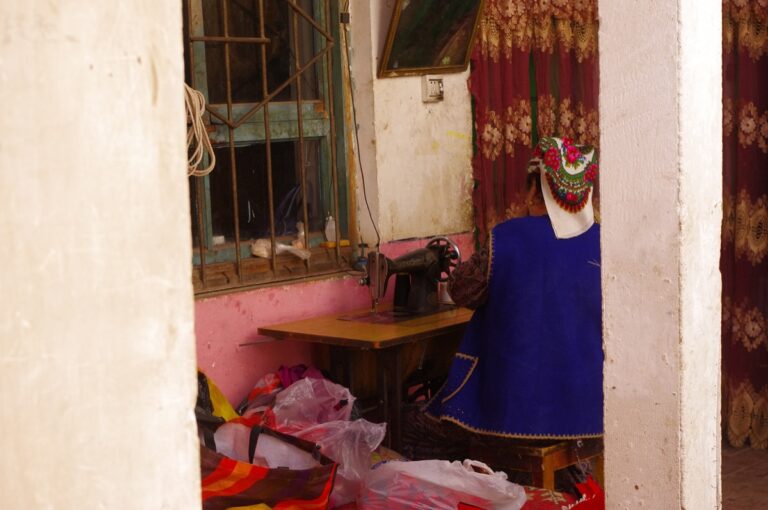
Fly into Kashgar (direct flights connect from Urumqi and several Chinese cities) and dive straight into the old city, the beating heart of the south. Kashgar’s labyrinth of mud-brick lanes, workshops, teahouses, and family courtyards is the best-preserved traditional Uyghur urban quarter anywhere. Spend the afternoon simply getting lost: watch coppersmiths and instrument makers at work, sip tea in a rooftop teahouse, and let the rhythm of the city settle over you. As the afternoon cools, visit the Id Kah Mosque, the largest mosque in China and the spiritual centre of Kashgar, whose yellow façade glows beautifully in the late light. End the day with lamb kebabs and hand-pulled noodles at the night market.
Day 2: Kashgar — Sunday Bazaar & Abakh Khoja Mausoleum
If your visit includes a Sunday, do not miss the legendary Kashgar Sunday Bazaar and the adjacent Livestock Market, one of the greatest trading spectacles on the Silk Road, where farmers haggle over sheep, cattle, and fat-tailed lambs exactly as they have for centuries. On other days, the daily Grand Bazaar still overflows with carpets, spices, dried fruit, hats, and crafts. In the afternoon, visit the Abakh Khoja Mausoleum (also known as the Xiangfei Tomb), a serene tiled complex that is among the finest examples of Islamic architecture in the region and the resting place of an important local dynasty. Round off the day back in the old city, watching the sunset from a rooftop.
Day 3: Karakoram Highway to Karakul Lake
Today is one of the great road journeys on earth. The Karakoram Highway climbs south from Kashgar toward the Pakistan border, threading between colossal peaks. The scenery escalates by the hour: red sandstone gorges, the vast pale sweep of the “sand mountains” at Baisha Lake, and finally the plateau opening out beneath the giants Muztagh Ata (7,509 m) and Kongur Tagh. Your destination is Karakul Lake, a high-altitude jewel that mirrors the surrounding glaciated peaks on calm days. Spend the afternoon walking the shore, meeting Kyrgyz herders, and — if you have the energy and the acclimatisation — riding a camel or hiking a short way up toward the Muztagh Ata base. Nights here are cold; stay in a yurt or guesthouse and marvel at the star field.
Day 4: Tashkurgan — Stone City & Tajik Heritage
Continue deeper onto the Pamir Plateau to Tashkurgan, the last town before the Pakistan and Tajikistan borders and the homeland of China’s Tajik people. Explore the ancient Stone City (Shishcheng), a ruined fortress whose walls have watched over Silk Road caravans for two thousand years, and walk out across the Golden Grass Beach (Jincaotan), a wetland meadow laced with meandering streams and grazing yaks — spectacular at sunrise and sunset. Learn about Tajik culture, famous for its eagle-flute music and mountain hospitality. In the afternoon, begin the return drive toward Kashgar, breaking the journey with photo stops you missed on the way up.
Day 5: Kashgar to Yarkand (Shache)
Head south-east into the oasis belt to Yarkand (Shache), once the capital of a powerful Silk Road khanate and now one of the most atmospheric and least-visited old towns in Xinjiang. Wander the old quarter, visit the Altun Mosque and the royal tombs of the Yarkand Khanate, and browse a bazaar that sees very few foreign travellers. Yarkand offers a glimpse of a slower, more traditional south, away from the busier circuit — a highlight for those who like their history uncrowded.
Day 6: Hotan — Jade, Carpets & Market Life
Travel on to Hotan (Hetian), the ancient centre of China’s jade trade and silk and carpet weaving. Watch artisans at the famous atlas silk and carpet workshops, visit a jade market where dealers still sift river stones for the prized “mutton-fat” white jade, and, if it is Sunday, experience the great Hotan bazaar — one of the largest and most authentic markets in the region. Hotan sits right on the southern rim of the Taklamakan Desert, and the mingling of desert, oasis agriculture, and ancient craft makes it a fitting deep-south finale.
Day 7: Desert Edge & Departure
On your final morning, get out to the edge of the Taklamakan — the “Sea of Death” — to stand before the largest shifting-sand desert in China and feel the scale of the landscape the Silk Road caravans had to cross. Depending on your flight, you can visit a stretch of desert dunes near Hotan or Kashgar before heading to the airport. If time allows, a short camel ride or a climb up a dune for sunrise is a fitting farewell to the region. Fly out from Hotan or return to Kashgar for onward connections, carrying with you the sights, smells, and sounds of the true Silk Road.
Ways to Customise This Route
This itinerary is a framework, not a fixed schedule, and it flexes easily to suit different travellers. History enthusiasts can add a day to explore more of the Silk Road ruins around Kashgar and the ancient Buddhist sites of the region. Those short on time can cut the Yarkand and Hotan legs and focus the week entirely on Kashgar and the Pamir, which alone justify the trip. Adventurous travellers with more time can extend from Hotan along the southern rim of the Taklamakan or cross the desert via one of the desert highways to link up with a northern loop. Photographers should weight the plan toward sunrise and sunset at Karakul Lake and the Tashkurgan grasslands, building in slower mornings. And if you are visiting in autumn, budget extra time in the oasis towns for the fruit harvest and the golden poplar season, which are unforgettable. However you shape it, keep at least two full days in Kashgar — the city rewards slow exploration more than any single monument.
Transport, Accommodation & Budget
Transport: A hired car with driver is the best way to cover the south’s long distances and remote sights, especially the Karakoram Highway. Small-group tours are widely available from Kashgar. Independent travellers can use long-distance buses and shared taxis between the main towns, though this requires patience and time. Note that the Karakoram Highway and border areas require permits and a registered driver — arrange these in advance through a local agency.
Accommodation: Kashgar has everything from backpacker hostels in the old city to comfortable mid-range hotels. On the Pamir Plateau, expect simple guesthouses and yurts at Karakul Lake and basic-to-comfortable hotels in Tashkurgan. The oasis towns of Yarkand and Hotan have modest but adequate options.
Budget: Southern Xinjiang is excellent value. A mid-range traveller might budget 400–700 RMB per day including a shared driver, accommodation, meals, and entry fees; budget travellers using public transport can spend considerably less. The Karakoram Highway day and permits are the biggest single costs.
What to Eat Along the Way
Southern Xinjiang is a food lover’s dream, and eating well is part of the journey. In Kashgar, work through the night-market classics: cumin-dusted lamb kebabs, laghman hand-pulled noodles, samsa (baked lamb buns), and polo (the region’s fragrant pilaf rice). Do not miss the freshly baked naan sold from tandoor ovens across the old city, or a bowl of cold, tart yogurt on a hot afternoon. On the Pamir Plateau, meals are simpler and heartier — Tajik and Kyrgyz herders serve milk tea, fresh dairy, and warming mutton dishes suited to the altitude and cold. In the oasis towns of Yarkand and Hotan, seek out the local bazaar food stalls, where seasonal fruit is spectacular: apricots and mulberries in early summer, then the famous melons and grapes as autumn approaches. Sharing tea and food with locals, when invited, is one of the great pleasures of travelling the south — accept graciously and eat with your right hand.
Details that matter locally
- Permits and altitude: Arrange Karakoram Highway/border permits ahead of time through a local agency, and take the Pamir altitude seriously — ascend gradually, hydrate, and rest on arrival at Karakul.
- Time it for a Sunday: The Kashgar and Hotan Sunday markets are highlights; try to have a Sunday in your itinerary.
- Cash and connectivity: Carry cash for markets and remote areas, and download offline maps; signal is patchy on the plateau.
- Dress in layers: The desert oases are hot while the Pamir is cold — you will experience both in a single week.
- Respect local customs: This is a predominantly Muslim region; dress modestly at mosques and mausoleums and ask before photographing people.
- Extend if you can: Adding two or three days lets you slow down in Kashgar, add a full day at Tashkurgan, or pair this route with a northern Xinjiang loop for the complete picture.
Before you go
Seven days in southern Xinjiang delivers the Silk Road at its most vivid: the ancient lanes and bazaars of Kashgar, the sublime climb to the Pamir Plateau and Karakul Lake, the quiet grandeur of Yarkand and Hotan, and the endless sands of the Taklamakan. It is a journey through living history and staggering landscape in equal measure — demanding in its distances, generous in its rewards. Come with an open schedule and an open mind, share tea where it is offered, and you will leave the south understanding why, for two thousand years, travellers have been unable to forget this corner of the world.