
Pamir Acclimatization Plan: A Day-by-Day Schedule and Medication Checklist
Last updated: August 17, 2026 · Written by Karl Huang, a Xinjiang travel specialist who has spent time across the region. Practical details are cross-checked against official tourism, transport, and border-regulation sources.
The companion guide Altitude Sickness on the Pamir Plateau explains why the thin air hits here and what the symptoms look like. This article turns that into an action plan: a day-by-day schedule that lets your body adapt, plus a medication and kit checklist you can actually pack. It is practical preparation, not medical advice — discuss medication with a doctor before you travel.
The one rule: gain altitude slowly
The Pamir starts high and keeps climbing. Kashgar sits at about 1,300 m, Tashkurgan at ~3,100 m, Karakul Lake at ~3,600 m, and the Khunjerab Pass near 4,700 m. The mistake most travelers make is rushing from Kashgar to the top in a day. Sleep lower than you drive.
Day-by-day acclimatization schedule
- Day 1 — Kashgar: arrive, do nothing strenuous, hydrate hard. The dry plateau air dehydrates you faster than it feels.
- Day 2 — Kashgar: a rest day. Let your body register the elevation before you climb. This single buffer prevents most problems.
- Day 3 — drive up, sleep in Tashkurgan: reach ~3,100 m and sleep there — not at the lake or the pass.
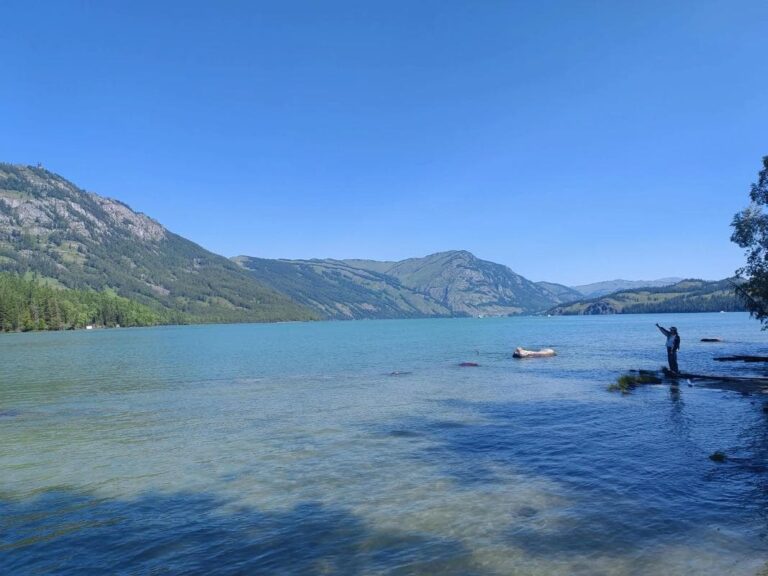
- Day 4 — Karakul day trip, return to Tashkurgan: see the lake at 3,600 m, then drop back down to sleep low. This is the key trick: climb high, sleep low.
- Day 5 — only now consider Khunjerab: the highest point is the worst place to feel unwell, so earn it last.
Medication checklist
- Acetazolamide (Diamox): helps some travelers prevent AMS by speeding acclimatization — discuss dosage and suitability with a doctor before the trip, and carry it if you’re prone.
- Ibuprofen or paracetamol: for the routine altitude headache; painkillers alone don’t fix AMS, but they make the adjustment bearable.
- Oral rehydration salts: the dry cold hides dehydration, which worsens every symptom.
- Any personal meds: remote pharmacies are scarce; bring what you rely on.
The one thing I order every time
Ask for it plain the first time. The sweet version is the one for the market, not for a morning. In Altitude Sickness Pamir Plateau that is the tea, and the reason is not the flavour. It is the rhythm of it: someone puts a glass in your hand, another arrives, you sit for ten minutes, and suddenly the rest of the day is sorted. If the timing is the question, our [[xinjiang-altitude-sickness-pamir-guide|Altitude and Health on the Pamir Plateau:…]] goes through it properly.
Three words that change the order
What you need is the phrase for not spicy, the hand signal for a smaller portion, and the knowledge that one word covers what locals drink in winter, which is salt and butter, and what visitors get, which is sweet. Point at what the next table has. You do not need Uyghur. In Altitude Sickness Pamir Plateau that single gesture has never once got me the wrong dish, and it saves you ordering a second plate you did not want.
How to order, and what a portion really costs
Order one less than you think, because the rice arrives in a bowl the size of a small basin and the second helping does not need ordering. The number on the board is for one, and one here is enough for a European adult if you share two. Tips are not expected in the small places and are quietly welcome where there is table service, but do not build the visit around it. Card and phone payment both work everywhere in Altitude Sickness Pamir Plateau. I wrote the driving side up in our [[xinjiang-altitude-sickness-guide|Xinjiang Altitude Sickness: How to Prepare…]] as well.
Symptoms to watch — and the descent rule
Mild headache, short breath on exertion, and poor sleep are normal adjustments. But severe headache unrelieved by painkillers, vomiting, loss of coordination, confusion, or breathlessness at rest mean descend now — even a few hundred meters helps, and Tashkurgan or Kashgar have medical help. Never push on to Khunjerab if you feel off; the pass is the highest, coldest, and most isolated point on the route.
What to pack for the plateau
- Layers: it can be 25°C in the sun and near freezing at a pass; a windproof shell is non-negotiable.
- Sun and wind protection: UV is intense at altitude — hat, sunglasses, lip balm, high-SPF cream.
- Water, constantly: sip through the day, not just when thirsty.
- Skip alcohol and heavy meals on the first plateau nights; rest beats hiking hard.
Most travelers adapt fine with a slow approach and common sense. For the symptoms, prevention, and “what to do if you feel bad” detail, read the full Pamir altitude guide before you go.