Sanzi (Fried Dough Twists): The Crunchy Snack You’ll Find Everywhere
Sanzi are the strips of fried dough you see piled on a tray at every second stall in a southern Xinjiang market, golden, twisted into loose ropes, and slightly oily in the best possible way. I first ate them standing up in a Hotan alley at midday with a bag of warm walnuts in the other hand, and I have been looking for a decent batch ever since. They are cheap, they keep for days, and they are the one snack locals buy by the kilo rather than by the portion.
What Makes the Dough Work
The dough is flour, water, a little salt, and often a small amount of alkali or bake powder that changes the colour and the snap. It is rested for a while, then pulled and stretched by hand into long strands, braided or twisted, and dropped straight into hot oil. There is no shaping tool involved. Watching a baker work a sanzi tray is closer to watchmaking than cooking: the hands know the thickness before the eyes do, and a strip that goes in too thick comes out greasy and soft.
That last detail is the whole craft. Thin sanzi shatter. Thick ones taste like fried bread. The difference between a good tray and a bad one is often a matter of an hour of practice and the temperature of the oil, which the baker judges by how the first strip behaves.
How They Are Served
The plate usually arrives with something to dip. Salt and chilli in the south. A sugar bowl in some of the Yining tea rooms, where a sweet sanzi is normal and nobody blinks. Occasionally a small dish of crushed walnuts, which is the combination I keep coming back to.
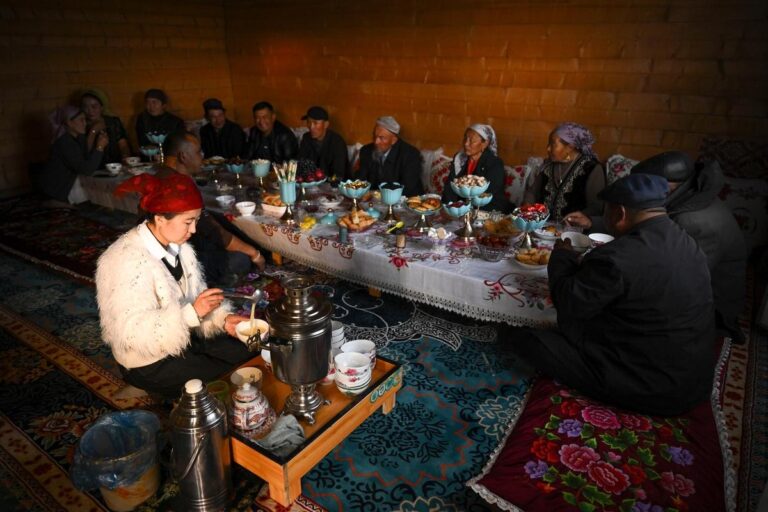
They are a breakfast and a tea food, not a meal on their own. A tray of sanzi on the table next to a pot of tea is how a lot of a morning here passes, and the same tray reappears at four in the afternoon with the same pot.
Reading a Good Tray From a Bad One
Look at the colour first. Deep gold with even colour along every twist means the oil was right and the strips were thin enough. Pale patches mean the oil was too cool and the dough drank it. Very dark spots mean it went past and the flavour turns bitter. Then look at the tray as a whole: if the bottom pieces are stuck together in a sheet, the batch was overloaded in the basket and the ones underneath never cooked properly.
Texture is the thing you cannot check in advance, so buy one piece first if the stall is busy and you cannot see the tray being turned. A fresh tray gives you the snap. A tray that has been under a cloth for two hours in a warm room goes soft and takes on a faint rancid note from the oil.
Where to Look in a Market
Two places: the hot section of a big bazaar, where the oil is running and the tray goes fast, and the small bake houses in the older lanes where the same family has been doing it the same way for years. Both work. The market stall gives you variety and spectacle, the lane bake house gives you the version people grew up with.
For the bigger picture of what a southern market is like, the Kashgar Sunday bazaar is the one most people picture, and it is worth a morning even if sanzi are not what drew you there. In Hotan and the smaller oasis towns the same stalls exist without the crowds.
How Much to Ask For
People buy by weight and eat slowly. A half kilo is a generous share for two; a kilo is what a family table goes through in an afternoon. If you are alone, ask for a small portion first, because the oil residue keeps them from being a clean travel snack after a few hours.
Our bargaining guide covers what is fixed price and what is not. The etiquette around snack food here is far lighter than the etiquette around carpets and jade, which is why the stalls are so easy to walk up to.
What to Pair Them With
Fresh naan breaks the effect and resets your palate between bites. A bowl of laghman afterwards is too much, so save that for the next meal. Walnuts, dried grapes, and a hot drink are the combination that works.
On the sweet side, the halal food guide explains the wider patterns of how these stalls operate, and if you are watching how much fried food is sensible on a long trip, the food safety tips page covers the practical version of that question.