Hostels in Xinjiang: What to Expect When You Travel Light
The first hostel I stayed in Xinjiang was in Urumqi, and it was fine in the way hostels are fine: thin walls, a friendly desk, and a dorm that smelled of someone’s noodles. What surprised me was how few of them there are once you leave the capital. If you are picturing a backpacker trail of hostels across the region, adjust that picture now.
Where they actually exist
You will find hostels in Urumqi, and a scattering in Kashgar and a couple of other big stops. Past that, the map thins out fast. This matters more for a road trip than for a train-based visit, because your own car means you are not tied to the few cities with dorms. I have often skipped the hostel and taken a cheap room instead, simply because there was no hostel to take.
Dorm reality
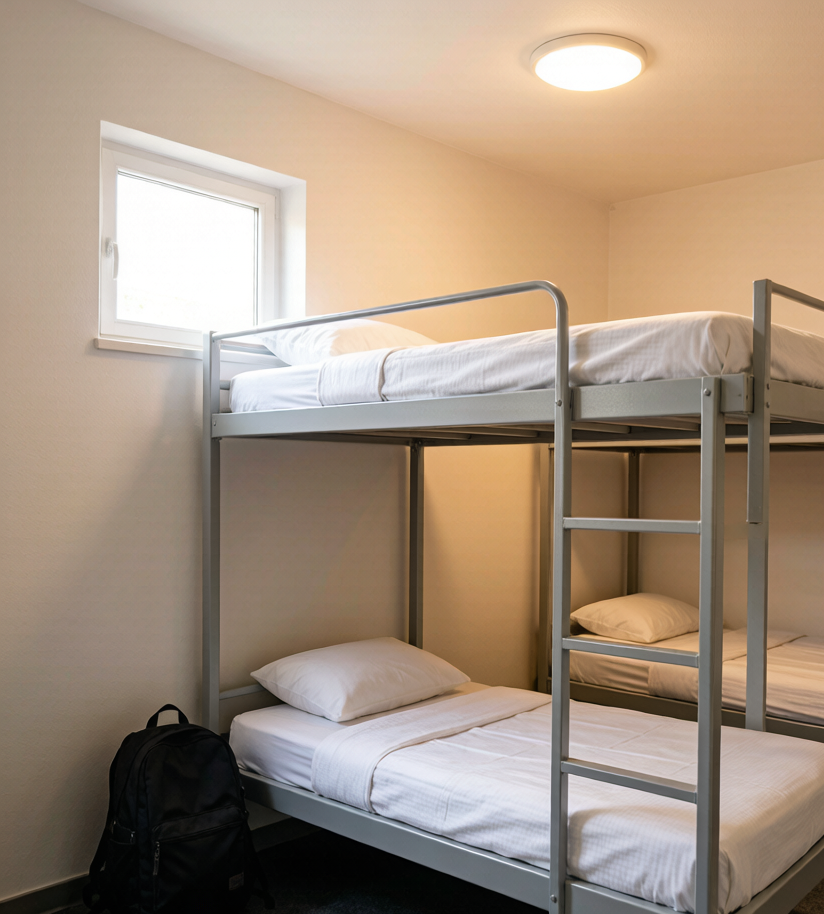
Most dorms are mixed or male-only, and the clientele is often domestic travelers and the occasional Central Asian trader, not the party crowd you get in other countries. Quiet hours are real because everyone is up early. I have had some of my calmest hostel nights here precisely because nobody was performing backpacker culture.
When a bunk beats a room
If you are solo and watching costs, a dorm in Urumqi or Kashgar is hard to beat, especially paired with broad budget tips. But for two or three people, splitting a basic hotel room is often cheaper per head and far more comfortable. I stopped using hostels the moment I started driving, because the car became my luggage and my flexibility.
The booking wrinkle
Foreigners sometimes hit a wall at smaller properties that claim they cannot register a foreign guest. That is why I lean on the foreigner booking rules and keep a backup. A hostel that cannot register you is worse than no hostel at all, since the police check-in is not optional.
If you want the more local sleep, Uyghur homestays and yurts are the more memorable option anyway. The bunk is just a tool, not the experience.
What goes in the day pack
The temperature drops fast once you stop moving and the drop is not hypothetical on an exposed pass. A fleece covers most of the year, a real jacket covers shoulder season. Water, more than you think, a power bank and some cash. Cards work at the gate and in the shops, but the stalls on the approach road and the drivers waiting at the turnoff want cash, and coming up short at the moment you want a lift is the classic way to lose an hour. The light here is serious and the shade is intermittent, so the sunscreen goes on before you leave the hotel, not at the gate. Sunscreen and a brim. A wind shell.
A few minutes of background change the visit
Knowing what you are standing on turns a pleasant walk into something you actually remember. Locals in Xinjiang will give you the short version in about a minute if you ask, and it is usually better than the panel at the gate. The place only makes sense once you know its shape. Xinjiang Hostels Backpackers was cut rather than built, which is why the walls are solid and the streets are the empty space between them, and why centuries of dust ended up acting as a roof. The history here is layered in a way the official signage compresses into names and dates. Read that the morning before rather than at the entrance, where the boards stand too far from the object to help. That stretch of the trip is described in our [[xinjiang-hostels-budget-stays|Hostels in Xinjiang: Budget Stays, Dorm…]] too.
One night that changed my mind
I will give the hostel its due. In Urumqi I shared a dorm with a Kazakh student who drew me a map of back roads his family used, roads no app showed. That single conversation rearranged my whole northern plan and led to a week I would not trade. You will not get that in a hotel lobby. The catch is the thin walls and the 6 a.m. departures, so I sleep with earplugs and a lenient schedule. If you are driving, the hostel is less useful, but as a solo arrival point for a day or two it remains the cheapest way to meet the region on its own terms.
The registration catch, again
One thing specific to hostels: the smaller ones sometimes fumble the foreigner check-in, and a hostel that cannot register you is a problem, not a quirk, because the police check is real. I confirm registration at the desk before I carry my bag upstairs, and if the answer is vague I look elsewhere. The bigger city hostels handle it as routine, which is why I lean to those over a charming unknown. Pair this with the [[booking-hotels-china-foreigner|foreigner booking rules]] and you avoid the only real downside of the bunk. The hostel is a tool for meeting the region, not a lifestyle, and used that way it earns its place on a tight budget.