Xinjiang Travel for Seniors: A Practical Guide for Older Travelers
Traveling Xinjiang in your 60s, 70s, or beyond is not only possible, it is one of the most rewarding ways to see the region. I have accompanied older relatives on two loops here, and the single lesson that mattered most was simple: do not copy a 25-year-old’s backpacker sprint. The landscape is huge, the distances are real, and the reward comes from slowing down. This guide distills what actually makes a Xinjiang trip comfortable and safe for older travelers, based on those trips and on what I would do differently next time.
Is Xinjiang Comfortable for Older Travelers?
Short answer: yes, with planning. The cities, Urumqi, Kashgar, Yining, Turpan, are modern, walkable in parts, and have good hotels and hospitals. The famous scenery, lakes, grasslands, old towns, is reachable by coach, train, or private car with minimal hard walking if you choose well. The challenge is not danger; it is scale. A “short” 200 km hop can take four hours on mountain roads, so the route design does the heavy lifting.
Pace and Route Planning
I group Xinjiang routes into three effort levels. Match the level to your energy, not your ambition.
| Effort | Example route | Daily driving | Why it suits seniors |
|---|---|---|---|
| Easy | Urumqi + Heavenly Lake + Turpan | 1.5-3 h | City bases, short scenic stops, good hotels |
| Moderate | Ili loop: Yining, Sayram, Nalati, Kazanqi | 2-4 h | Gentle grassland walks, lake shore drives |
| Demanding | Kashgar to Tashkurgan (Pamir) | 4-6 h | High altitude, border permit, long climbs |
Why a Loop Beats Point-to-Point
A loop, starting and ending in the same city, means you unpack once and let a driver handle the rest. For older travelers this removes the daily luggage shuffle and the risk of missing a long-distance bus. I now recommend a private car with driver for anyone over 65 doing the Ili or northern loop; the cost is modest split across a small group and the comfort payoff is large.
Altitude: What to Watch
Most visitor hotspots sit between 800 and 2,000 m, where healthy seniors feel fine. The Pamir and Tianshan passes are the exception.
| Destination | Elevation | Watch for |
|---|---|---|
| Heavenly Lake (Tianchi) | ~1,900 m | Mild breathlessness on the boardwalk |
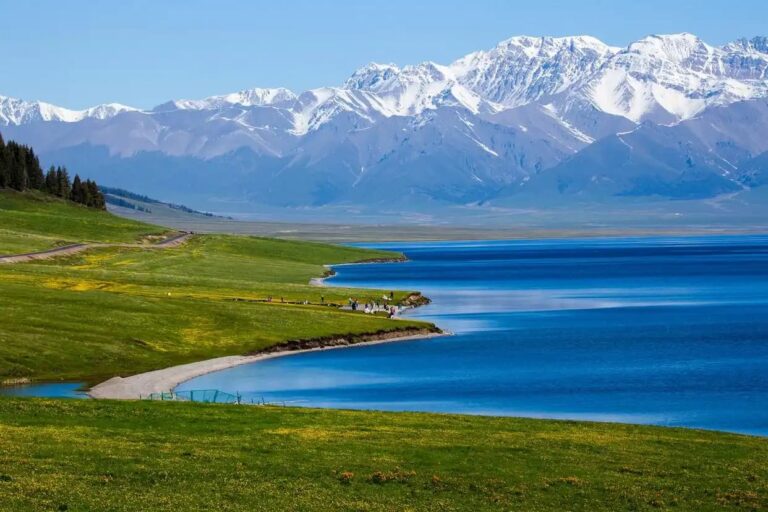
| Sayram Lake | ~2,070 m | Wind and cold even in summer |
| Tashkurgan / Karakul | 3,000-3,600 m | Real altitude effect; pre-acclimatize |
If you have heart or lung conditions, show this table to your doctor before booking the Pamir. For the lower routes, a normal fitness level is enough.
Transport That Saves Your Knees
Three options matter. The new high-speed and regular trains are smooth and let you sit for hours without road fatigue; book a soft-sleeper or business seat. Coaches are cheapest but rougher on bad roads. A private car is the most flexible and lets you stop the moment a knee complains. I avoid long-distance buses for seniors entirely; the saved money is not worth a stiff back.
Choosing Where to Stay and Your Daily Rhythm
| Style | Best for | Trade-off |
|---|---|---|
| City hotel base | Seniors who want lifts, breakfast, clinics nearby | Less time in nature |
| Lake/resort stay | Calm mornings, fewer crowds | Fewer medical options |
| Yurt or homestay | Culture, but basic toilets | Not ideal over 70 |
Keep a rhythm of late start, long lunch, early dinner. Xinjiang’s sun sets after 9 p.m. in summer, so an 10 a.m. departure still gives a full day without the midday heat.

Health, Insurance and Medication
Carry a written list of your medications in both English and Chinese, and pack extras in your hand luggage in case checked bags delay. Travel insurance that covers evacuation is not optional out here; clinics exist in cities but a medevac to Urumqi or home is expensive without it. For the full picture on clinics, altitude, and what to pack in your medical kit, see our Safety & Health in Xinjiang guide. I also keep a paper copy of my passport and permit in a separate bag.
Food Without the Fuss
Xinjiang food is hearty and mostly halal, which suits many older stomachs, but the signature lamb and noodle dishes are rich. Ask for “yumshaq” (softer) rice or noodle dishes, and lean on laghman, polo, and soup-based ququ if you want something lighter. Fresh melon and grapes in season are a gentle, hydrating bonus. Always drink bottled or boiled water; the dry climate dehydrates you faster than you notice.
Money, Connectivity and Daily Comforts
Two practical wrinkles catch first-time seniors. First, carry some cash; outside the big cities, small vendors and village homestays may not take foreign cards, and while mobile pay dominates locally, it requires a Chinese account most visitors lack. I keep about 500 yuan in small notes for melon stalls and toilet fees. Second, a local SIM or eSIM keeps maps and translation working in the valleys where Wi-Fi drops; ask your hotel to help with the simplest data plan rather than wrestling the app yourself.
Toilets are the other daily reality. Scenic areas have paid public facilities that are cleaner than the free ones but rarely stock paper, so a small tissue pack and hand sanitizer earn their weight. I build a “restroom rhythm” into the day, using facilities at each meal stop, which avoids the long road stretches with nowhere to go. None of this is hard; it just rewards a little advance thought.
Photography Without the Rush
Seniors often take the best Xinjiang photos precisely because they are not sprinting. A tripod-free golden-hour sit by Sayram or a slow wander through a Kashgar alley yields more than a whistle-stop checklist. I schedule one “sit and watch” block per day, a cafe or lakeside bench, and let the light come to me. The camera matters less than the patience, and patience is something older travelers usually have in surplus.
Best Seasons for Comfort
Shoulder seasons, late May to June and September, are the sweet spot: warm days, cool nights, and fewer crowds than July-August. Winters are stunning but harsh, with closed mountain roads. Our best time to visit Xinjiang breakdown maps each month so you can dodge both the heat and the holiday-price spikes.
A Sample 8-Day Gentle Loop
| Day | Base | Activity |
|---|---|---|
| 1-2 | Urumqi | Arrive, rest, Heavenly Lake half-day |
| 3-4 | Turpan | Grape valley, Jiaohe ruins, slow pacing |
| 5-6 | Yining | Sayram Lake shore drive, Kazanqi old town |
| 7-8 | Nalati | Gentle grassland walk, return flight |

If it goes wrong, this is what to do
If this happens: Needing to be fit to enjoy xinjiang at 70
No. Choose easy or moderate routes, use a private car, and skip the high Pamir if you have cardiac concerns. Most scenic stops are a short, flat walk from the parking area.
When it goes sideways: Medical care available if i need it
Yes in all major cities, with modern hospitals and English-speaking staff in Urumqi. Carry insurance and your medication list; for remote areas, plan a buffer day.
If you run into this: Altitude be a problem
Only above ~3,000 m. The popular lakes and grasslands are fine for most seniors. Spend a night at mid-elevation before any Pamir leg if you are unsure.
On the ground: Food too heavy
It is rich but not usually fiery. Ask for softer, soup-based dishes and plenty of fruit; vendors are used to adjusting for older guests.
If this happens: Travel independently
A small private car with driver gives the most comfort and control. Groups are fine but lock you into a fixed pace; for seniors I prefer the private option.
When it goes sideways: Pack that younger travelers skip
Extra medication, a supportive neck pillow for long drives, slip-on shoes for the many shoe-off home visits, and a lightweight layer even in July for lake wind.