
Xinjiang on a Budget: Real Costs and Money-Saving Tips for 2026
The Real Cost of Traveling in Xinjiang
Let me start with a confession: before I took my first trip to Xinjiang, I thought it would be cheap. I’d traveled extensively in Southeast Asia and India, where $30 a day is a comfortable budget. I assumed Xinjiang, being a less-developed region of China, would be similar. I was wrong — and I overspent by nearly 40% because I hadn’t done the math.
Xinjiang is big. It’s huge. The distances between cities are measured in hundreds of kilometers, and the transportation costs add up quickly. But it’s not uniformly expensive — some things cost more than you’d expect, others less. In this article, I’ll break down the real costs based on my three trips to Xinjiang between 2018 and 2024, with updated prices for 2026.
{IMG1}
Accommodation Costs
Hostels and Budget Options
If you’re traveling on a tight budget, hostels are your best friend. In Urumqi, Kashgar, and Yining, you can find dormitory beds for 80 to 150 yuan per night. The quality varies — some are clean and modern with good common areas, others are… well, let’s just say you get what you pay for.
I stayed at a hostel in Kashgar’s Old City in 2023 that cost 90 yuan a night for a dorm bed. It had a lovely courtyard, free tea, and the owner spoke enough English to help me plan my day. On the other hand, a 100-yuan hostel in Urumqi turned out to be above a noisy night market, and I didn’t sleep for two nights.
Private rooms in hostels or budget hotels range from 200 to 350 yuan per night. These are decent options if you want privacy but don’t need luxury.
Mid-Range Hotels (3-Star)
For a comfortable 3-star hotel in most Xinjiang cities, expect to pay 300 to 500 yuan per night. In Urumqi, prices are on the higher end — a decent business hotel near People’s Square will set you back 400-600 yuan. In smaller cities like Kuqa or Hotan, you can find similar quality for 250-400 yuan.
One thing to note: during peak season (July to September) and Chinese holidays (especially National Day in October), prices can jump by 50% or more. I made the mistake of not booking ahead during National Day week in 2019 — I ended up paying 800 yuan for a room that normally costs 350.
Luxury Hotels (4-5 Star)
If you want to splurge, luxury hotels in Urumqi and Kashgar cost 800 to 2,000 yuan per night. The Shangri-La in Urumqi, for example, runs about 1,200-1,800 yuan depending on the season. In Kashgar, the luxury options are fewer but include some beautiful boutique hotels inside the Old City that have been converted from traditional courtyard houses. These typically cost 600-1,200 yuan.
Food and Dining Costs
Food is where Xinjiang shines — and where you can save money if you eat like a local. Here’s what I typically spend:
Street Food and Local Eateries
A plate of laghman (hand-pulled noodles with vegetables and meat) costs 15 to 25 yuan. Samsa (meat pastries) are 5 to 10 yuan each. A skewer of lamb chuanr is 3 to 8 yuan depending on the city and the quality of the meat.
My typical breakfast in Xinjiang: a nang (flatbread) for 3-5 yuan, plus a cup of milk tea for 5 yuan. That’s a filling breakfast for under 10 yuan.
Lunch at a local noodle shop: 20-30 yuan. Dinner at a mid-range restaurant with beer: 50-80 yuan.
Mid-Range Restaurants
For a proper sit-down meal at a restaurant that serves both local and Chinese cuisine, expect to pay 60 to 120 yuan per person. In Urumqi, there are excellent Uyghur restaurants where a feast for two (with multiple dishes, bread, tea, and dessert) costs about 200-300 yuan total.
Western Food and Cafes
Western food is surprisingly expensive in Xinjiang. A burger and coffee at a cafe in Urumqi or Kashgar will cost you 80 to 150 yuan. If you’re craving Western food, it’s a significant expense — but sometimes, after two weeks of noodles and bread, you just need a burger.

Transportation Costs
This is the big one. Because Xinjiang is so large, transportation will likely be your largest expense.
Trains
China’s rail network in Xinjiang has expanded significantly in recent years. The high-speed rail from Urumqi to Kashgar (opened in 2022) has made a huge difference.
- Urumqi to Kashgar (high-speed): 2nd class ~450 yuan, 1st class ~720 yuan. Travel time: about 6-7 hours.
- Urumqi to Yining (high-speed): ~150-200 yuan. Travel time: about 2.5 hours.
- Urumqi to Turpan (high-speed): ~50-80 yuan. Travel time: about 1 hour.
Overnight sleeper trains are still available for some routes and cost 250-400 yuan for a hard sleeper berth.
Domestic Flights
Flights within Xinjiang can be surprisingly affordable if you book in advance:
- Urumqi to Kashgar: 500-900 yuan (one way)
- Urumqi to Hotan: 600-1,000 yuan
- Urumqi to Yining: 300-600 yuan
Prices fluctuate wildly based on season. I’ve seen Urumqi-Kashgar tickets for as low as 350 yuan during sales, and as high as 1,400 yuan during peak season.
Long-Distance Buses
Buses are the cheapest option but also the slowest. A bus from Urumqi to Kashgar costs about 200-280 yuan but takes 14-18 hours. I don’t recommend this unless you’re on an extreme budget — the train is faster, more comfortable, and costs about the same.
Car Rental and Taxis
Renting a car with a driver (the most common option for foreigners) costs 800 to 1,500 yuan per day, depending on the type of vehicle and the distance. This includes the driver’s fee and fuel. For a week-long trip around southern Xinjiang, expect to pay 6,000-10,000 yuan total for transportation.
Taxis within cities are affordable. A ride across Urumqi costs 20-40 yuan. In smaller cities, 10-20 yuan.
Attraction Entrance Fees
Xinjiang’s top attractions have gotten more expensive in recent years. Here are the 2026 prices for major sites:
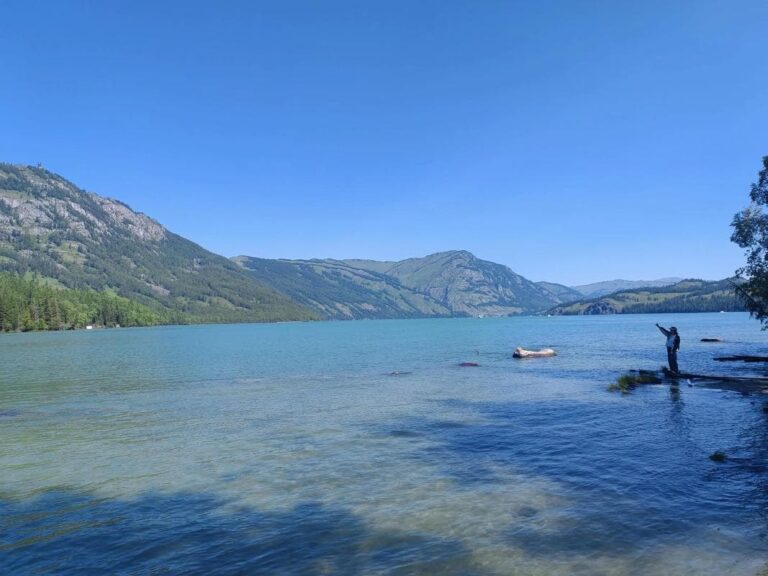
- Kanas Lake (including shuttle bus): 275 yuan (peak season), 150 yuan (off-season)
- Hemu Village: 102 yuan (including shuttle)
- Kashgar Old City: Free (yes, it’s free!)
- Id Kah Mosque (Kashgar): 45 yuan
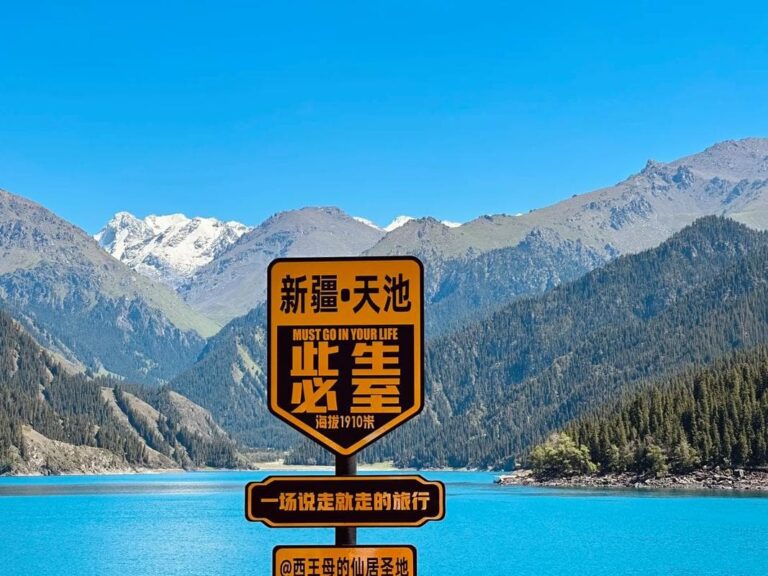
- Heavenly Lake (Tianchi) near Urumqi: 155 yuan (including shuttle bus)
- Jiaohe Ancient City (Turpan): 70 yuan
- Flaming Mountains (Turpan): 40 yuan
- Karakul Lake (on the Karakoram Highway): 50 yuan
If you’re planning to visit multiple attractions, the costs add up. For a typical 7-day trip covering Kanas, Hemu, and Turpan, you’re looking at 600-800 yuan just in entrance fees.
A 7-Day Budget Breakdown
Let me share the actual numbers from my 2024 trip. This was a 7-day trip starting and ending in Urumqi, covering Turpan and a quick visit to Kashgar:
| Expense Category | Cost (CNY) |
|---|---|
| Accommodation (6 nights, mid-range) | 1,800 |
| Food (3 meals a day + snacks) | 900 |
| Transportation (trains + local taxis) | 1,200 |
| Attraction entrance fees | 450 |
| Miscellaneous (souvenirs, tips, etc.) | 300 |
| Total | 4,650 |
That’s about $650 USD for a week of comfortable travel. If I had stayed in hostels and eaten only at local eateries, I could have cut that to about 2,500 yuan ($350). On the other hand, if I had rented a car with a driver and stayed in luxury hotels, it would have been 10,000 yuan ($1,400) or more.
Money-Saving Tips That Actually Work
1. Travel in the Shoulder Season
June and September are my favorite months in Xinjiang. The weather is pleasant, the crowds are thinner, and prices are 20-30% lower than in July and August. Avoid Chinese holidays at all costs — that’s when prices peak and availability disappears.
2. Use High-Speed Rail Instead of Flying
The high-speed rail network in Xinjiang is excellent, and it’s often cheaper than flying. Plus, you get to see the landscape from the train window, which is spectacular on the Urumqi-Kashgar line.
3. Eat at the Local Markets
Every city in Xinjiang has a bazaar or market where locals eat. In Urumqi, it’s the Erdaoqiao Market. In Kashgar, it’s the streets around the Id Kah Mosque. A meal at these places costs a fraction of what you’d pay at a restaurant, and the food is often better.
4. Share Transportation Costs
If you’re renting a car or hiring a driver, try to find other travelers to split the cost. In Kashgar, I met two French travelers at a hostel, and we shared a driver to Tashkurgan for three days. The cost per person dropped from 1,200 yuan to 400 yuan.
5. Book Accommodation in Advance (But Not Too Far in Advance)
Booking 2-3 weeks ahead usually gets you the best rates. Booking too far in advance (more than 2 months) can actually be more expensive because you’re locked into a rate that might drop later. And of course, booking last-minute during peak season is a recipe for overpaying or not finding anything.
Urumqi vs. Other Cities: Cost Comparison
Urumqi, being the capital and the transport hub, is generally more expensive than other cities in Xinjiang. Here’s a quick comparison:
- Accommodation: Urumqi is 20-30% more expensive than Kashgar or Yining for similar quality.
- Food: Surprisingly, Urumqi is cheaper for local food because there’s more competition. A plate of laghman in Urumqi costs 15-20 yuan; in a tourist town like Burqin (gateway to Kanas), it’s 25-35 yuan.
- Transportation: Urumqi is the cheapest place to start your trip because you have more options (high-speed rail, flights, buses). Starting from a smaller city can limit your options and force you into more expensive choices.
My Biggest Money Mistakes in Xinjiang
Let me save you some pain by sharing where I wasted money:
- Booking a driver for a route I could have done by train. On my first trip, I hired a driver from Urumqi to Turpan for 600 yuan. The high-speed train costs 60 yuan and takes 45 minutes. I could have taken the train, hired a local driver in Turpan for the day (200 yuan), and saved 340 yuan.
- Eating at “halal” restaurants that cater to tourists. In Kashgar’s Old City, there are restaurants with English menus and pictures of foreign celebrities on the wall. They’re twice as expensive as the hole-in-the-wall places where the locals eat, and the food is often worse.
- Not bringing enough cash. Some smaller towns and rural areas still prefer cash, and you might get charged extra if you use a foreign card at an ATM. I once paid a 50-yuan ATM fee because I was desperate. Bring 500-1,000 yuan in cash as a backup.

Internal Links for Further Reading
- Kashgar Old City Travel Guide — plan your base city before budgeting
- Best Time to Visit Xinjiang: A Seasonal Guide — travel in shoulder season to save money
- Xinjiang Transportation Guide — compare trains, buses, and flights for your budget
FAQ: Budget Travel in Xinjiang
Is Xinjiang more expensive than other parts of China?
Yes and no. Accommodation and food are similar to or cheaper than Beijing, Shanghai, or Shenzhen. But transportation costs are higher because of the distances. If you’re on a backpacker budget, expect to spend 250-400 yuan per day. For a comfortable trip, 600-1,000 yuan per day is more realistic.
Can I use credit cards in Xinjiang?
In major cities and luxury hotels, yes. But in most places, you’ll need to pay with cash or Alipay/WeChat Pay. Foreign credit cards can be linked to Alipay now, but it’s not always seamless. Bring cash as a backup.
Are there any hidden costs I should know about?
Two things: shuttle buses at scenic areas are often mandatory and expensive (50-100 yuan). And tipping is not customary in China, so you don’t need to budget for that — but some drivers or guides may hint at it. It’s up to you whether to give something extra.
What’s the cheapest way to get around Xinjiang?
High-speed rail for intercity travel, local buses or shared taxis for shorter distances, and walking or renting a bicycle within cities. If you’re really on a budget, consider overnight trains to save on accommodation costs.
Is it possible to travel Xinjiang on 150 yuan a day?
It’s possible but very challenging. You’d need to stay in the cheapest hostels (60-80 yuan), eat only street food (30-40 yuan), and use only local buses (20-30 yuan). You’d also have to skip most paid attractions. It’s doable for a short trip, but not recommended for more than a few days.