Xinjiang Naan (Nang): A Field Guide to the Region’s Daily Bread
You do not eat naan in Xinjiang so much as rely on it. On my first morning in Kashgar I bought a still-warm round from a roadside tandoor for two yuan, tore it open, and dunked it in Xinjiang milk tea. It became every breakfast, every long-drive snack, every accompaniment to the lamb skewers I ordered at night. Naan is the quiet backbone of the regional table — here is how to know your nang.
What Exactly Is Naan?
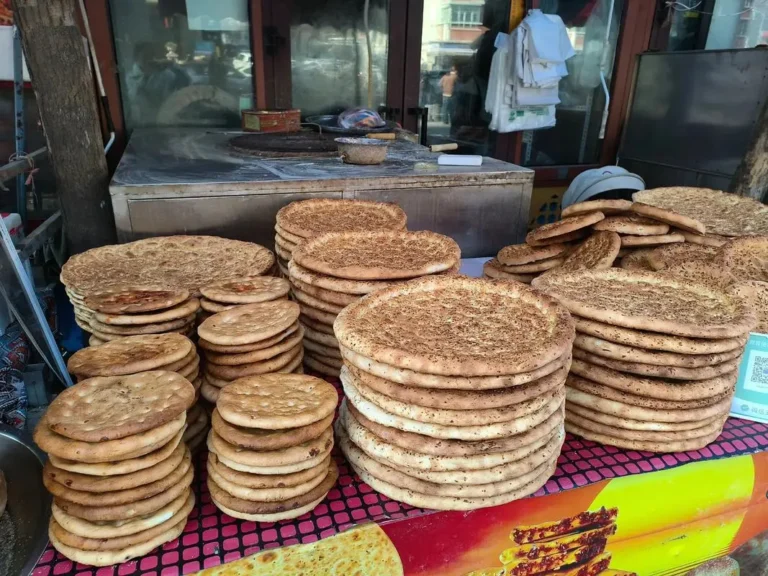
Naan (spelled nang in Uyghur) is a flatbread baked stuck to the inner wall of a cylindrical clay oven called a tondo or tandoor. Dough is rolled thin, stamped with a patterned press (chekich), brushed with water or onion-salt wash, and slapped onto the scorching wall where it puffs and chars in two or three minutes. Every oasis town has its own variation, but the method is shared across the whole Silk Road.
The Main Types You Will Meet
Walk any bazaar and you will see a dozen shapes. These are the ones worth naming:
| Type | Shape & size | Topping | Where it shines |
|---|---|---|---|
| Qoshaq nang | Large, thin, ~30 cm | Plain, sometimes sesame | Everyday staple, Urumqi to Kashgar |
| Girde nang | Thick ring with hole | Sesame, cumin | Hearty breakfast bread |
| Toxa nang | Small, soft, folded | Onion, sometimes egg | Soft enough for kids and tea |
| Sikh nang | Round with raised rim | Black cumin (zira) | Aksu and Korla favourites |
| Yaghlik nang | Stuffed / oily | Fat-tailed lamb fat, onion | Festival and winter fuel |
| Qattiq nang | Hard, dried | None | Travel bread that lasts a week |
How the Oven Defines the Bread
The tandoor runs on apricot wood or coal and hits 300°C+. Bread baked against that wall gets a blistered, slightly smoky bottom and a steamy crumb. A home oven cannot replicate it, which is why the street tandoor — not the supermarket — is where you find the real thing. I time my visits for the 7–9 am bake when the rounds come out hottest.

How Locals Actually Eat It
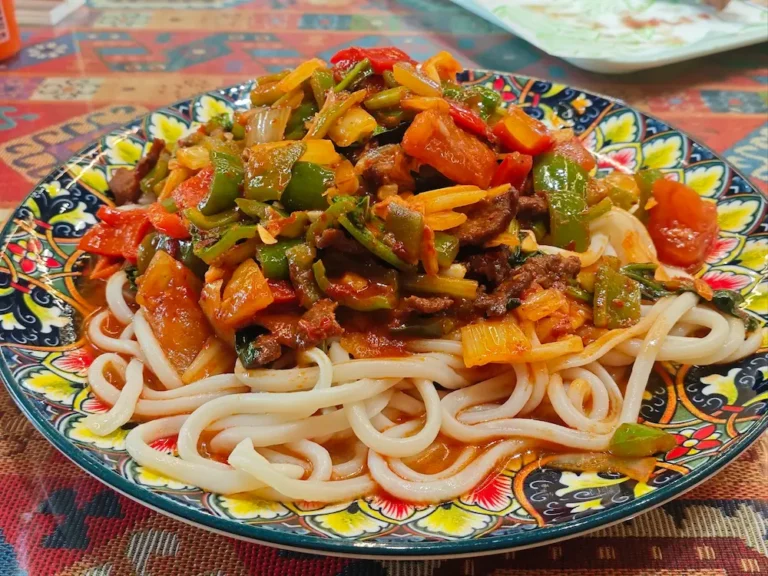
Naan is never just a side. At breakfast it is torn into milk tea. At lunch it scoops laghman broth or wraps around kebab meat. Travellers pack qattiq (hard) naan for the road because it survives a week in a daypack. The etiquette is to handle it with care — bread is respected across the region, and you will see people pick up dropped crumbs rather than step on them.
Buying the Best Nang
In Urumqi, the naan bazaars near the International Grand Bazaar turn out consistent, sesame-heavy rounds. In Kashgar, the old-city alley ovens bake smaller, softer toxa nang that locals queue for at dawn. Prices run ¥2–¥6; the sesame and cumin versions cost a little more. Buy warm, eat within a day, or ask the baker to wrap a hard qattiq loaf for the journey.

Naan Across the Regions: Urumqi vs Kashgar vs Hotan
The bread shifts as you travel. Urumqi’s rounds are large, pale, and sesame-forward, baked for a commuting city that eats on the move. Kashgar’s are smaller, softer, and often onion-laced — built for slow tea sessions in the old city. Hotan, deeper south, leans into the oily yaghlik and the sweetened versions sold at night markets. I started noting the local nang like a wine tourist notes terroir; the differences are subtle but real, and asking a baker “yours is girde or qoshaq?” always earns a smile.
Storing and Reviving Day-Old Naan
Fresh naan is best within hours, but it rarely goes to waste. Day-two naan firms up; I break it into soup or laghman broth, or toast it over a gas flame until the edges crackle. The hard qattiq type is meant for age — travellers dip it in tea for days. Never refrigerate soft naan; it goes stale faster. A cloth bag on the dashboard of a car, in the dry Xinjiang air, keeps it edible far longer than you would expect.
Naan in Festivals and Family Life
During Eid and family gatherings, the tandoor runs overtime and the best rounds are reserved for guests and elders. Offering naan is the baseline of hospitality here — you are handed bread before you are asked your name. Learning to accept it with both hands and a small nod cost me nothing and opened more kitchen doors than any phrasebook. In homes I visited, the round was torn and shared from a single piece, a quiet ritual of equality that needed no translation.
How to Order Like a Local
Walk up, point at the round you want, and say “bir” (one) or hold up fingers; most bakers understand basic numbers. If you want it warm, ask “issiq” (hot). For the sesame type say “kunchi”, for cumin “zira”. You pay after, often into a wooden box on the counter. Nobody rushes you, and if you stand watching the bake, the baker will usually hand you a broken-off edge to taste — that is how I learned to tell a fresh toxa from a reheated one.
Naan and the Road Trip
For a self-drive or bus loop, naan is the ideal provision. I stack four or five qoshaq rounds in a cloth at the start of a Taklamakan-edge drive; they survive heat, dust, and being sat on better than any sandwich. At petrol stations and truck stops, the naan and a flask of tea become a meal without a restaurant. Just keep them out of direct sun in the car — a closed cabin in July turns soft naan into leather in an afternoon.
A Naan Tasting Mini-Itinerary
If you want to make a morning of it, start at a Urumqi tandoor for a sesame qoshaq, move to a Kashgar old-city oven for toxa with onion, and finish at a Korla stall for zira-topped sikh nang. Three breads, three cities, one clear lesson: the staple everyone takes for granted is also the clearest map of the region’s geography. It cost me under ¥15 and taught me more about Xinjiang than a museum. Pair each with the local tea and you have a tour that is cheaper than a single taxi ride and far more memorable.
Things people ask me
Is Xinjiang naan the same as Indian naan?
Similar oven, different bread. Xinjiang nang is usually flatter, leaner (less ghee and garlic), and baked plain or with cumin and sesame rather than buttered and stuffed.
Can I take naan home as a souvenir?
Yes — the hard qattiq type travels well for a week. Wrap it tightly; softer rounds go stale in two days, so eat those on the spot.
Is naan vegetarian?
Mostly yes. Plain, sesame, and cumin naan are vegan. The yaghlik (oily) type is brushed with lamb fat, so ask if you avoid animal fat.
Why is there a hole or pattern on top?
The stamped pattern (chekich) lets steam escape and gives the bread its signature look; ring-shaped girde nang’s hole helps even baking on the thick dough.
Where is the cheapest, freshest naan?
Street tandoors in any oasis town at dawn. Skip packaged supermarket naan — it is a pale echo of the real bake.