Xinjiang Summer Drinks: Mulberry Sherbet, Frappé and Iced Tea
Xinjiang summers are ferocious — Turpan regularly tops 40°C. Locals do not sweat it; they drink. The cold-beverage culture is its own tour of the region, from street sherbet to iced tea, and learning it is one of the small pleasures of a summer trip.
Mulberry sherbet (sharbat)
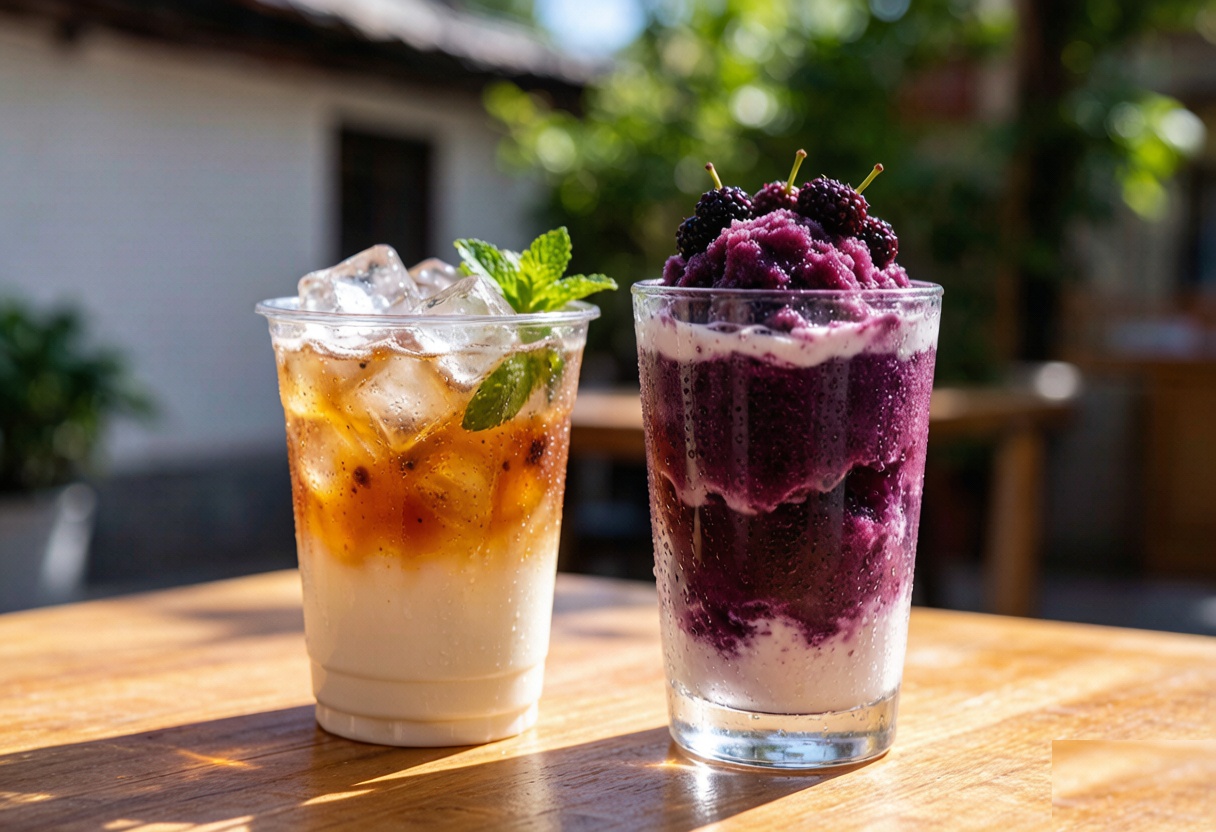
In early summer the white and black mulberries ripen, and street vendors churn them into sharbat — a sweet, slightly tart purple drink served over ice. It is seasonal (roughly May–June) and gloriously local. I time trips around it. Our tea culture guide covers the hot side of the same tradition, because the same stalls switch to tea when the fruit is gone.
Milk-tea frappé
The Uyghur milk tea that warms winter mornings gets blasted with ice and sugar in summer, sold from silver urns as a thick, frothy frappé. It is richer than any coffee-shop version and costs a few yuan. Pair it with the Uyghur breakfast for the full dairy experience, or sip it solo against the heat.
Iced black tea
Every restaurant sets a pot of hot tea by default, but ask for it cold (lěng chá) in summer and you get a jug of weak, refreshing black tea. It is the default throat-saver on a long self-drive day and free at most meals, which makes it the unsung hero of the road.
Safety notes
- Buy sherbet from busy stalls where the fruit is fresh and the ice comes from a sealed machine.
- Bottled water remains the safest baseline; treat street drinks as a treat, not your only fluid.
- Our food-safety guide has the full rules for eating and drinking out across the region.
Hydrate hard, sip the local cold things, and the heat becomes part of the adventure rather than its enemy. The drink culture is also a cheap, cheerful way to meet people at a street corner.
The seasonal calendar
The drinks rotate with the heat. Mulberry sherbet is a tight May–June window — miss it and you wait a year. Milk-tea frappés run all summer. Iced black tea is eternal. In winter the same stalls switch to hot milk tea and the fruit gives way to nuts and dried things. I plan at least one early-summer trip specifically for the sherbet, because nothing else tastes like it.
Make it a habit
Build a mid-afternoon drink stop into your driving day. Pull into a town, find the silver urn or the sherbet cart, and reset. It is cheaper than air-conditioning, kinder than constant bottled water, and a reliable way to meet people who are not paid to talk to you. The cold-drink culture is one of the small joys of a Xinjiang summer.
The money, line by line
On your own the same afternoon comes out at maybe half again as much. Prices at the gate are reasonable by European standards, which is exactly why they are easy to underestimate. Ask once at the ticket office what the full circuit costs before you commit. The admission is cheap, the internal transport is what adds up, and a family of four in one car turns a small ticket into a real line in the budget.
Staff there are used to it, and the answer takes ten seconds. The headline entrance ticket is only the first line. On top of it comes a shuttle or sightseeing bus inside the site, and if you want a far viewpoint rather than the main one that is another leg. Parking, a printed map, and a guide are the other three places the number moves.
Two of us covered the whole thing for well under what a single hotel night in Xinjiang costs, but only because we shared the car and shared the entry between us.
What goes in the day pack
The temperature drops fast once you stop moving and the drop is not hypothetical on an exposed pass. Water, more than you think, a power bank and some cash. A fleece covers most of the year, a real jacket covers shoulder season. Cards work at the gate and in the shops, but the stalls on the approach road and the drivers waiting at the turnoff want cash, and coming up short at the moment you want a lift is the classic way to lose an hour.
Sunscreen and a brim. The light here is serious and the shade is intermittent, so the sunscreen goes on before you leave the hotel, not at the gate. A wind shell. More on the other end of that day is in our [[xinjiang-wusu-beer-drinks-guide|Xinjiang Wusu Beer and What the Locals…]].
What to actually ask for
Three drinks cover most of a Xinjiang summer. Mulberry sherbet (مەتتى شەربىتى) — a pale, not-too-sweet fruit drink — turns up in Turpan and Kashgar in June. Dugh (دوغ), a salted yoghurt drink, is the thing that actually cools you down on a hot plain. And kvas (كۋاس), a lightly fermented bread-root soda, is what the Russian-influenced north drinks. Point, or just say the name; vendors know the regulars’ orders by heart.
Sugar, melon and timing
These are sweet by default, so if you want less sugar say so early. The bigger summer story is fruit: Hami melon (哈密瓜) and Turpan watermelon are eaten like water, sliced and sold by the roadside, and after a hot drive a roadside melon stop beats any cafe. I carry a small foldable knife habit from locals, but a vendor will cut it for you. The rule I keep: drink the sherbet, eat the melon, and always have a bottle of plain water underneath it all.