Police Checkpoints on Xinjiang Roads: What a Self-Driver Actually Experiences
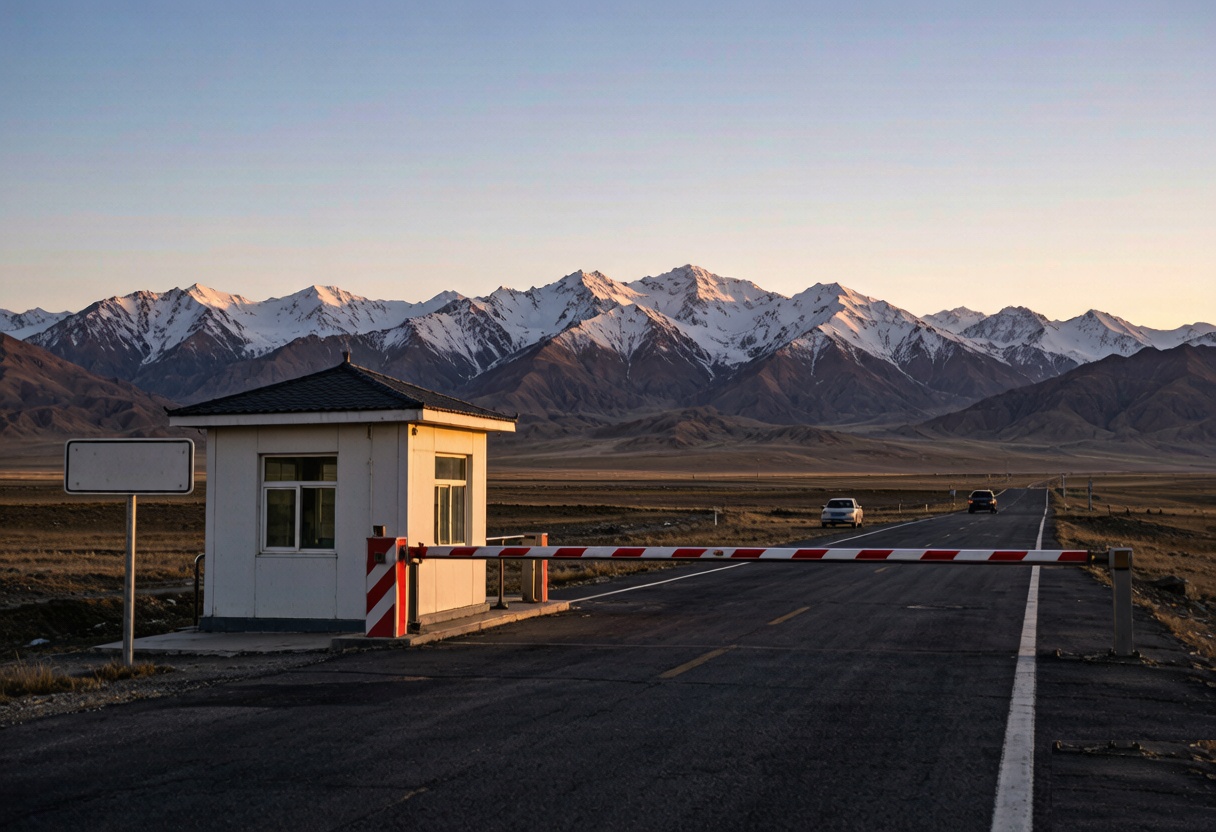
On my first self-drive loop through Xinjiang I expected emptiness and open road. What I did not expect was how often a red-and-white striped barrier would swing down in front of the bonnet. Checkpoints are a normal, unremarkable part of driving here, and once you know the rhythm they stop being intimidating — they become a brief, polite pause on a very long road.
Why the checks exist
Xinjiang borders eight countries and contains vast, sparsely populated counties. Police checkpoints (检查站, jiǎnchá zhàn) sit on highways, at the entrances to certain prefectures, and on the approach to sensitive border zones such as the Pamir. They exist for routine public security, not because you have done anything wrong. Treat them the way you would treat a toll booth: slow down, window down, paperwork ready.
The three kinds you will meet
- Highway checkpoints — the lightest touch. A scan of the plate, a glance at your face, sometimes nothing at all if the automatic reader is happy.
- Prefecture-entry stations — larger, with a facial-recognition gate you walk through. Budget five to ten minutes.
- Border checks — on the road south to Tashkurgan. Your permit is checked against a list and foreign travellers are recorded. These are serious; do not treat them casually.
What actually happens at the barrier
Most stops follow the same choreography. You slow, an officer waves you into a lane, another scans your passport while a colleague peers into the back seat. On major highways the whole stop takes ninety seconds. At prefecture entries you may step out and walk a gate. Cameras and licence-plate scanners do most of the work before you even stop.
Documents to keep within reach
- Your passport — original, not a photo.
- Your Chinese driving licence or notarised translation if renting.
- Vehicle papers if it is your own car; the rental agreement if not.
- Your border permit (边境证) for Tashkurgan or other controlled areas.
I keep everything in the door pocket so I am not rummaging through a packed boot at midnight. Officers appreciate not waiting.
What NOT to do
The one behaviour that turns a ninety-second stop into a long one is photographing the barrier or the officers. Cameras down, phone away, smile ready. Likewise, do not argue about the stop — it is not negotiable and the officer is not the decision-maker.
The upside nobody mentions
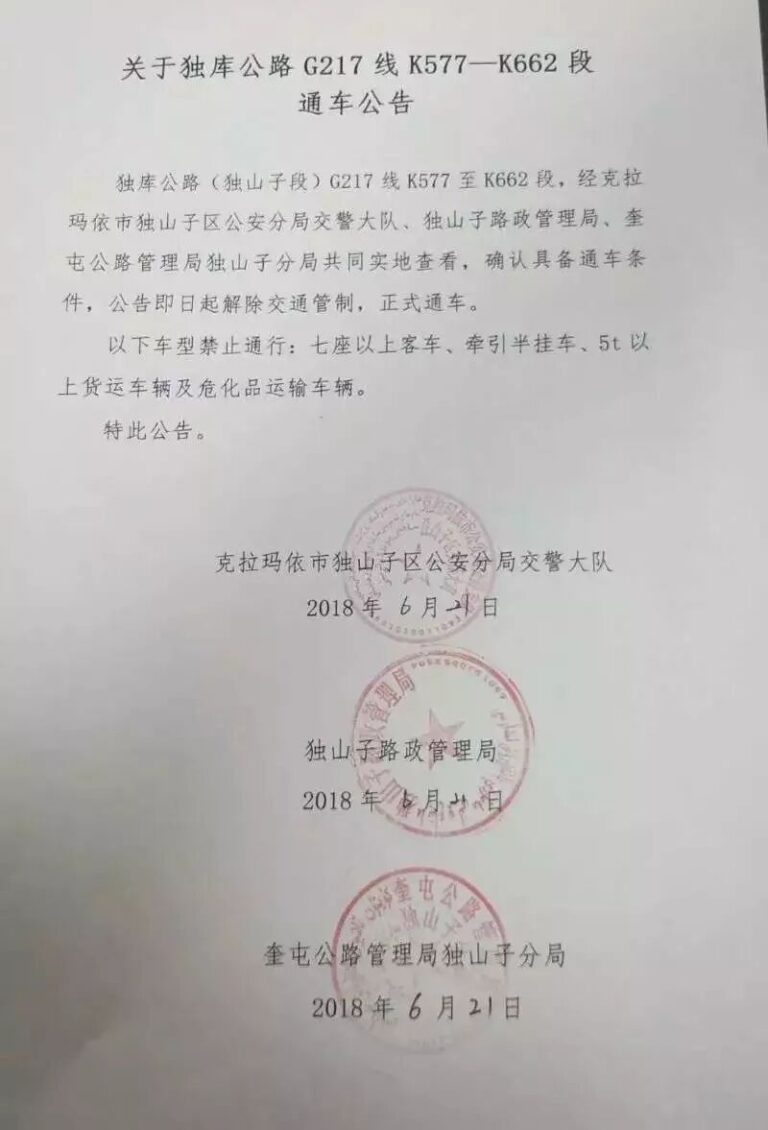
Checkpoints double as unofficial rest stops. The big ones have toilets, water, and sometimes a thermos of hot water for your flask. After a long haul across the Duku or Sayram loops, I have learned to welcome the barrier as a chance to stretch and refill. Our winter-driving guide covers the added checks when mountain passes close, and the self-drive logistics piece explains the permit side in full.
Drive the roads of Xinjiang with patience and the right papers, and the checkpoints become what they are meant to be: a routine, harmless part of the journey.
The checkpoints, honestly
Nobody has ever been rude to me at one of these. They are tedious rather than dangerous, and the driver’s document pack is the only thing that makes them quick. You will stop at checkpoints. Write down the address of tonight’s accommodation, because that is the question they ask. They are short, they are not hostile, and the whole process for a foreign plate takes longer than for a local one because the officer has to make an entry. Keep passport and car documents in the glovebox rather than the boot so you are not unpacking in front of a queue. More on the other end of that day is in our [[xinjiang-police-registration-foreign-visitors-guide|Foreign Visitor Police Registration in…]].
What a local driver would refuse to do
What they will refuse is a night drive over the high sections in winter, and they are right. What they will happily do is leave at five in the morning to catch the light, and that is the version worth asking for. A driver who knows this road gives you the honest distance. My host in Xinjiang said the pass was two hours, meaning two hours driving without the stops, and that is the number to plan around, not the one the map shows.
Cameras, drones and the one rule
The only behaviour that turns a ninety-second stop into a long one is photographing the barrier, the officers, or the scanning equipment. Cameras down, phone away. Drones are a separate, stricter matter: flying one near any checkpoint or border area is genuinely off-limits and can end a trip, so I leave the drone in the bag on the Pamir approach entirely.
My one memorable stop
On the run south to Tashkurgan I once forgot my border permit in the hotel safe. The officer at the Karakoram gate was patient, explained the list, and turned me back to Kashgar rather than letting me through. It cost a day and a half, but it was correct — and it taught me to treat the permit check as the real gate, not a formality. Build the permit into your packing list the night before, the way you would a passport.