Train vs Self-Drive vs Flight: How I Choose for Each Xinjiang Region
Xinjiang is about the size of Western Europe, so “how do I get around” is not a detail — it is the trip. After crossing it by rail, by plane and by car, here is the decision framework I actually use, region by region.
The north (Urumqi, Sayram, Kanas, Yili): self-drive wins
The northern loop is a necklace of lakes, grasslands and canyons spread across 1,500 km of good road. A car lets you stop at a viewpoint the bus never reaches and roll into a village at golden hour. The Sayram Lake loop only makes sense with your own wheels. The cost is fuel, tolls and the occasional closed mountain pass in spring.
The Pamir and the far south: train or flight, then local transport
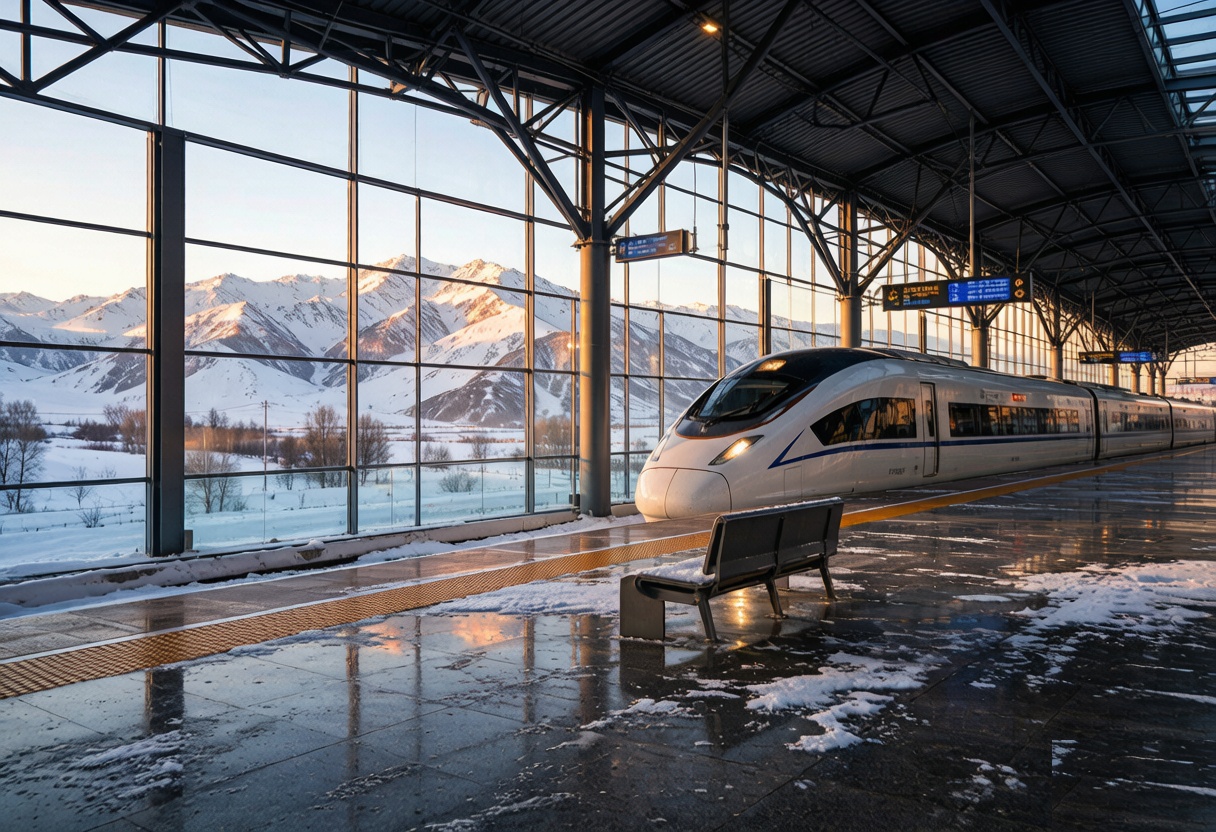
For Kashgar and the Pamir, I often fly into Kashgar and rent a car only for the Tashkurgan run. The Urumqi–Kashgar railway is a genuine experience — two days of desert, oasis and mountain scrolling past the window — but it eats time you may not have. If the journey is the point, take the train; if the destination is, fly.
City hops: flight beats the train
Urumqi to Hotan, or Kashgar to Yining? Flights within Xinjiang are cheap and short. The train is romantic but slow; use it when you want to see the land, not when you are chasing a schedule.
A worked example
Suppose you have ten days and want lakes plus the Pamir. I would fly into Urumqi, self-drive the northern loop for five days, fly to Kashgar, and rent a car for the Pamir. That mixes all three modes and wastes almost no time. Our self-drive backbone guide explains the rental and fuel logistics that make the northern part smooth.
The honest trade-offs
- Self-drive: freedom and remote views, but long monotonous highway stretches and your own fatigue to manage.
- Train: no driving stress, scenic, but you arrive at station towns, not trailheads.
- Flight: fastest, but you see nothing from 10,000 metres.
Most good Xinjiang itineraries mix all three — fly in, drive the loop, train or fly out. Whichever you pick, start from our 30 things to know before you go: the region rewards planners.
Booking tickets in practice
For the train, use the official 12306 app or site with your passport; hard-sleeper cars are the social, budget choice, soft-sleeper the quieter one. Flights are booked like anywhere via Ctrip or the airline app. Self-drive needs the rental sorted in Urumqi first — our self-drive backbone guide walks the paperwork. Match the booking tool to the mode and you avoid the classic mistake of arriving to a sold-out train.
The cost reality
Roughly: a long-haul flight Urumqi–Kashgar runs a few hundred RMB and two hours; the train the same route is cheaper but closer to 24 hours; self-drive fuel and tolls for a loop run higher but split across a group. Solo and short on time, fly. In a group with time, drive. The train is the wildcard — cheap, slow, and oddly the most memorable.
What winter does to this road
The problem is that a pass at this height can shut for a day with no warning and reopen at dawn, and nobody announces it until somebody radioes it in. Snow chains help, warm layers in the cabin matter more, and a full tank matters more than both. The surface is fine. Drive it in summer and none of this matters. Between November and March you are planning around a gate that moves. Where most people get the logistics wrong is covered in our [[xinjiang-self-drive-travel-guide|2026 Xinjiang Self-Drive Travel Guide]].
Fuel, and the gaps where there is nothing
I have been on a road in this region where the next fuel was two hours back, the reason being a closure, and the only thing that got me moving was a trucker with a spare can. Every town on this route has a station and every station takes cards, which is the good news. Fill before you leave anything with a city name on the map, even if the next is only ninety minutes out. The bad news is the distance between them through the middle sections, enough that a full tank is arithmetic rather than paranoia. The evening version of that plan is in our [[car-rental-xinjiang-self-drive-guide-2026|Car Rental in Xinjiang: What Foreigners…]].
How I mix all three on one trip
On my last two trips I stopped treating them as either/or. I fly into Urumqi to save the long haul from the coast, pick up a car for the northern loop (Sayram Lake, Kanas, the Dabancheng corridor), then park the car and take an overnight train south to Kashgar so I’m rested for the old town rather than wrecked from two days of motorway. The pattern that works for me: fly for distance, drive for scenery, train for overnight repositioning. It costs a little more than pure self-drive but I see more and drive fewer zombies-miles.
Booking windows that actually matter
Xinjiang is huge, so the constraint is rarely the vehicle — it’s the bed. Summer sleepers and the popular self-drive routes book out weeks ahead. I lock trains and the first two hotel nights before I leave home, then plan the middle of the loop loosely. If you only remember one thing: book the long train legs early, and let the driving stay flexible.