Yining’s Russian Buildings: The Wooden Houses Most Visitors Walk Past
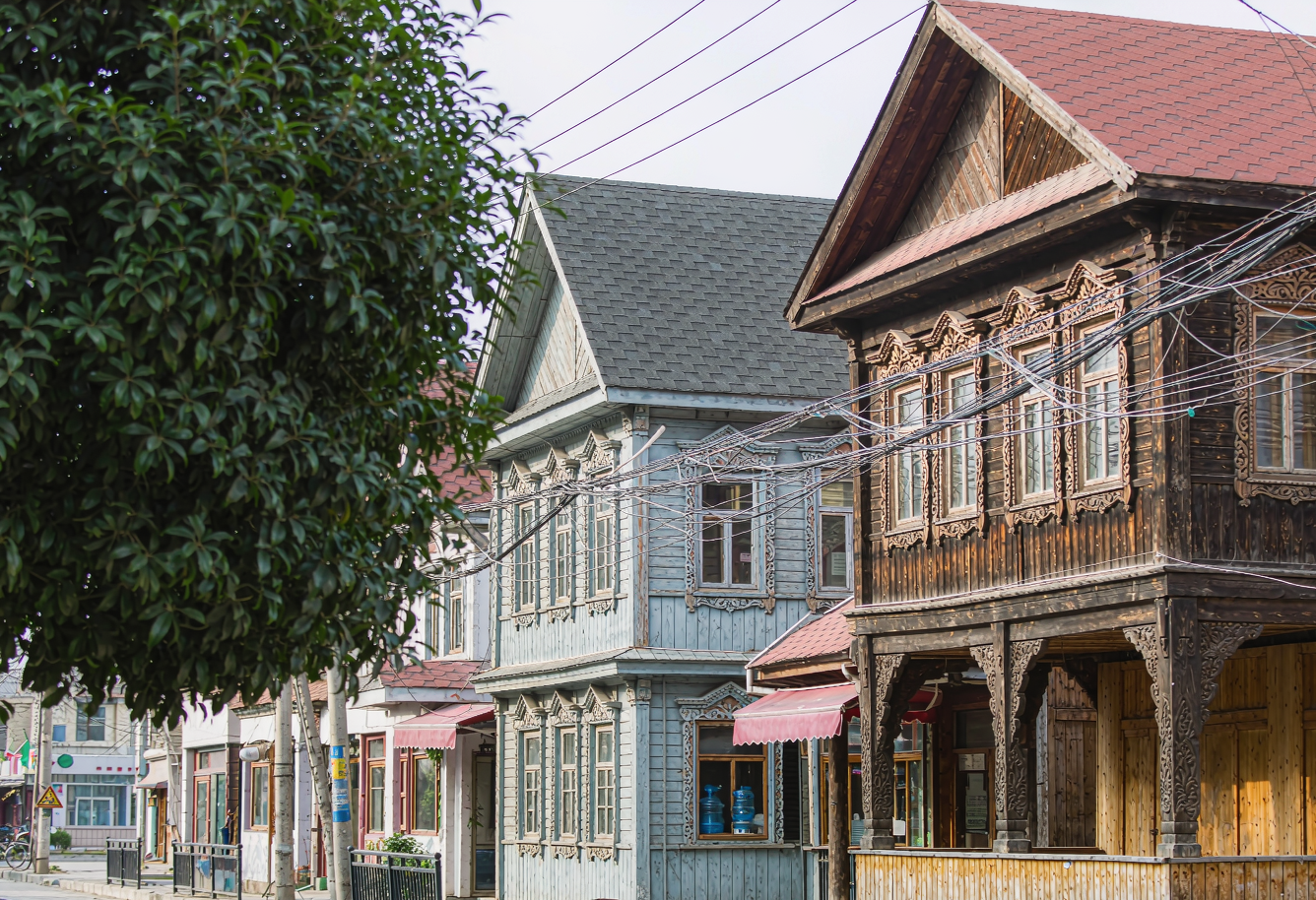
Most people pass through Yining to reach the Ili valley and never look at the buildings. That is a mistake. The town has wooden houses with carved eaves and pitched roofs that belong to a Russian chapter of its history, and they sit quietly between the bread stalls and the kvass carts like they have nowhere to be.
I found them by getting lost on purpose, which is the only way. The Yining and Ili valley guide covers the green scenery, but the town itself rewards a slow walk more than a viewpoint. The wooden houses are unremarkable from the front and lovely from the side, where the joinery shows.
Why they survive is its own story. Wooden construction fit the damp river climate better than mud brick, and a string of settlers built in the style they knew. The wider culture of the region is a stack of layers, and Yining wears more of them at once than almost anywhere I have been.
A few are kept up; most are fading, paint peeling, lived in. I do not knock or photograph the residents. The ones on the quieter streets are the ones to see, because they are still houses and not museums.
If you go, walk the side streets off the main drag in the older quarter, early, before the carts crowd the road. The houses will be there, worn and plain, holding a piece of the story the guidebooks rush past.
The house I liked best had a porch with carved wooden brackets and a window frame painted the faded blue of an old passport. An old man was sitting on the step peeling apples, and when I asked, in bad Mandarin, if I could look, he waved me into the yard without standing. Inside, the ceiling beams were raw pine, untreated for decades, and the floor dipped in the middle from a hundred years of feet. He did not speak the tourist languages and did not need to; the house was the explanation. I sat on the step with him for a while and ate an apple. The wooden houses of Yining are not a museum you enter with a ticket. They are someone’s porch, and the porch is the whole exhibit worth the walk.
The wooden houses are easiest to see in the older quarter west of the center, on the side streets, early, before the carts crowd the road. The Yining guide covers the green scenery that pulls people in; stay an extra day for the town and you get both. Some houses are marked, most are not, and the best ones are the ones someone still lives in, peeling and plain. Do not knock; a wave from the step is the whole interaction most owners want. The Russian layer sits under a city that is also Uyghur, Kazakh, and Han at once, and Yining wears all of it without explaining. Walk slow, look up at the eaves, and the wooden houses tell the part the signs skip.
Timing your visit to {P}
My own rule now: if I have to choose between this and an extra evening in Xinjiang, I keep the evening. Most first-timers plan two hours and then get stranded. The gates open early and the last entry tends to stop a couple of hours before closing, so the promise of coming back for sunset is not always possible. Budget the full morning. Ninety minutes is enough to tick the box.
That covers the walk in, the slow look at the main feature, the side trails almost nobody does, and getting back to the car before the light goes flat. Half a day is enough to understand it. The first time I rushed it and spent the whole visit looking up at the same rock from one spot. A full day is what you want when the point of coming was Xinjiang Russian Architecture Yining itself rather than a stop on the way. The second I gave it a morning and a late-afternoon return and saw two completely different places, because the light moved across the surface and the crowds thinned to nothing.
More on the other end of that day is in our [[xinjiang-russian-soviet-heritage-yining-guide|Russian & Soviet Heritage in Yining:…]].
Reaching {P} on buses, taxis and shared rides
What does exist is an intercity coach leaving the Xinjiang long-distance station early, a taxi share at the stand that costs a few tens of yuan a head if you are patient, and the tour vans that pick up at hotels. We came twice. The first time we chartered a car for the round trip and it was worth every yuan. The second a driver on a return leg dropped us at the entrance and waited in the car park, which is the cheap way to do it if you do not mind setting your own clock. The trick is finding the vehicle rather than the timetable.
Leave two hours of slack on the return. In Xinjiang the drivers wait where drivers always wait, in the little offices a few hundred metres off the main terminal, and they will put together a half-day for a price the meter would never quote. The last vehicles back leave in the early evening, and after dark on a mountain road the local buses stop running entirely. Xinjiang Russian Architecture Yining sits an hour or two from the nearest town, which sounds close until you work out there is no reliable public bus to the gate. Where most people get the logistics wrong is covered in our [[yining-ili-valley-xinjiang-travel-guide|Yining and the Ili Valley in Spring: The…]].