Bezeklik Caves Near Turpan: Murals, History, and a Half-Day Loop
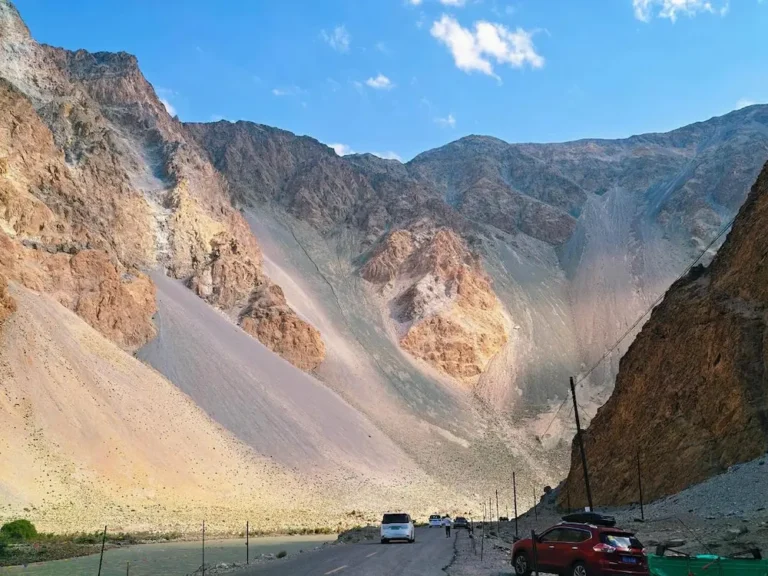
The first time I visited the Bezeklik Thousand Buddha Caves I almost skipped them. They sit in a scorched, rust-colored gorge east of Turpan, and from the parking lot they look like little more than dark mouth-shaped holes in a cliff. Then I stepped inside one of the restored chambers and looked up at a row of thousand-year-old donor figures in ochre and malachite green, and the hair on my arms stood up. These are among the most important Buddhist murals in Central Asia, and most travelers rush past them on the way to the Flaming Mountains. They deserve a slower stop.
What the Bezeklik Caves Actually Are
Bezeklik (“a place with paintings” in Uyghur) is a cluster of roughly 70 cave temples cut into the cliffs of the Mutou (Wood) Valley, about 45 km east of Turpan city. They were excavated and painted between roughly the 5th and 14th centuries, peaking under the Uyghur Kingdom of Gaochang (9th–12th centuries), when this was a wealthy Buddhist court. Each cave is a small rectangular chapel with a vaulted or domed ceiling, originally covered floor-to-ceiling in murals of Buddhas, apsaras, and rows of kneeling donors in silk robes.
A Short History: From Gaochang to the Silk Road
The site sits in the shadow of two vanished cities — Gaochang and Jiaohe — that were major Buddhist centers for over a thousand years. When the Uyghurs migrated south from the Mongolian plateau and adopted Buddhism, they made Gaochang their capital and poured resources into cave art here. Later, as Islam spread through the Tarim Basin from the 10th century on, the caves were abandoned, some figures plastered over or defaced. What survived is a rare record of Uyghur royal patronage and the mixed artistic DNA of the Silk Road.
The Art: Manichaean Traces to Buddhist Murals
What makes Bezeklik unusual is the layering of faiths. A few chambers show Manichaean influences — a religion that briefly flourished here — while the majority are firmly Buddhist. The signature images are the large standing Buddhas and the double rows of donor princes, painted with the rounded faces and patterned garments characteristic of Uyghur court art. The pigments came from the trade itself: lapis lazuli blue, malachite green, and gold leaf moving along the same routes that carried silk and walnuts.
Getting There from Turpan
Bezeklik is an easy half-day trip from Turpan and pairs naturally with the Flaming Mountains and the Gaochang ruins. Distances and times from Turpan city:
| From | Distance | Drive time | Best transport |
|---|---|---|---|
| Turpan city | ~45 km | 50–70 min | Taxi / rented car / tour |
| Flaming Mountains viewpoint | ~15 km | 20 min | Same vehicle |
| Gaochang ruins | ~25 km | 30 min | Same vehicle |
| Jiaohe ruins | ~60 km | 75 min | Separate half-day |
There is no public bus that drops you at the cliff; most people come on a Turpan day tour or with a rented driver. If you’re self-driving, the road in is paved and the lot is large, but it bakes in summer — the Turpan city guide has the seasonal context for planning the loop.
Tickets, Hours and the Best Time to Visit
The site is managed as part of the Flaming Mountains scenic area, so your ticket often bundles several nearby stops. Hours are typically ~09:30–19:00 in summer and shorter in winter. Go early or late in the day: midday in July and August is brutally hot and the cliff face offers no shade. Spring and autumn are ideal — cool enough to walk the gorge comfortably and clear enough light to photograph the murals through the cave grilles.
What you’re allowed to photograph
The exterior cliffs and valley are fair game. Inside the protected caves, flash and tripods are forbidden and some chambers are dim by design to slow pigment fading. Respect the ropes and grilles; the murals are fragile and irreplaceable.
Combine With: Flaming Mountains and Gaochang
Bezeklik is the cultural anchor of a triangle of Turpan sights. The Kizil Caves near Kuqa are older and arguably finer, but they are a full day’s drive west; Bezeklik is the accessible taste of the same tradition without leaving the Turpan oasis. I usually do Flaming Mountains first (cool morning light on the red ridge), then Bezeklik mid-morning, then Gaochang’s earthen walls in the softer afternoon.
What You’ll See Inside
Only a handful of the caves are open and lit. The standouts are the large niche caves with rows of donor figures — identifiable by their small, detailed portraits and Uyghur-style robes — and the central-pillar caves where pilgrims once circumambulated. Don’t expect vivid color everywhere; centuries of abandonment, smoke, and 20th-century removals have left many walls bare or faded. The power is in the survival, not the polish.
Preservation and the Berlin Controversy
A frank note for visitors: some of Bezeklik’s finest murals are no longer in China. In the early 1900s, expeditions including the German Turfan expeditions cut and removed panels — many now in the Museum of Asian Art in Berlin (destroyed in WWII) and fragments elsewhere. This history is part of why the on-site remains feel incomplete, and why conservation here is taken seriously today. Seeing the caves in person is the only way to grasp what was lost and what endured.
Making the Most of a Short Visit
Because the site is small, pacing matters more than time. Buy your ticket, walk the shaded boardwalk to the first open caves, and resist the urge to rush — the murals reward close looking. A decent phone camera on a steady hand captures the donor figures better than you’d expect in the dim light. If a cave is closed for conservation, don’t argue; the open set rotates and the staff are protecting exactly the thing you came to see. I usually budget the quietest 45 minutes of my Turpan day here and save the big sights for when I have more energy.
Nearby: Tuyoq Village and the Grape Valleys
If you have a car and a spare afternoon, the nearby Tuyoq (Tuyugou) village — a mud-brick settlement tucked against a ravine of cave-houses and a small early Christian/Buddhist site — makes a natural extension of the Bezeklik theme: ordinary people living inside the same geology that once held the murals. The Turpan grape valleys nearby are greener and cooler, a good place to end a hot day with a plate of raisins and a glass of local wine. None of these need a separate trip; they fold into the same loop you’re already driving.
Small questions, honest answers
Are the Bezeklik Caves worth visiting if I’m not into art history?
Yes, surprisingly. The gorge setting is dramatic on its own, and standing inside a 1,000-year-old painted chamber is visceral even if you can’t name the styles. Pair it with the Flaming Mountains and it’s an easy, rewarding half-day.
How long should I budget for the visit?
Plan 60–90 minutes on site, plus 1–1.5 hours of driving round-trip from Turpan. A full Turpan loop with Flaming Mountains and Gaochang takes most of a day.
Is Bezeklik better than the Kizil Caves?
Kizil is older and more extensive, but it’s far west near Kuqa. Bezeklik is the convenient, high-quality option from Turpan and pairs with other oasis sights. Choose Kizil only if you’re already in the north.
Can I take photos inside the caves?
Outside, yes. Inside the protected chambers, no flash, no tripod, and follow the ropes. Some caves are too dim and fragile for any photography — enjoy them with your eyes.
When is the site closed or uncomfortable?
Mid-summer midday is brutally hot with no shade at the cliff. Winter is quiet and cool but has shorter hours. Spring and autumn are the sweet spots for both comfort and light.
Is there food and water on site?
Minimal — a few stalls near the lot in season, but nothing reliable. Carry water and snacks, especially in summer, and eat properly in Turpan before or after the loop.