Xinjiang Naan: The Tandir-Baked Bread That Fuels the Silk Road
I did not understand Xinjiang until I ate naan for breakfast, lunch, and dinner for a week. In the West we treat bread as a side; in Xinjiang, naan (馕, náng) is the meal’s backbone — the thing you tear, dip, wrap, and carry. Every morning the neighborhood tandir (clay oven) fires up and the streets fill with that nutty, smoky smell. This is a love letter to that bread, and a practical guide to finding the best of it on your trip. Pair it with the Kashgar food guide for a full eating plan.
What Exactly Is Xinjiang Naan?
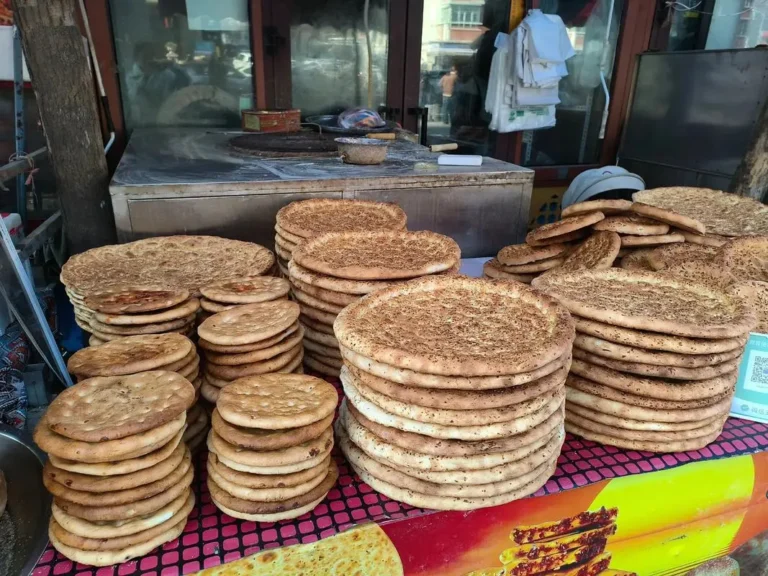
Naan is a flatbread leavened with a simple yeast or sourdough starter, rolled thin, stamped with a decorative pattern, and slapped onto the inner wall of a domed clay oven called a tandir. The intense radiant heat bakes it in two or three minutes, giving a crisp, blistered bottom and a chewy top. It keeps for days without refrigeration — which is exactly why it became the travel bread of the Silk Road, carried by caravans across deserts and over passes.
The Main Types You’ll Meet
Not all naan is the same. Here are the ones worth knowing by name so you can point at the right one in the bakery window.
Sangkak (长馕 / 锡克馕)
The everyday round naan, palm-sized to plate-sized, stamped with a lattice pattern and sprinkled with sesame or black cumin (zira). This is the default; buy it warm.
Girde (窝窝馕)
A thicker, ring-shaped naan with a raised rim and a soft middle. Sturdier and longer-keeping — the caravan bread.
Qatta (油馕 / 千层馕)
A flaky, layered naan brushed with oil, closer to a pastry. Rich and a little sweet; a treat, not a staple.
Onion and Meat Naan (皮牙子馕 / 肉馕)
Folded with sliced onion or a little minced meat and scallion. The savory upgrade you want for a roadside lunch.
How Naan Is Made in the Tandir
| Step | What happens | Why it matters |
|---|---|---|
| Dough | Flour, water, salt, yeast or sour starter | A long, slow ferment builds flavor |
| Shaping | Rolled thin, stamped with a naanwang pattern | The stamp isn’t just pretty — it helps even baking |
| Seasoning | Brushed with water, sprinkled with sesame or zira | Seeds add the signature nutty aroma |
| Baking | Slapped onto the 300°C+ tandir wall | Radiant heat = crisp outside, chewy inside |
| Cooling | Stacked in cloth; eaten same day if possible | Fresh is best; day-two naan is for dipping |
Naan Across the Regions
Xinjiang is huge, and naan has local accents. Kashgar’s naan tends smaller and seed-heavy; Hotan’s is famously large and pale, baked almost paper-thin in places; Yarkand (Shache) is celebrated region-wide for a particularly flavorful, slightly sweet version. In the north around Yining, you’ll find softer, oil-rich rounds closer to Central Asian breads, while the Turpan oasis favors a denser, longer-keeping loaf built for the desert heat. Trying naan city by city is a cheap, delicious way to taste the region’s geography — the bread really does change every few hundred kilometers, and the locals will happily tell you which town’s naan they think reigns supreme.

Where to Eat the Best Naan
The honest answer: any neighborhood bakery with a queue at 8 a.m. In Kashgar, the Old City is dense with tandir shops; buy one still hot and eat it leaning against a mud-brick wall. In Urumqi, the area around the Grand Bazaar has reliable bakeries. In Hotan and Yarkand, the naan culture is especially deep — Yarkand naan is famous across the region for its size and flavor. Watch the baker: the theatrical moment of slapping dough onto the oven wall, then hooking it off with a long iron rod, never gets old.
Naan in Uyghur Hospitality
Naan is more than food here — it is a sign of respect. You will see naan stacked on rooftops to cool, never placed face-down on the ground, and guests are always offered the freshest round. When you are invited into a home, accepting naan and tearing it with your right hand is a small, appreciated gesture that says you understand the local rhythm. Don’t waste it, and don’t step over a piece left on the floor; the custom runs deep enough that even careless visitors notice the difference in how they are treated.
Buying Naan to Take Home
Naan travels better than you’d think. Buy extra, let it cool fully, and keep it in a paper (not plastic) bag so it doesn’t go soggy. A day or two old, it’s perfect for dipping. Some travelers vacuum-seal a few to bring home, though freshness fades — eat most on the trip, save one for the plane. It also freezes well if you have a kitchen at the end of your journey.
Naan Pairings Worth Trying
Beyond the obvious, try naan with Xinjiang milk tea (dip and soak), with lentil or mutton soup, or torn over a plate of laghman noodles to mop the broth. A meat naan wrapped around grilled lamb makes the best road lunch in the region — portable, filling, and far better than any airport sandwich.
A Note for Cooks: The Tandir at Home
You will not build a clay tandir in your kitchen, but the spirit translates. Home ovens run cooler than 300°C, so the trick is heat and steam: preheat a pizza stone or inverted tray as hot as it goes, roll the dough thin, stamp it with a fork, brush with water and scatter sesame or black cumin, and bake on the stone for three to four minutes until blistered. It will not be identical — a real tandir’s radiant heat is fiercer — but the result is close enough to transport you back to that Kashgar morning. Use bread flour for the chew, and a spoon of yogurt or a pinch of sugar in the starter for the flavor depth the slow ferment normally provides.

What tends to go sideways
The trap here: Xinjiang naan the same as indian naan
Similar family, different bread. Indian naan is usually softer, often enriched with yogurt or ghee and cooked in a tandoor; Xinjiang naan is leaner, crisper, and built to keep. The words share a root, but the experience differs.
Where people slip: Naan vegan
The plain sangkak and girde are typically just flour, water, salt, yeast, and seeds — vegan. The qatta (oil-layered) and meat naan may use animal fat or meat; ask or stick to the plain kinds to be safe.
The usual error: Timing
At room temperature in dry air, a plain naan stays edible for 3–5 days, softening with age. It’s best within a day. Stale naan is excellent dipped in soup or tea.
Easy to get this wrong: Watch it being made
Almost always. Tandir bakeries are open kitchens; stand at the window and you’ll see the baker slapping dough onto the oven wall. A smile and a point at the fresh tray usually earns you the warmest one.
The trap here: Cost
A basic sangkak runs about ¥2–5; seeded or meat versions ¥4–10. It is among the best-value food in China. Buy by the stack.
Where people slip: Etiquette i should know
Don’t put naan face-down on the ground or step over it — bread is traditionally respected across the region. Tear with your right hand, and never waste it.