Xinjiang Hand-Pulled Noodles (La Mian): Art, Flavor, and Where to Eat
Wheat, not rice, rules the Xinjiang table, and at the center of that wheat culture is La Mian — noodles pulled by hand from a single ball of dough. Watch a cook work and it reads like choreography: the dough is folded, twisted, and whipped against the counter, stretching into ropes, then split and re-stretched until it becomes dozens of slender strands in under a minute.
The technique is older than any restaurant and tuned to the local climate. Xinjiang’s hard winter wheat and dry air produce a high-gluten dough that stretches without tearing — the same reason the region’s naan and mantou are so distinct. The result is a noodle with bite: chewy, elastic, and built to hold sauce.
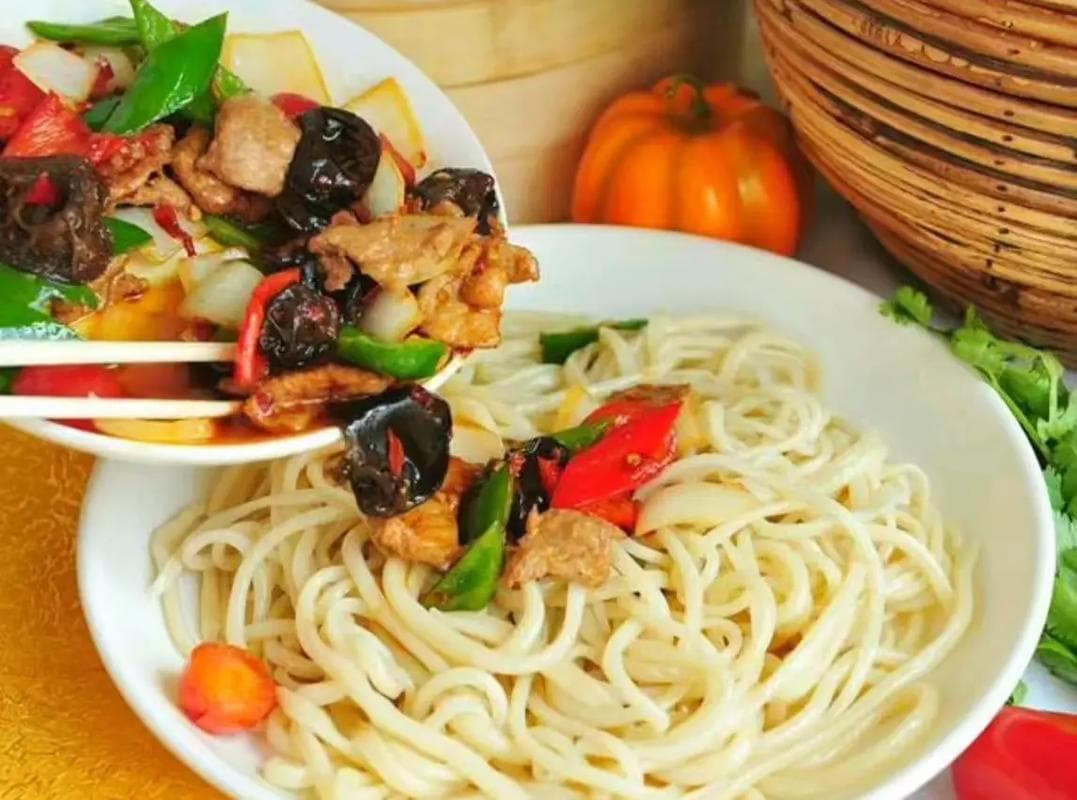
Two dishes dominate. Laghman is the Uyghur classic — hand-pulled noodles under a stir-fried topping of lamb, tomato, green pepper, and onion (the ‘Sini’ sauce). Chaomian is the stir-fried cousin, where the noodles are flash-fried with meat and vegetables so each strand picks up wok hei. Both are everyday food, eaten at noon in a haze of steam.
Regional accents matter. In the north and around Ili, the noodles trend thicker and the toppings heavier with tomato; in the south, near Kashgar and Hotan, you’ll find sharper cumin and more chili. The Xinjiang Travel Guide food sections track these micro-differences if you want to eat your way along the Silk Road.

Where to eat: look for hole-in-the-wall halal joints with a visible pulling station — if the cook pulls to order, the noodles will be fresher than anywhere plating from a batch. Urumqi’s bazaar fringes, the lanes of Kashgar Old Town, and the roadside stops on the Ili route all deliver. A steaming bowl rarely costs more than a few dollars and easily feeds one hungry traveler.
Don’t sleep on the variations: ‘ban mian’ (board-pressed ribbons), ‘kawa’ cold noodles in summer, and the celebratory ‘sangza’ fried shapes for festivals. Noodles here are not just sustenance; they are a craft performed daily in public, a small theater of skill that doubles as lunch.

If you want to try it yourself, the home version is humbling — getting the dough’s hydration and rest right takes practice. But even attempting it deepens your appreciation for the bowls you’ll slurp across the region. For most travelers, the better move is to pull up a stool, point at the cook’s best-looking plate, and let Xinjiang’s noodle masters do what they’ve done for generations.
A few minutes of background change the visit
Knowing what you are standing on turns a pleasant walk into something you actually remember. The place only makes sense once you know its shape. Xinjiang Hand Pulled Noodles was cut rather than built, which is why the walls are solid and the streets are the empty space between them, and why centuries of dust ended up acting as a roof. Locals in Xinjiang will give you the short version in about a minute if you ask, and it is usually better than the panel at the gate. The history here is layered in a way the official signage compresses into names and dates. Read that the morning before rather than at the entrance, where the boards stand too far from the object to help.
Worth pairing with
Xinjiang Hand Pulled Noodles sits naturally into a longer Xinjiang day. The stops most people miss are the small ones between the big names. Ask at the hotel desk the evening before what opened this week, because several of these places shift their hours with the season and the leaflet in the lobby is a year out of date. With a car the combination that worked for us was the site in the morning, a long lunch somewhere with shade, and the other place in the late afternoon, so two half-days covered a full one. The evening version of that plan is in our [[xinjiang-laghman-hand-pulled-noodles|Xinjiang Laghman: Hand-Pulled Belt Noodles…]].
How much time the place really needs
The first time I rushed it and spent the whole visit looking up at the same rock from one spot. The second I gave it a morning and a late-afternoon return and saw two completely different places, because the light moved across the surface and the crowds thinned to nothing. My own rule now: if I have to choose between this and an extra evening in Xinjiang, I keep the evening. The gates open early and the last entry tends to stop a couple of hours before closing, so the promise of coming back for sunset is not always possible. Most first-timers plan two hours and then get stranded.
Budget the full morning. That covers the walk in, the slow look at the main feature, the side trails almost nobody does, and getting back to the car before the light goes flat. Ninety minutes is enough to tick the box. Half a day is enough to understand it. A full day is what you want when the point of coming was Xinjiang Hand Pulled Noodles itself rather than a stop on the way.