Camel Trekking in Xinjiang: Crossing the Edge of the Taklamakan on Four Legs
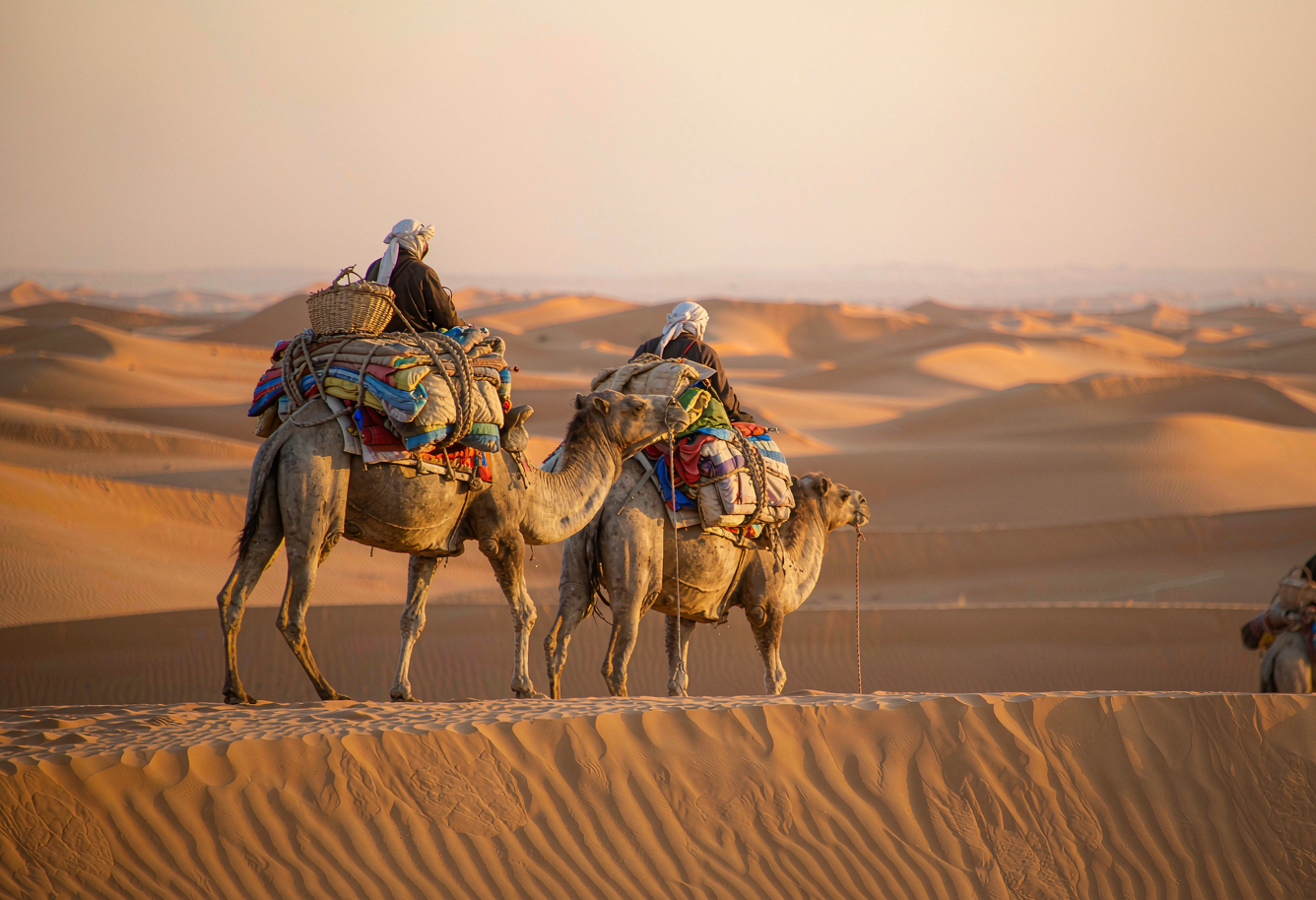
The first time I rode a camel I expected romance and got a wobble. The animal stood, and my stomach did not. By the second hour I had given up on grace and was just grateful the beast knew the way, because I did not.
The Taklamakan highway gets the fame, but the edge of that sea is where camels still work. The Gobi and the oasis edge are gentler places to start, and the Kumtag desert lets you walk from a town straight into the sand, no expedition required.
I did a two-day camel trek near the poplar forest in autumn, when the leaves turn and the sand is cold at night. The edge route skirts the dead heart by oasis town, which is how the old caravans did it, and how you should too unless you have a death wish and a 4×4.
Prep is boring and matters: cover everything, drink more water than you want, and respect the handler. The camel knows the ground; you do not. I once tried to ‘help’ steer and the animal simply stopped, which I took as a correction.
The thing I keep: the silence. On a camel at the desert edge there is no engine, no windbreak, no one. Just the step of the animal and the size of the place. It is the closest I have come to understanding why anyone crossed it on purpose. The handler said nothing the whole way, and he did not need to, because the camel already knew and so, by the end, did I.
The camel driver on my trek sang the whole second day, a low song with no words I could place, and the camel kept the same pace as the tune. I asked, through the handler, what it was, and got ‘old’ as the answer, which I took to mean a song older than either of us. At night by the fire he showed me how to read the dune shape for where water had been, a skill I will never have, and I felt the size of what I do not know about this place. The trek is sold as adventure, and it is, but the part that stays is the unhurried competence of someone who treats the desert like a neighborhood. I tipped him too much and he accepted without performance, which is its own kind of expert you cannot buy at a desk.
Choose the desert by your appetite for discomfort: Kumtag is the gentle intro, walkable from town; the Taklamakan edge and the poplar forest in autumn are the pretty ones; the deep highway is a 4×4 stunt, not a trek. Cover skin, drink past thirsty, and let the handler lead; the camel knows the ground and you do not. I did a two-day trek and slept cold and woke clear, which is the trade. The Gobi edge is gentler if you are unsure. Book through a handler who owns the animals, not a desk that rents them, because the desk does not ride and the handler does. The desert is honest; it gives back exactly what you bring.
The hour I go back for
Sunrise is the one worth an alarm for. The whole face of Xinjiang Camel Trekking turns a colour that does not exist at any other time, and the site is empty enough that you can stand still and hear nothing. By ten the coaches are here, and by one it is an hour of people shuffling past. I have come to like the last forty minutes before the gate shuts, when the groups have gone and the staff are sweeping, because that is when you can look up properly instead of squeezing a shoulder past strangers. Whatever the guidebook says about golden hour, go on a weekday.
The light is only free of company on a Tuesday. Midday is the hour to avoid, not the hour to schedule. Go early or go late and the same ground gives you two different subjects. Everything goes flat, the shade disappears, and the temperature on an open plateau rises in a way that stops you caring about photographs. Between the two I would pick the later one, mostly because the early version costs you the rest of the day.
That stretch of the trip is described in our [[xinjiang-camel-trekking-guide|Camel Trekking in Xinjiang: Riding the…]] too.
The mistake I made the first time
The other mistake is about distance on the map. The gate is not the site. There is a shuttle, a walk, sometimes another shuttle, and the stretch everybody underestimates is between the second gate and the thing you crossed the country to see. So: work out how far it is from where the vehicle drops you to the feature, then double it. I assumed two hours would be plenty.
That is the number of hours the visit needs. It was, in the sense that I saw everything, and it was ruined in the sense that I saw everything at the same hour with the same crowd, and I spent the drive home meaning to come back and never did. What I would tell the version of me who planned it: put the slow hours in, not the fast ones. The whole point of coming this far is to have the place to yourself for a while, and that only happens if you are willing to be there when it opens or when it is nearly shut. I did come back the following trip, at seven in the morning, and it was a different site.
More on the other end of that day is in our [[xinjiang-camel-milk-products|Xinjiang Camel Milk: The Desert Superfood…]].