Wildlife and Birding in Xinjiang: Nature Reserves, Wetlands, and Where to Spot Birds
Wildlife in Xinjiang: Birding, Nature Reserves, and Wetlands
Hook
This guide is compiled from protected-area descriptions, ornithological records, and traveler reports – not from the author’s personal observation. Wildlife in Xinjiang spans deserts, alpine lakes, and vast wetlands that sit along the Central Asian migratory flyway. Researchers note that the region hosts more than 450 recorded bird species, including several that breed nowhere else in China. Park authorities state that most protected areas enforce seasonal closures and entry quotas to limit disturbance during nesting and migration peaks. Travelers report that patience, optics, and a quiet approach matter far more than expensive gear when watching birds in these open landscapes. This article gathers practical, sourced information to help readers plan a responsible birding trip without implying direct field experience by the writer.

Facts before you go
Xinjiang covers over 1.6 million square kilometers, and its habitats range from the Taklamakan desert to the snow-fed lakes of the north. Park authorities state that the region’s wetlands act as critical stopover points for birds moving between Siberia and the Indian subcontinent. Researchers note that the combination of altitude, climate, and isolation has produced distinct bird communities in each sub-region. The most active birding zones cluster around major water bodies and mountain ranges.
The primary reserves and wetlands discussed here include Bosten Lake, Sayram Lake, Kanas Lake, and the broader Tianshan Mountains corridor. Each offers different target species and accessibility levels. The comparison table below summarizes the key differences reported by protected-area management and ornithological surveys.
| Reserve / Wetland | Key Bird Species | Best Season | Accessibility |
|---|---|---|---|
| Bosten Lake | Great crested grebe, whooper swan, various ducks, raptors | April to May, September to October | Easy; 1 hour drive from Korla, paved roads |
| Sayram Lake | Bar-headed goose, raptors, waders, waterfowl | May to June, late August to September | Moderate; reached via Ili highway ring road |
| Kanas Lake | Capercaillie, black grouse, owls, forest songbirds | June to July, September | Moderate to hard; northern Altai, longer drives |
| Tianshan Mountains | Himalayan vulture, golden eagle, snowcock, chukar | June to August | Variable; some sites need permits and guides |
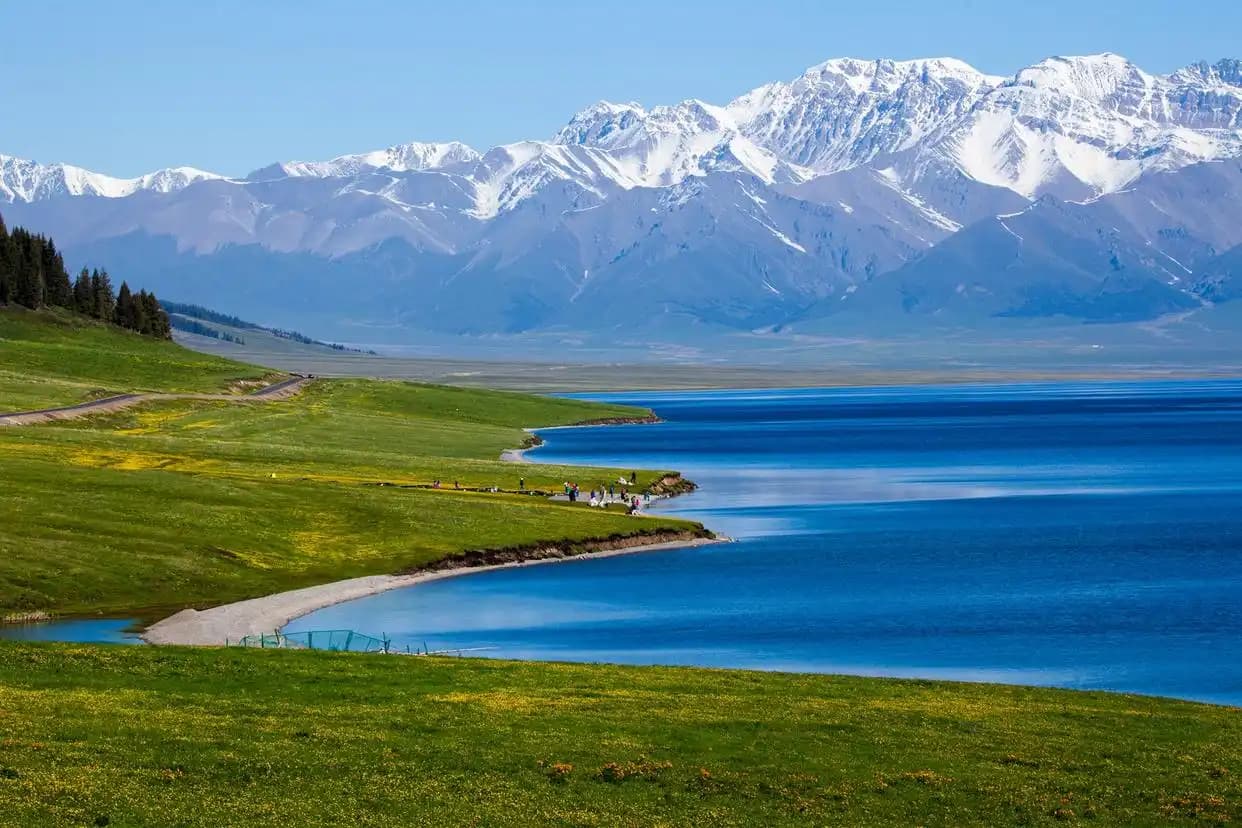
Researchers note that Bosten Lake is the largest inland freshwater lake in Xinjiang and supports the densest waterbird concentrations. Park authorities state that Sayram Lake sits at about 2,000 meters and attracts high-altitude migrants. The Tianshan Mountains hold raptor populations that draw dedicated birders despite harder logistics.
Where the road drops you
Most international and domestic travelers enter Xinjiang through Urumqi, which has an international airport with rail and road connections across the region. From Urumqi, the southern wetland sites such as Bosten Lake are reached by road or regional rail toward Korla. Park authorities state that Korla is the practical base for Bosten Lake, roughly 70 kilometers away by highway.
For the northern sites, travelers report flying or taking the train to Yining for Sayram Lake, then continuing by road along the Ili highway ring road. Kanas Lake in the Altai region requires a longer transfer, typically through Urumqi or Altay city, followed by a scenic drive that park authorities describe as seasonally weather-dependent. The Kanas Lake area is far north and best approached with a planned route.
Road conditions vary by season. Researchers note that spring thaw and winter ice can close mountain passes, so checking current access before departure is essential. Local drivers familiar with reserve entrances reduce the risk of missing restricted zones.
Admission and fees
Entry fees differ by site and are adjusted periodically. Park authorities state the following representative prices, and travelers should confirm locally before visiting because rates change:
- Bosten Lake reserve entry 45 RMB as of 2025, with separate boat or viewing-platform fees where applicable.
- Sayram Lake scenic-area ticket 70 RMB as of 2025, sometimes bundled with a shuttle pass.
- Kanas Lake reserve entry 185 RMB as of 2025 including mandatory shuttle transport inside the park.
- Tianshan Mountains sites vary; a typical mountain reserve day pass is 60 to 90 RMB as of 2025.
Researchers note that combined multi-day passes can lower per-day costs at larger reserves. Travelers report that hiring a local guide for birding adds roughly 300 to 600 RMB per day depending on language and vehicle needs. All prices should be confirmed locally, as posted rates and seasonal discounts shift year to year.
Best Time to See Wildlife in Xinjiang
Wildlife in Xinjiang follows clear seasonal patterns tied to migration and breeding. Researchers note that spring, from April to early June, brings the largest influx of waterbirds to southern wetlands as birds move north. Park authorities state that autumn, from September to October, offers a second peak as flocks return south and mammals become more visible before winter.
Summer, June through August, is best for high-altitude species in the Tianshan Mountains and for forest birds around Kanas Lake. Winter birding is limited but can reward observers with raptors and hardy resident species where open water remains. Travelers report that early mornings and late afternoons produce the most sightings regardless of season.

The itinerary I would follow
The following three-day birding route centers on Bosten Lake and nearby wetland margins, the most accessible cluster for first-time visitors. Times reflect typical light and bird activity reported by travelers and park staff.
| Day | Time | Activity | Target Species / Notes |
|---|---|---|---|
| Day 1 | 06:30 – 09:00 | Arrive Korla, drive to eastern shore viewing point | Dawn waterfowl flight, grebes, swans |
| Day 1 | 10:00 – 12:30 | Board reserve platform and scan reed beds | Raptors, ducks, herons |
| Day 1 | 15:00 – 18:30 | Late afternoon lake margin walk | Waders, roosting flocks |
| Day 2 | 05:45 – 08:30 | Pre-dawn survey at northern inlet | Migrating geese, swans |
| Day 2 | 11:00 – 13:00 | Visit wetland museum and ranger talk | Context on seasonal counts |
| Day 2 | 16:00 – 19:00 | Boat transfer to quiet bay (if open) | Closer waterbird views |
| Day 3 | 06:00 – 09:30 | Final sunrise watch, checklist compilation | Mixed flocks, raptor patrols |
| Day 3 | 10:30 – 12:00 | Return to Korla, log records | Travel buffer before flights |
Researchers note that a similar timed structure works at Sayram Lake, with higher-altitude species appearing later in the morning after fog clears. Travelers report building in rest and buffer time because remote reserves have limited services.
Hostels, hotels and homestays
Korla offers the widest range of accommodation near Bosten Lake, from budget hotels to mid-range chains, with rooms commonly priced between 200 and 500 RMB per night as of 2025. Park authorities state that a limited number of guesthouses exist closer to the reserve entrance, useful for dawn access but basic in comfort.
Near Sayram Lake, travelers report staying in Yining or at camp-style lodges around the lake rim, with prices varying sharply by season. Kanas Lake has timber guesthouses and resort-style options inside the reserve, though researchers note these book out during the September peak. In the Tianshan corridor, stays range from town hotels to shepherd camps, and park authorities advise reserving ahead for guided mountain routes.

What & Where to Eat Nearby
Cuisine around Xinjiang reserves centers on lamb, hand-pulled noodles, and flatbreads, with wetland towns offering freshwater fish from local lakes. Travelers report that Korla has Uyghur and Han eateries within a short drive of Bosten Lake, where a simple meal runs 30 to 60 RMB per person as of 2025.
Park authorities state that inside larger reserves, food options are limited to small cafes and packed-lunch services, so carrying water and snacks is wise. Near Sayram and Kanas, travelers note dairy products such as yogurt and dried curds are common, alongside grilled meats. Researchers note that altitude at Sayram can reduce appetite, so light meals are practical during full-day birding.
Ground truth
Researchers note that Xinjiang’s scale means long driving days, so grouping sites by region saves time. Park authorities state that many reserves require ID registration at entrances and that drone use is restricted near nesting areas. Travelers report that a spotting scope, binoculars, and layered clothing cover most needs.
Bring sun protection and extra water; open wetlands offer little shade. Confirm opening dates because seasonal closures protect breeding birds. Learn basic species names in Mandarin or local languages to communicate with rangers. Respect distance rules, as flushed birds waste energy and may abandon nests. Finally, download offline maps because signal is weak in remote mountain and lake areas.
Responsible Wildlife Watching
Researchers note that approaching nesting sites or feeding grounds stresses animals, so keeping distance and using optics rather than approaching on foot protects both the species and the experience. Park authorities state that several reserves limit visitor numbers during peak breeding months, and travelers report that booking through official channels avoids disappointment. Binoculars rated 8x or higher and a spotting scope are the most practical tools for distant wetland birds.
Best Habitats at a Glance
Xinjiang’s range runs from desert oases to alpine tundra, so species differ sharply by zone. Wetlands such as Bosten Lake draw migratory waterbirds along the Central Asian flyway, while the Tianshan and Altai forests hold raptors and smaller songbirds. Travelers report that early morning, just after sunrise, is the most active window for both birds and mammals, making a timed arrival essential if photography or listing is the goal.
The ones I get asked
Q: Do I need a guide to birdwatch in Xinjiang reserves?
A. Park authorities state that some restricted mountain zones require a licensed guide, while accessible wetlands like Bosten Lake can be visited independently. A guide helps with language, access, and finding species.
Q: Which reserve is best for a first-time birder?
A. Researchers note that Bosten Lake combines easy road access, dense waterbirds, and basic facilities, making it the most approachable starting point for newcomers to Wildlife in Xinjiang.
Q: What gear should I pack for a birding trip?
A. Travelers report that binoculars, a spotting scope, a field guide for Asian birds, sun protection, and warm layers cover most situations across both desert and alpine sites.
Q: Are there seasonal closures I should know about?
A. Park authorities state that nesting and migration peak periods often bring partial closures or timed entry to reduce disturbance, so confirm current rules before each visit.
Q: Can I see mammals as well as birds?
A. Researchers note that reserves such as Kanas and Tianshan hold mammals including deer and smaller carnivores, though sightings are less predictable than bird observations.
Q: How far in advance should I book accommodation?
A. Travelers report that September and holiday periods fill lakeside lodges weeks ahead, while spring and summer off-peak allow shorter-notice bookings in most towns.