Buying Jade in Hotan: How Not to Get a Glass Pebble for a Fortune
The first piece of ‘Hotan jade’ I bought turned out to be glass, confirmed by a man at a different stall who laughed and tapped it with a key. The ring was wrong. Real jade does not ring like glass; it thuds, soft and closed. That tap taught me more than the guidebook.
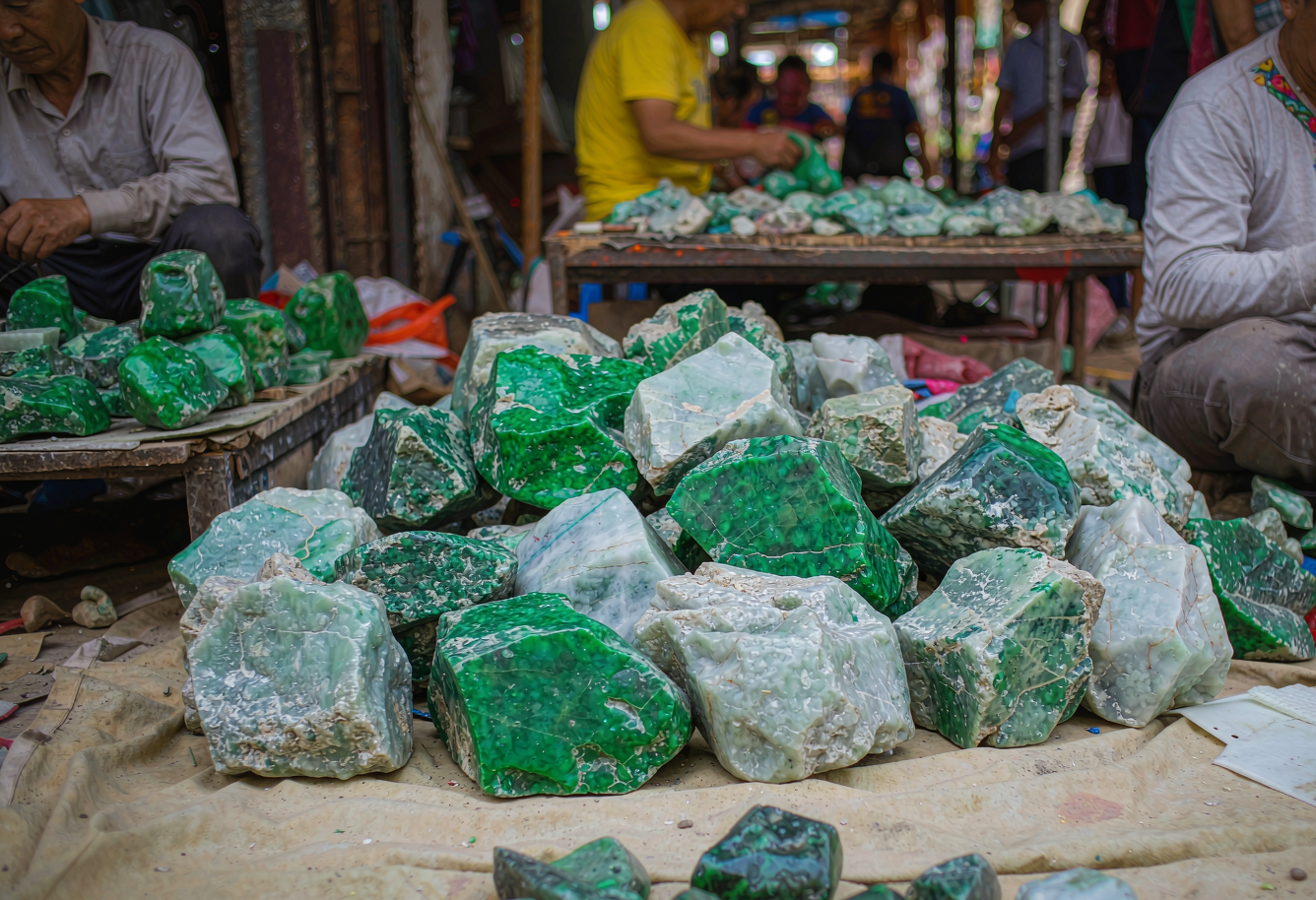
Hotan jade is nephrite, not the jadeite people mean elsewhere, and the good stuff is a deep, oily green-white that feels warmer than it should. The Hotan guide points you to the city; the shopping guide tells you the market by the river is where the serious trade happens at dawn, before the tourists arrive.
I now buy only where I can see the stone wet, because water hides flaws and also reveals them if you know how to look. The where-to-buy list and the Kashgar bazaar both have honest sellers if you ask the right person, and the handicraft markets page lists the ones I trust.
My tests are stupid-simple: the tap test, the temperature test (real jade stays cool), and the price test (if it is cheap and perfect, it is not real). I have walked away from a hundred ‘bargains’ and kept the three pieces I actually believe in.
The rule I tell friends: buy jade because you like the stone in your hand, not because a seller named a dynasty. The story is free; the stone is what you pay for. I keep my one good piece on my desk, not in a box, so I see it daily and remember the tap that proved it real. The glass one I threw away, which turned out to be the more useful of the two.
The dealer who taught me the tap test did it for free, which is the part I did not expect. I was handling a piece at his neighbor’s stall and he wandered over, tapped it with his ring, and said one word I took as ‘glass’ and one I took as ‘no.’ No sale for him, just a correction. I have since suspected he was the honest one and the stall was not, which is how the river market works: the real traders know each other and the tourists, and they will tell you when you are about to be a story. I bought my one good piece from a man who let me wet it, weigh it, and walk away twice before I came back. The price was fair because the patience was the product.
The river market at dawn is the real one; by midday it is tourists and the same stones at double. The Hotan guide points you there, and the where-to-buy list names sellers I trust. Trust the tap, the temperature, and your own doubt over any certificate a stranger hands you; certificates are easier to print than jade is to grow. I buy one piece per trip and live with it. The handicraft markets page covers the wider field if jade is not your stone. The rule that has saved me the most money: if the seller is in a hurry to close, I am in a hurry to leave. Real jade waits. Glass does not.
Not everyone should build a trip around this
The honest version: take half a day if that is all the arithmetic allows, and save the full day for the thing that is genuinely once in a lifetime. There is a lot of unshaded ground, the altitude is real if you came from a low-altitude city, and the swing between the car and the viewpoints is enough to give you a headache on an empty stomach. I am not going to pretend this is gentle. Who it does suit: someone wanting one strong memory, someone driving the Hotan loop anyway, someone willing to be out before breakfast. If you are short on days, this is the thing to cut, and no guidebook will tell you that. Xinjiang Jade Hotan Buying is superb, but it is also an hour or more in each direction from everything else you planned, and the drives are what eat the schedule.
Who it does not: anyone whose main goal is a relaxed few days, and anyone who has already done this same thing twice here. It suits people who like landscape and can walk a few kilometres at their own pace. It suits a traveller with a car and a flexible morning. It does not suit a family with a small child who needs a shade stop every forty minutes, and it does not suit anyone in week two of a high-altitude trip still feeling it. That stretch of the trip is described in our [[xinjiang-jade-buying-guide|Buying Hetian Jade in Xinjiang: A…]] too.
The hour I go back for
The light is only free of company on a Tuesday. Midday is the hour to avoid, not the hour to schedule. Everything goes flat, the shade disappears, and the temperature on an open plateau rises in a way that stops you caring about photographs. Between the two I would pick the later one, mostly because the early version costs you the rest of the day. Go early or go late and the same ground gives you two different subjects.
Sunrise is the one worth an alarm for. The whole face of Xinjiang Jade Hotan Buying turns a colour that does not exist at any other time, and the site is empty enough that you can stand still and hear nothing. By ten the coaches are here, and by one it is an hour of people shuffling past. I have come to like the last forty minutes before the gate shuts, when the groups have gone and the staff are sweeping, because that is when you can look up properly instead of squeezing a shoulder past strangers. Whatever the guidebook says about golden hour, go on a weekday.
A few minutes of background change the visit
Knowing what you are standing on turns a pleasant walk into something you actually remember. Read that the morning before rather than at the entrance, where the boards stand too far from the object to help. Locals in Hotan will give you the short version in about a minute if you ask, and it is usually better than the panel at the gate. The place only makes sense once you know its shape. Xinjiang Jade Hotan Buying was cut rather than built, which is why the walls are solid and the streets are the empty space between them, and why centuries of dust ended up acting as a roof. The history here is layered in a way the official signage compresses into names and dates.