
Winter in Xinjiang: Snow, Ski Fields, and What Actually Stays Open
The information below was cross-checked against several kinds of public material. Resort pages and operator listings supply lift ticket prices, opening dates, and facility notes for the ski fields near Urumqi and in the Altay region. Published closure notices from highway and transport authorities describe which mountain corridors shut and roughly when. Traveler reports on forums and travel platforms fill in the gaps on crowds, hotel heating, and what is actually open in the off-season. None of this replaces a live local check: weather, snow, and policy change fast, and a single storm can close a road that was open the day before.
One honesty note worth repeating: winter conditions in Xinjiang vary sharply by altitude and by how far north you are. A figure that is true for Urumqi at 800 meters is not true for Hemu at 1,400 meters, and neither matches the high passes near the Pamirs. Treat every specific number here as a starting point, not a guarantee.

What you need up front
Winter in Xinjiang runs roughly from late November through March, with deep cold peaking in December and January. In the north (Urumqi, Altay, Kanas), daytime highs often sit between minus 10 and minus 20 degrees Celsius, and nights drop to minus 20 to minus 30. Southern Xinjiang (Kashgar, Hotan) stays milder, commonly minus 5 to plus 5 in daytime, because of lower elevation and desert shelter.
Daylight is short. Around the December solstice, Urumqi gets about 8.5 to 9 hours of light; farther north it is closer to 8. That compresses your usable touring window. Most outdoor sites and lifts open late morning and close by late afternoon, so a winter day is front-loaded. Snow covers the ground across the north for months, and ice on lakes is thick enough that Sayram Lake becomes a frozen white plain rather than a blue summer expanse.
The season also changes the social texture. Summer’s tour buses thin out. Some scenic areas close entirely; others stay open but run skeleton services. For travelers who dislike crowds and high prices, that is the main draw. For travelers who want full services, guided routes, and easy driving, it is the main risk.
Closer to the entrance
Flying is the most reliable way into Xinjiang in winter. Urumqi Diwopu International Airport keeps scheduled service through the season, and major cities connect via Beijing, Xi’an, Chengdu, and Shanghai. Altay Airport serves the ski and Kanas corridor, though winter weather can delay or cancel flights. Traveler reports note that morning flights are less likely to slip than afternoon ones, when wind and snow build up.
Rail is steady but slow. The Silk Road Train Travel in Xinjiang routes link Urumqi with Kashgar, Turpan, and the east, and trains run through snow without the road-closure risk. The trade-off is time: Urumqi to Kashgar by rail is roughly 24 hours. Long-distance buses and self-drive routes are the weakest link, because highways over passes close.
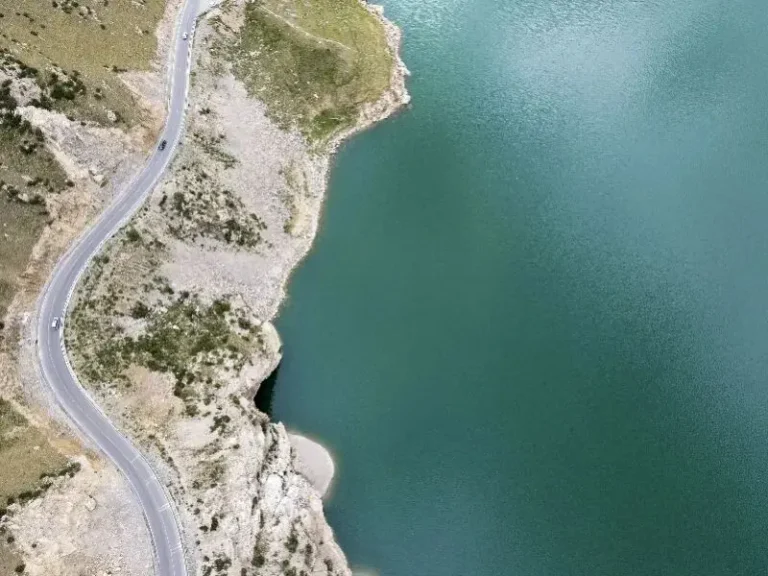
Road travel deserves its own planning. The Duku Highway is closed in winter, typically from roughly October to early June, so the direct north-south crossing through the Tianshan is not an option. Anyone considering driving should read the dedicated Winter Self-Driving in Xinjiang guide on snow tires, chains, and which passes shut. Weather delays are common, and a closed pass can add a full day to a route.
Ticket prices
Off-season pricing is the clearest win. Hotels in Urumqi, Kashgar, and the Ili corridor commonly drop 30 to 50 percent versus summer rates, according to traveler reports and booking listings from 2024 and 2025. Scenic-area entry fees are often unchanged, but bundled shuttle and tour services shrink, and some ticket offices run reduced hours.
Ski costs are the exception. Resorts list day passes in a believable range: Silk Road Ski Field near Urumqi posted around 200 to 400 RMB per day as of 2025, with equipment rental and lessons extra. Altay and Koktokay resorts price similarly, sometimes higher for international-standard slopes. Kanas and Hemu charge entry plus internal shuttle or horse-sled transport, and winter lodging inside the scenic area carries a premium because supply is limited and heating is expensive.
Be honest that prices shift. Fuel, heating subsidies, and resort investment change year to year. The figures above are anchor points from recent public listings, not fixed tariffs. Budget a buffer and confirm at booking.
Best Time to Visit: Choosing Your Month for Winter in Xinjiang
December brings the first deep snow and the start of ski season, with fewer crowds before the New Year. January is the coldest and the most reliably snow-covered, ideal for skiing and frozen-lake scenery but hardest on unprepared travelers. February mixes cold with the run-up to Spring Festival, when domestic travel spikes and some prices rise. March is the shoulder: snow lingers in the north, passes begin reopening later in the month, and some winter-only services wind down.
For skiing, December through February is the window. For Kanas and Hemu snow villages, January and February give the iconic frozen look but the heaviest cold. For Kashgar’s off-season charm, December, February, and March are all workable because the south stays milder. Use the best time to visit Xinjiang seasonal guide for the month-by-month picture beyond winter.
The itinerary I would follow
This sample winter route favors Urumqi and the north, with a southern add-on. Clock times reflect short daylight and lift schedules.
| Day | Time | Plan |
|---|---|---|
| 1 | 10:00 | Arrive Urumqi, stock cold gear, afternoon at the Xinjiang Regional Museum |
| 2 | 09:00 | Transfer to Silk Road Ski Field; lifts open 09:30, ski until 16:30 |
| 3 | 08:30 | Fly to Altay; afternoon transfer toward Koktokay ski area, check gear |
| 4 | 09:00 | Koktokay slopes 09:00 to 16:00; evening heated lodge |
| 5 | 07:00 | Long drive or flight south; rest in Urumqi by 18:00 |
| 6 | 10:00 | Fly to Kashgar; walk Kashgar Old City in mild afternoon light, dinner hot pot |
| 7 | 09:30 | Kashgar bazaar and Id Kah area; depart by 17:00 before dark |
This is a template, not a promise. Snow, flight delays, and closed roads will reshape it. Build in rest days.

Rooms and what they cost
Heating is the first question, not the decor. In Urumqi and Kashgar, standard hotels run central heating or strong AC, and traveler reports say most are comfortable. In Kanas and Hemu, winter lodging is inside the scenic area or in nearby villages, often wooden cabins with stoves or electric heating. Reports describe them as atmospheric but variable: some are warm, some struggle. Book the better-rated ones early, because winter supply is small.
Resort versus town is a real trade-off. Staying at a ski resort gets you first lifts and less driving, but costs more and offers little off-slope life. Staying in Urumqi or Altay town is cheaper and has more food options, but adds a daily transfer. In the south, Kashgar’s old city guesthouses are a practical, heated base for an off-season visit.
What & Where to Eat Nearby
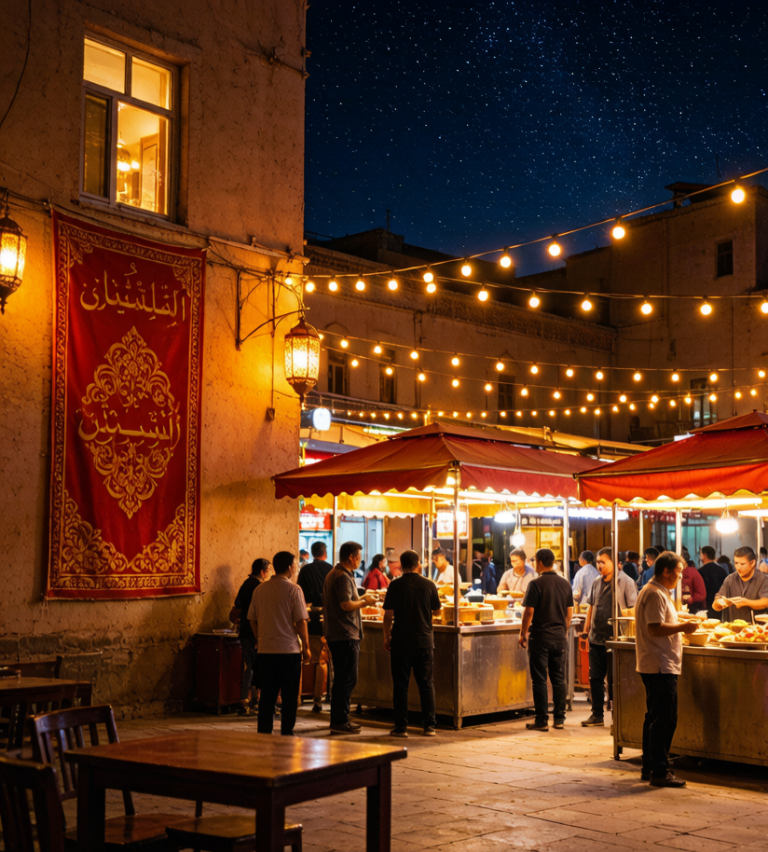
Winter food in Xinjiang is built for cold. Hot pot, hand-pulled noodles, and shorpa (meat broth) are everywhere in the cities. Naan stays a daily staple, and milk tea is the default warm drink. The Xinjiang milk tea guide covers the salty versus sweet styles you will meet.
Off-season changes what is open. Urumqi and Kashgar keep full restaurant scenes year-round. Scenic areas like Kanas and Hemu narrow to lodge kitchens and a few village spots; travelers report limited menus and higher prices because supply is trucked in. Carry snacks and a thermos. In Altay ski towns, slope-side cafes operate during lift hours but close early with the light.

Practical local notes
Layering is non-negotiable. Base layer, insulating mid layer, and windproof shell, plus spares for when the first set gets damp. Frostbite risk is real below minus 15, especially on exposed lifts and open lake ice; cover face, hands, and feet, and watch for numbness.
Battery drain is steep in cold. Phones and camera batteries die fast; keep a spare inside a jacket and charge overnight. Car reality: even with snow tires, unplowed sections and closed passes are common, and the Winter Self-Driving in Xinjiang guide covers chains and routes. Shorter daylight means planning every drive before dark. Finally, confirm Sayram Lake access and the Duku corridor status locally, because both shift with weather.
Choosing your weeks
Spring and early summer
For many, yes if unprepared. Northern areas hit minus 20 to minus 30 at night. With proper layers, heated hotels, and limited outdoor time, it is manageable. The south is much gentler. People who hate cold should pick Kashgar and skip the north.
Summer
The Duku Highway closes roughly October to early June. Other high Tianshan and Pamir corridors also shut or restrict with snow. Check current notices before any drive, because closure dates shift year to year.
If you want a frozen white lake with few people, yes. The blue summer ring road is gone, and some access points close. Check the Sayram Lake guide for current winter access before going.
It is one of the better winter choices. Milder than the north, full food scene, and the Kashgar Old City stays lively. Crowds thin compared with summer, and hotel rates drop.
Autumn
Yes, both stay accessible by road from Altay or Urumqi routes that remain open, and the frozen village scenes are the season’s signature. But services are reduced, lodging is limited and pricey, and cold is severe. It suits prepared, self-sufficient travelers more than first-timers.
Winter
Silk Road Ski Field near Urumqi and the Altay/Koktokay resorts run winter seasons. Day passes list around 200 to 400 RMB as of 2025, with rentals extra. Confirm dates, because opening depends on snow and resort schedules.
4
Fly for speed and to dodge road closures; take the train for steady, storm-proof travel between major hubs, as covered in the Silk Road Train Travel in Xinjiang guide. Avoid relying on long bus routes over passes.