Pamir Highway Xinjiang Guide: Kashgar to Tashkurgan on the Karakoram Highway
The First Time the Plateau Opened Up
The Pamir Highway Xinjiang section of the Karakoram Highway, China National Highway G314, is the road I have now driven three times. The first time, I left Kashgar before dawn and watched the farmland give way to rock within an hour. By the time the bus climbed out of the Ghez Canyon, the air had thinned and the colour of the light had changed in a way no photograph reproduces. I have never crossed into Pakistan, and I have never climbed anything out here. What I know is the road: the checkpoints, the altitude, the way the weather at Karakul Lake turns without warning, and the small friction of getting the border permit for Tashkurgan county. This guide is built from those three trips and from the practical questions travellers keep asking me.
Key facts
The Pamir route in Xinjiang runs south from Kashgar along G314 toward the Khunjerab Pass on the Pakistan border. The road is roughly 4roughly 300 km from Kashgar to Tashkurgan town, and another 130 km or so from Tashkurgan to the Khunjerab Pass itself. This is high, dry country. The stops most travellers care about sit in a clear sequence.
- Ghez Canyon: the narrow gorge climb immediately south of Kashgar where the road gains real altitude fast.
- Baisha Lake: a pale, wind-blown lake below white dunes, around 3,300 m. A ticket runs about ¥40, but the classic mirror reflection is free from the public viewing platform on the north bank — aim to arrive before about 11:00, when the wind is usually calmest.
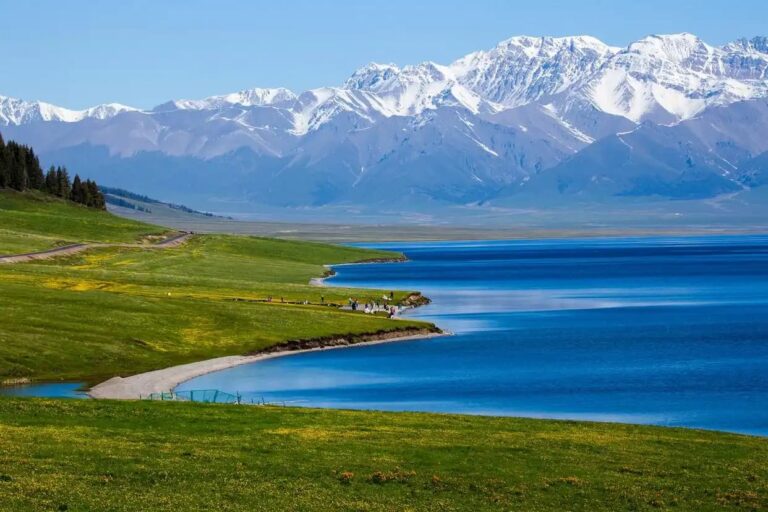
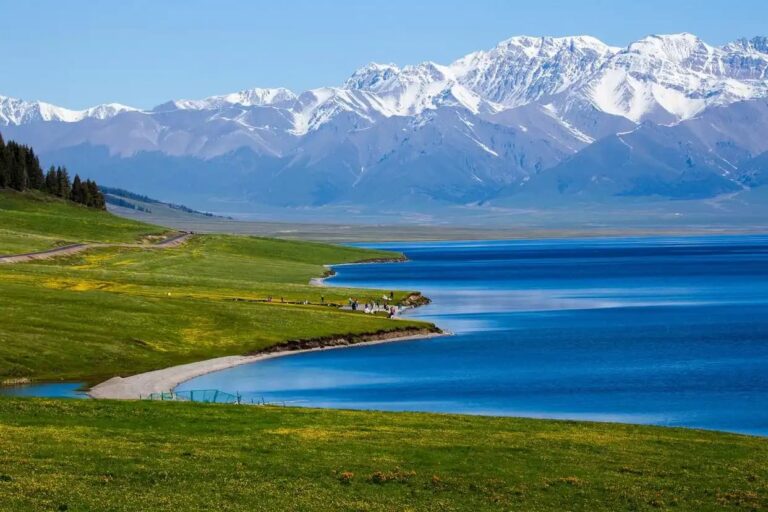
- Karakul Lake: the big glacial lake at roughly 3,600 m, with Muztagh Ata rising behind it.
- Muztagh Ata: the 7,546 m Father of Ice Mountains seen from the lake shore.
- Tashkurgan: the Tajik county town at about 3,100 m, base for the Stone City and the run to the border.
- Khunjerab Pass: the actual border crossing, around 4,700 m, often closed to casual tourist entry.
The altitude is the single fact that shapes every decision on this route. Karakul is high enough that many people sleep badly their first night; Khunjerab is high enough that you should not plan to linger.

Reaching it by car
Everything on this route starts in Kashgar Old City. Kashgar is the last real city before the plateau, and you will want at least a day there to sort permits, cash, and supplies before heading south. The highway itself begins at the southern edge of Kashgar and is signed clearly toward Tashkurgan and the Khunjerab Pass.
You cannot simply walk onto this road as a casual stroll. Foreign travellers especially need the right paperwork before the first major checkpoint south of town. If you are coming from further afield, fly or take the train to Kashgar first, then organise the Pamir leg from there. I would not try to combine the Pamir run with the best time to visit Xinjiang planning for the north without a buffer day, because the plateau operates on its own weather schedule.
| Option | Cost (as of 2025) | Flexibility | Permit handling | Time |
|---|---|---|---|---|
| Shared taxi (Kashgar to Tashkurgan) | 100 to 150 RMB per seat | Low: fixed route, set off when full | Driver usually handles own; you still need yours | 5 to 7 hours |
| Public bus | 50 to 80 RMB | Low: fixed timetable | None provided; bring your own permit | 7 to 9 hours |
| Hired car with driver | 800 to 1,500 RMB per day | High: stop at lake, Baisha, viewpoints | Driver arranges his; eases your logistics | Your call, 2 to 4 days |
| Cycling | Own gear; no fare | Total: go at your pace | All on you; hard at altitude | Several days, weather dependent |
Prices at the gate
Prices on the Pamir shift, and I have watched them move between my own trips, so treat the following as a starting point rather than a quote. Confirm at the Kashgar ticket offices or your guesthouse before you commit.
- Karakul Lake scenic area entry: around 100 RMB as of 2025. This covered the lake shore access on my most recent trip; it was not charged the same way on earlier visits, which tells you how much the arrangements move.
- Shared taxi Kashgar to Tashkurgan: typically 100 to 150 RMB per seat as of 2025, depending on the vehicle and how full it is. Negotiate at the Kashgar transport hubs, not online.
- Public bus Kashgar to Tashkurgan: cheaper, often 50 to 80 RMB as of 2025, but slower and on a fixed timetable.
- Hired car with driver: the most flexible option. Expect roughly 800 to 1,500 RMB per day as of 2025 depending on vehicle and season; confirm whether fuel and the driver border permit are included.
The honest summary: budget more than you think for a hired car, and budget flexibility for everything else, because the permit situation can change the plan on the morning you intended to leave.
Which months to aim for
The plateau is brutal in winter and unreliable in early spring. The practical window is roughly May through October. June to September is the safest bet for open passes and passable weather, though afternoon storms at Karakul are common even in summer. I have seen clear mornings collapse into sleet by noon at 3,600 m, so carry a warm layer no matter the month.
Avoid the deep winter months unless you specifically want empty roads and accept that the Khunjerab side and some high passes can be closed by snow. The best time to visit Xinjiang page covers the wider regional pattern, but the Pamir has its own colder, higher microclimate on top of that.
Day-by-Day Itinerary on the Pamir Highway Xinjiang
This is a realistic 3-day plan I have used in roughly this shape on my own trips. Times are clock times, not aspirations.
Day 1: Kashgar to Karakul Lake
- 07:30: Leave Kashgar with your driver or shared taxi; buy water and snacks the night before.
- 09:00: Enter Ghez Canyon; the climb begins and the altitude starts to tell.
- 11:30: Stop at Baisha Lake for photos and a short walk; it is around 3,300 m, so move slowly.
- 13:30: Reach Karakul Lake, check into a lakeside yurt or guesthouse, eat a simple lunch.
- 15:00: Walk the shore toward the Muztagh Ata viewpoint; watch the weather and turn back if it closes in.
- 19:00: Early dinner; sleep is often poor at this altitude, so rest before dark.
Day 2: Karakul Lake to Tashkurgan
- 08:00: Breakfast and depart; the road continues past smaller lakes and herder settlements.
- 11:00: Checkpoint south of the lake; have your permit and passport ready.
- 13:30: Arrive Tashkurgan, check in, walk the town and the Stone City ruins if open.
- 17:00: Eat early; the town is quiet by night and options thin out.
Day 3: Tashkurgan and the Khunjerab Approach
- 08:30: Drive toward the Khunjerab Pass; note that foreign entry to the actual border crossing is frequently restricted, so this is often a turn-around at a control point rather than a crossing.
- 12:00: Return toward Tashkurgan; afternoon is the usual weather-risk window.
- 15:00: Begin the return to Kashgar or overnight again and return Day 4.

Staying nearby
Tashkurgan has the most reliable hotels, from basic county-town rooms to a few better-rated spots near the main road. At about 3,100 m it is lower than Karakul, so most people sleep better here than at the lake.
Karakul Lake offers yurts and a few guesthouses right on the shore. They are simple, cold at night, and the altitude makes sleep light. I have woken at Karakul more times than I have slept through, and that is normal. Bring a warm sleeping layer and do not expect heating to match the outside temperature.
Altitude sleeping advice: arrive hydrated, skip alcohol on night one, and keep the first night exertion mild. If you feel genuinely unwell at Karakul, dropping to Tashkurgan the next day usually helps because it is lower.
What & Where to Eat Nearby
Food on the plateau is hearty and limited. In Tashkurgan you will find Tajik offerings such as noodle soups and flatbreads, alongside standard Uyghur staples: laghman noodles, polo (rice with carrot and lamb), and kebabs. The lake yurts serve basic meals, often noodle soup and bread, and you should not count on variety.
Carry your own snacks and water from Kashgar. The high altitude cuts appetite for many people, so heavy meals can sit badly; I have found a light lunch at Karakul better than a large one. Afternoons are when options close, so eat your main meal earlier than you might in the city.

What locals know
The border permit for Tashkurgan. Tashkurgan is a border county, and the permit question is the part of this trip that causes the most friction. On my trips the requirement has been a border area permit (边境证) for foreign travellers entering the county south of Kashgar. The practical reality: you usually arrange it through the Kashgar public security office or, commonly, via your hotel or a local agent who handles it for guests. The snag is that the rules have shifted between visits, and what worked one year was not identical the next. Sometimes a checkpoint turns a traveller back for a missing document even when a guesthouse said it was fine. My honest advice: start the permit process a day before you plan to leave, ask three sources rather than one, and accept that the answer may simply be not this week depending on the current control posture. Do not invent a permit or assume silence means approval.
Altitude sickness. Karakul sits around 3,600 m and Khunjerab around 4,700 m. Tashkurgan at 3,100 m is the gentlest of the three. Symptoms are usually headache, poor sleep, and shortness of breath on small hills. Ascend gradually, drink water, and do not push hard on the first day at the lake. If symptoms worsen, descend. I have seen fit travellers knocked flat by the altitude at Karakul, so treat it seriously rather than as a minor inconvenience.
Other practical points. Cash is useful in small towns and at yurts where cards fail. A local SIM helps; the SIM cards in Xinjiang guide covers getting connected. Road checkpoints are normal here, and the Xinjiang safety overview explains the checkpoint culture so it does not surprise you. Weather turns fast, and the section of G314 between the lake and Tashkurgan is exposed and windy even when Kashgar is calm.
Paperwork and prep, in order
- Needing a special permit — Yes for the Tashkurgan stretch.
- Foreign tourists reach the khunjerab pass — Often not as a casual crossing.
- Better to take the public bus — The bus is cheaper and fine if you only want Kashgar to Tashkurgan.
- Bad is the altitude on this route — Karakul at about 3,600 m is where most people feel it; poor sleep and light breathlessness are common.
- Pamir highway in winter — You can reach parts of it, but snow closures on the high passes and the Khunjerab side are likely from late autumn through early spring.
- Days do i need — A realistic minimum is three days from Kashgar: one night at Karakul, one or two in Tashkurgan.
- Road scenery worth the effort — The Ghez Canyon climb is dramatic and Baisha and Karakul are genuinely striking, but stretches between them are bare and dull.
- The author — Karl Huang runs xinjiangtraveltips.com and has travelled the Pamir Plateau route in Xinjiang three times, alongside repeated Duku Highway drives and an extended stay in Kashgar Old City.
Work through that list a few days before departure, not on the morning you fly. Most of the grief I have seen on this route comes from leaving it until the last minute.