Sayram Lake: The ‘Last Tear of the Atlantic’ and Xinjiang’s Alpine Gem
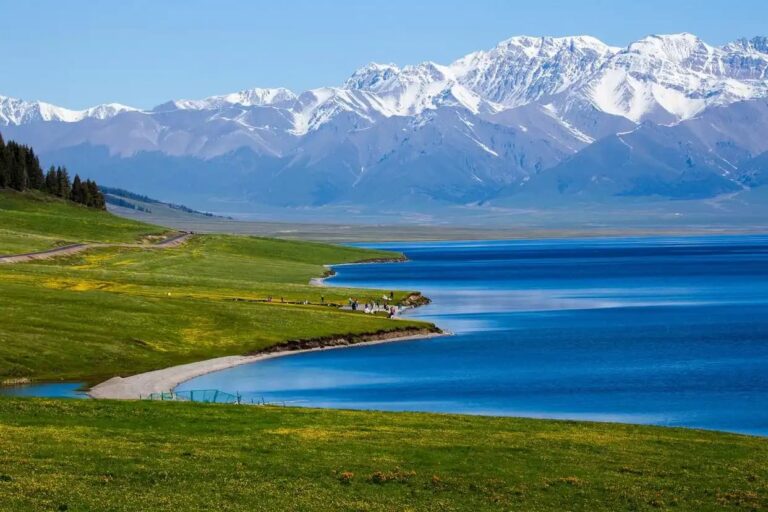
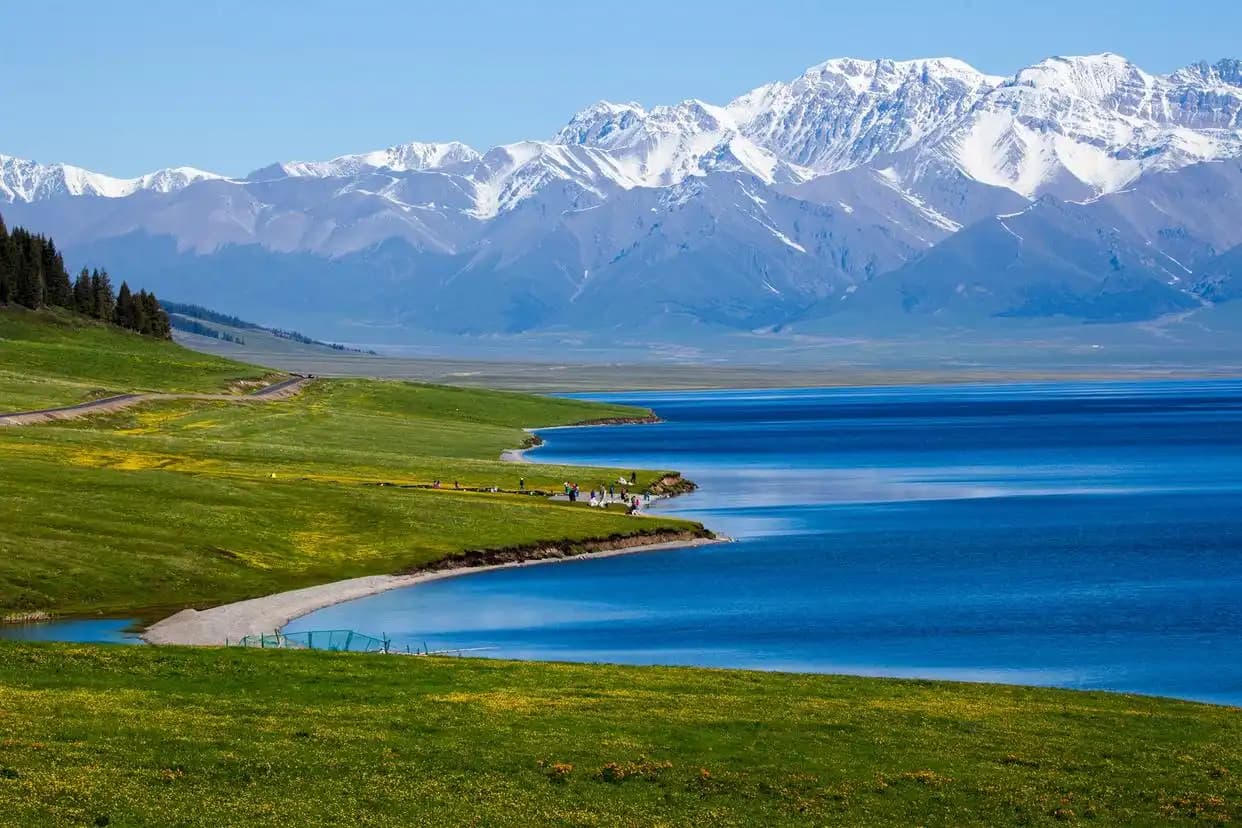
There is a local saying that Sayram Lake is the “last tear of the Atlantic.” It sounds poetic until you stand on the shore and realize it is almost literally true: the lake sits at about 2,070 m in the Borohoro Mountains, and the moisture that feeds it is the final breath of the westerly air currents that have crossed half the globe and die here, on the threshold of the driest interior on earth. Past Sayram, the land falls into the rain shadow of the Dzungaria Basin.
For travelers building a northern Xinjiang loop, Sayram is the alpine centerpiece — a Swiss-grade lake you can reach by car from the G30 highway in a couple of hours. I have pulled off the causeway at both dawn and dusk, and the difference is enormous: at first light the surface goes mirror-flat and the snow behind it doubles; by midday the tour buses arrive and the wind picks up.
At a glance
- Altitude: ~2,070 m. High enough for strong sun and sudden cold, but not for altitude sickness.
- Entry: Peak season (roughly April–October) runs about ¥100–145 per person including the shuttle; self-drive vehicles need a separate pass (around ¥145/24h). Off-season is cheaper. Confirm current pricing at the gate.
- Loop road: The shore road is roughly 70–90 km. Allow at least half a day; the speed limit is low and the pull-offs are the point.
- Best light: Arrive before 09:00 or after 17:00 to beat the buses and catch calm water.
Driving the loop
The G30 now runs along the southern shore on a causeway, so you can circle a good portion of the lake by car. Most visitors enter at the East Gate and follow the shore road counter-clockwise, saving the best stretches for when the light is low. The drive itself is the attraction — stop at the pull-offs rather than rushing to a single “viewpoint.”
Stops worth the stop
- Moon Bay (月亮游): The crescent shore where the water runs deepest; a sailing-boat jetty operates in season.
- Dianjiangtai (点将台): A hill with the widest panorama of lake, grassland, and distant peaks.
- Kele Yongzhu (克動涛珠): A cluster of springs where swans gather May–September and where winter “blue ice” bubbles form under the surface.
- Pine Tree Head (松树头): The high point — climb about 40 minutes for a view that stacks Sayram, the snow range, and the Guozigou Bridge (果子没大桥) in one frame. The bridge is also visible for free from the G30 itself.
- The S-curve road: The photogenic bend near West Sea Prairie, best shot in the soft morning light.
When to go
Summer (June–August) brings wildflower meadows and nesting swans, but the most crowds. Winter (December–February) turns the lake into blue ice with frozen-bubble formations — spectacular and nearly empty. Spring and autumn are the quiet sweet spots, with snow on the peaks reflected in still water. Whichever season, pack a windproof layer; the lake is 5–10°C cooler than the surrounding basin and the weather flips fast.
The one thing I order every time
In Sayram Lake The Last that is the tea, and the reason is not the flavour. It is the rhythm of it: someone puts a glass in your hand, another arrives, you sit for ten minutes, and suddenly the rest of the day is sorted. The sweet version is the one for the market, not for a morning. Ask for it plain the first time. That stretch of the trip is described in our [[sayram-lake-last-tear-atlantic-guide|Sayram Lake with Kids: A Family Plan and…]] too.
What travels home and what does not
What does not work is anything fried or saucy, which turns in transit, and anything you cannot repeat at home. Nuts, dried grapes, an uncut flatbread and vacuum-packed lamb all survive a long-haul flight. It is cheaper, the staff wrap it properly, and it spends a week in your bag as the best thing about the trip. Buy the dried fruit in the market rather than at the airport and ask for it packed at the stall. That stretch of the trip is described in our [[sayram-lake-the-last-tear-of-the-atlantic-a-complete-visitors-guide|Why Sayram Lake Is Called the ‘Last Tear of…]] too.
On the ground
- Eat the local fish. Sayram’s cold-water gaobai gui (high whitefish) is the regional specialty — try it at a lakeside restaurant, or in nearby Qingshuihe town for less.
- Bring your own food and water. In-park dining is limited and pricey; stock up in Yining or Bole on the way in.
- Drones: Restricted — registration is required and some zones are no-fly. Check at the gate.
- Pair it. Sayram is the natural northern bookend to a Turpan run, or the start of an Ili Valley loop through Guozigou, Yining, and the grasslands.
My take
Sayram rewards patience more than any other stop on the northern loop. The mistake is treating it as a 20-minute photo op on the way to Yining. Give it a morning, walk the Pine Tree Head trail, and watch the light move — that is when the “last tear of the Atlantic” actually earns the name.