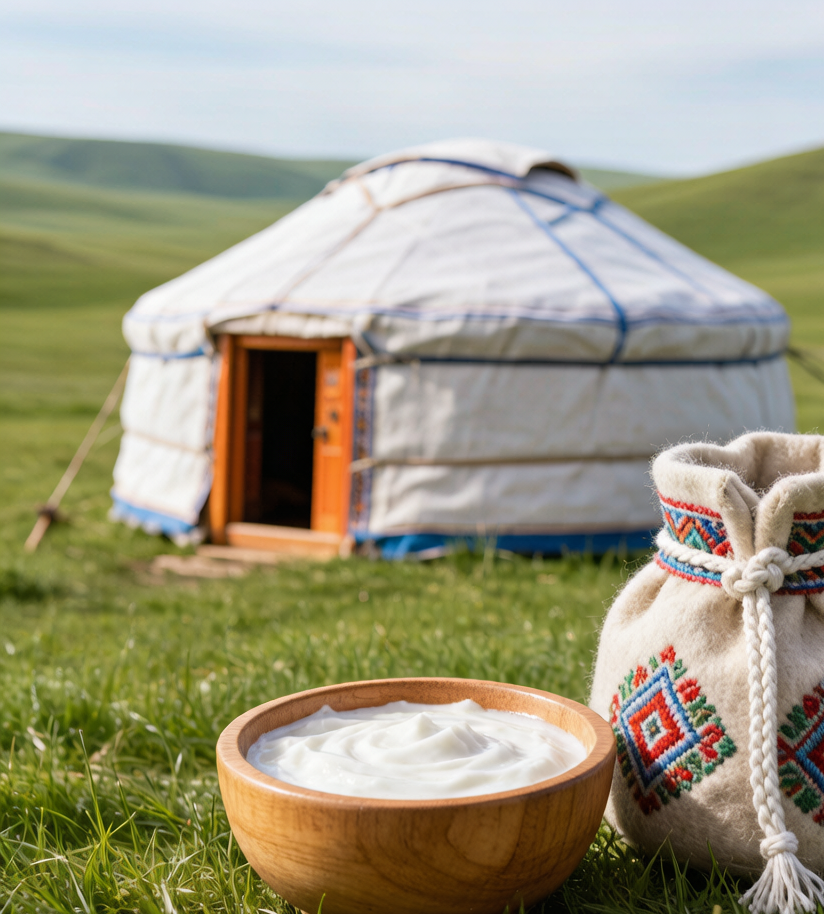
Kumiss: The Fermented Mare’s Milk You Either Love or Learn From
Some drinks you taste to be polite and some you taste to understand a place. Kumiss, the fermented mare’s milk of the grasslands, is firmly the second, and I tried it at a yurt table where refusing would have been rude.
It is nothing like the milk you know. Lightly alcoholic from fermentation, faintly sour, and gently fizzy, kumiss is a herder’s drink built for the open steppe. It belongs to the same dairy world as the summer drinks I rely on, only it carries a tang and a kick the sweet teas do not.
The right place to meet it is a Kazakh yurt stay, where the host may offer a bowl as part of welcome. I treated it like the breakfast ritual: accept, sip slowly, and let the host set the pace. A little is plenty on a first meeting, and nobody expects you to finish the bowl.
It pairs, oddly, with brick tea as two ends of the nomad drinks spectrum, one fermented and lively, the other steeped and grounding. Together they explain why the grassland kitchen is built around what the animals provide, and why the table is central to a stay.
My honest take: kumiss is an experience more than a refreshment, and the value is the moment, not the flavour. Try it once, with grace, and you will have tasted something most visitors only read about. Skip it if you must, but do not mock it, because on the steppe it is hospitality itself.
If the taste is too strong, ask for it mixed or watered at first; some hosts do this for newcomers, and it eases you in. I started there and grew to like it straight, but there is no shame in the gentle version. The point is the gesture, and the bowl offered is the welcome, not the beverage.
On the steppe, kumiss often comes with dried curds or bread, and taking both is the right answer. Refusing the food reads as refusing the host, and that is a mistake I made once and not twice.
The ferment varies by maker and by day, and I learned to ask how strong before the first bowl, because a fresh batch can be mild and a settled one sharp enough to make the eyes water. The host usually grins and tops you up regardless, which is the point, not the peril. On a cold grassland morning a bowl of kumiss is warming in a way tea is not, and I came to look forward to it despite the first shock. If you are offered the home-made curds alongside, take them; they are the savoury counterpoint and the polite answer. The whole ritual, bowl and bread and a circle of strangers who treat you as kin, is the clearest window I got into steppe life, and the drink is only the vessel for it.
For the squeamish, start with a few sips and set the bowl down; no host is offended by a measured try, and most are amused by the face it earns. The point was never the drink but the seat at the circle, and a polite half-bowl still buys you the story. I left lighter in step than I arrived, which is the only review that matters.
The one thing I order every time
It is the rhythm of it: someone puts a glass in your hand, another arrives, you sit for ten minutes, and suddenly the rest of the day is sorted. Ask for it plain the first time. In Kumiss The Fermented Mares that is the tea, and the reason is not the flavour. The sweet version is the one for the market, not for a morning. Where most people get the logistics wrong is covered in our [[koumiss-kumys-xinjiangs-ancient-fermented-mares-milk-drink|Koumiss (Kumys): Xinjiang’s Ancient…]].
What travels home and what does not
Nuts, dried grapes, an uncut flatbread and vacuum-packed lamb all survive a long-haul flight. It is cheaper, the staff wrap it properly, and it spends a week in your bag as the best thing about the trip. What does not work is anything fried or saucy, which turns in transit, and anything you cannot repeat at home. Buy the dried fruit in the market rather than at the airport and ask for it packed at the stall. That stretch of the trip is described in our [[xinjiang-yogurt-fermented-milk-guide|Xinjiang Yogurt & Fermented Dairy: Süzmä,…]] too.