
A Xinjiang Breakfast: Nan, Tea, and the Jam You Did Not Expect
Forget the Western hotel buffet.
The regional breakfasts differ more than you’d expect. In the north, Kazakh and Kyrgyz households add panir (a salty pressed cheese) and sometimes a bowl of milk tea instead of green tea, a holdover from the pastoral north where dairy, not just carbs, anchors the morning. In the south, the table is pure nan-and-jam, sweeter and simpler. I came to prefer the northern version on cold mornings and the southern one in summer, when the apricot jam cuts the heat. Either way, the meal is light by design — it primes you for a big midday lunch rather than competing with it, which is exactly how the local day is built.
A real Xinjiang breakfast is built around one thing: fresh nan bread, still warm from the overnight tandoor, torn and dipped into sweet jams or butter, washed down with green tea. After a week on the road I started timing my mornings around the nan bakeries, because the first hour after they open is the only time the bread is this good. The breakfast here is quiet, sweet, and carby — a gentle start that contrasts with the savory onslaught of lunch and dinner.
The Core Components
| Item | Role on the table |
|---|---|
| Nan (flatbread) | The anchor — torn, not cut |
| Green tea (chay) | The constant drink |
| Apricot or rose jam | The sweet counterpoint |
| Butter or clotted cream | Rich spread for special mornings |
| Boiled egg | Protein, often soft |
| Tomato/cucumber | Fresh crunch in summer |
| Cheese (panir) | Salty, in some households |
The jam is the surprise. Xinjiang makes intense apricot jam from its own dried-fruit belt and a fragrant rose-petal jam that tastes like perfume in the best way. Spread thick on hot nan, it is the region’s version of toast and marmalade, minus the toast. The rose jam in particular is a Kashgar specialty, made from damask roses grown in the oasis gardens, and it is unlike anything in a Western supermarket.
Where to Eat It
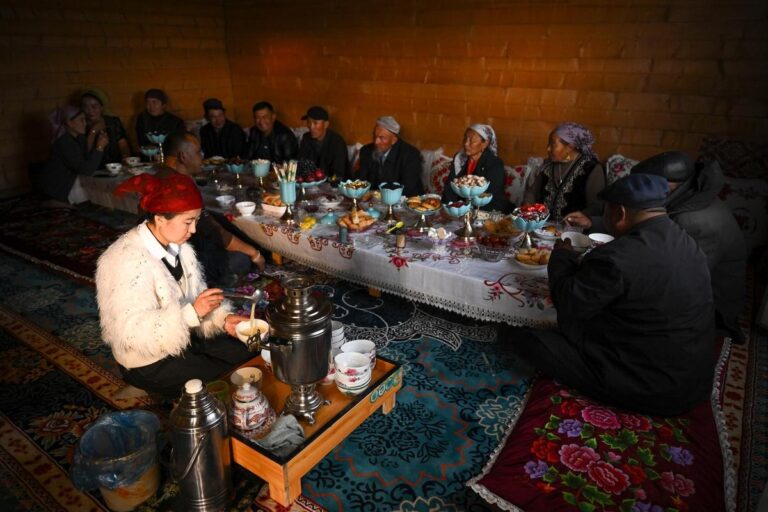
Every neighborhood has a nan furosh (nan shop) that opens around 7–8 a.m. Buy two rounds hot, then sit at a nearby teahouse or back at your guesthouse with a thermos. In Urumqi and Kashgar, morning nan-and-tea breakfasts are a social institution for older residents; join a shared table and you are instantly part of it. The early crowd — retirees, vendors setting up, a few insomniac travellers — is the most authentic cross-section of the city you will meet all day.
The Tandoor Moment
Nan is slapped onto the inner wall of a cylindrical tandoor and peeled off with a hook when blistered and golden. The ones with onion seeds (qashqar nan) and the larger girde rings are the ones to aim for. They go stale by evening, so breakfast is the only correct time to eat them. Buy extra and you can refresh them in a toaster later, but nothing matches the just-out-of-the-oven version, soft inside with a crackly, seeded crust.
A Note on the “Western” Option
Upscale Urumqi hotels serve continental breakfasts, but you will learn far more about the region from a 6 RMB nan-and-tea morning in a side-street bakery. For the full edible picture, our Xinjiang food guide covers the rest of the day’s eating. The Western option is convenient but it erases exactly the cultural texture you came to experience — the clatter of tea glasses, the warmth of the bread, the old men debating the news over refills.
The usual missteps
The trap here: Time is breakfast in xinjiang
Early. Bakeries open 7–8 a.m. and the best nan is gone by 9–10. Locals eat a light breakfast and a heavier lunch, so don’t sleep through the good bread.
Where people slip: Xinjiang breakfast spicy
No. It is mild, sweet and carby — the opposite of the chili-heavy food of inland China. A perfect reset for a palate tired of heat.
The usual error: Geting coffee
In Urumqi and tourist hotels, yes. Traditional spots serve tea only. Don’t expect espresso in a Kashgar side street — bring your own or embrace the chay.
Easy to get this wrong: Filling enough
Nan is dense and the jam adds sugar; two rounds plus tea will hold you to lunch. Add an egg if you have a big day of hiking or a long drive.
The trap here: Vegetarian-friendly
Completely. A bread, jam, egg and tea breakfast contains no meat and is naturally halal. Even the butter is often a clarified, halal version.
Where people slip: If i want something savory in the morning
Some spots serve samsa (baked buns) from the tandoor alongside, and egg-on-nan is common. Ask for “yumurta” (egg) and point at the nan.
Where to Eat It in Each City
In Urumqi, the blocks around the International Grand Bazaar and the older Erdaoqiao district have early nan shops and tea houses side by side — grab nan hot and step into any teahouse. Kashgar’s old city wakes slowly but the nan ovens near the Id Kah Mosque are firing by 7:30, and a few courtyard guesthouses serve a proper spread to guests. Yining blends the northern dairy breakfast with southern nan, making it the most interesting morning in the region. Turpan keeps the same template but adds its own raisins to the jam. Wherever you are, the rule is identical: follow the locals to the busiest oven, because the busiest oven is the freshest.
Cost and Practicalities
A breakfast of two nan, a pot of tea, and a smear of jam runs 8–15 RMB per person — among the best-value meals you’ll eat. Most bakeries are cash or Alipay only, so have a few yuan ready; the bigger teahouses take cards. If you’re staying in a hotel with a Western breakfast, skip it at least once and go local — the savings funds a better lunch, and the experience is the point. One logistics note: bakeries close by early afternoon and rarely reopen for a second bake, so this is genuinely a morning-only meal; don’t expect good nan after 3 p.m.
A Breakfast Ritual of Your Own
The easiest way to make this a daily habit on the road is to buy nan the evening before (it keeps a day), then brew your own tea in the guesthouse and spread whatever jam you picked up. It costs almost nothing and turns a generic hotel room into a small piece of the region each morning. I did this on long stays and found it anchored the day better than any sightseeing plan — a quiet, cheap, repeatable ritual that needed no translation and no reservations.
The Jam Question
If you only try one element, make it the jam. The apricot jam is made from the region’s own dried-apricot belt and cooks down to a deep, tangy-sweet spread unlike the pale supermarket version; the rose-petal jam (made from Kashgar’s damask roses) is floral and intense, a spoonful on hot nan is enough. Both are sold in markets if you want to take some home — look for the darker, less glossy jars, which are the traditionally cooked ones rather than the bright, pectin-heavy commercial packs. A small jar costs 10–20 RMB and survives the trip home better than most souvenirs. It’s the cheapest way to recreate a Xinjiang morning in your own kitchen months later.
Why It Matters
Breakfast here is a window into the region’s character: unhurried, sweet, communal, and built on bread and tea rather than rush. Starting your day this way — even once — resets the rhythm of the whole trip and costs almost nothing. Skip the hotel buffet at least one morning; the neighborhood nan shop and the old men at the teahouse will show you more about daily life in ten minutes than a museum does in an hour. It’s the most accessible, most authentic, and most forgettable-until-you-try-it meal in Xinjiang.