Xinjiang Yogurt: Why the Local Version Tastes Nothing Like Store-Bought
The First Sip That Made Me Rethink Everything I Knew About Yogurt
I thought I knew what yogurt tasted like. I grew up eating supermarket yogurt — the sweet, fruity kind that barely tastes like dairy at all. So when a vendor at the Kashgar Sunday Bazaar handed me a bowl of thick, white yogurt with a spoonful of honey on top, I expected something similar. I was wrong. Completely, utterly wrong.
Last updated: July 15, 2026 · Written by Karl Huang, a Xinjiang travel specialist who has spent time across the region. Practical details are cross-checked against official tourism, transport, and border-regulation sources.
The first spoonful of that Kashgar yogurt hit my tongue with an intensity I wasn’t prepared for — it was tart, almost aggressively so, with a thickness that made it more like eating soft cheese than drinking yogurt. But then the honey kicked in, and the combination of sharp acidity and floral sweetness created a flavor that supermarket yogurt could never, ever approach. I paid 5 RMB for that bowl, sat on a low stool in the corner of the bazaar, and realized I’d been eating fake yogurt my entire life.
That was in May 2023, and since then, I’ve made it a point to seek out local yogurt (酸奶, suānnǎi) everywhere I go in Xinjiang. What I’ve discovered is that Xinjiang yogurt isn’t just a snack — it’s a completely different dairy experience that has more in common with Greek yogurt or Middle Eastern labneh than anything you’ll find in a Western supermarket.
{IMG1}Why Xinjiang Yogurt Tastes Nothing Like Store-Bought
Let me be blunt: if you’ve only had commercial yogurt from a supermarket, you haven’t really had yogurt. The stuff in plastic containers with fruit at the bottom has been processed, sweetened, stabilized, and pasteurized to within an inch of its life. Xinjiang yogurt, especially the homemade versions sold at bazaars and small shops, is a different beast entirely.
The Tang Factor: It’s Supposed to Be Sour
The first thing you’ll notice about Xinjiang yogurt is the tartness. We’re not talking about a mild, pleasant tang — this is mouth-puckeringly sour if you’re not expecting it. That’s because authentic Xinjiang yogurt is made from raw milk that’s been fermented with live cultures, usually in a clay pot or glass jar. There’s no sugar added during fermentation, so what you’re tasting is the natural acidity of the cultured milk.
I remember giving a spoonful to a friend who visited me in Urumqi, and his face scrunched up like he’d bitten into a lemon. “Is it supposed to taste like this?” he asked. Once he mixed in the honey that came with it, he understood. The sourness isn’t a flaw — it’s the whole point. It means the yogurt is alive, active, and untreated.
Texture: Thick Enough to Stand a Spoon In
Xinjiang yogurt has a texture that ranges from thick cream to soft cheese, depending on how long it’s been strained. The version I had in Kashgar was so thick I could turn the bowl upside down and nothing would fall out (I tested this, to the amusement of the vendor). This thickness comes from using full-fat milk (often from sheep or camels in rural areas, though cow’s milk is more common in cities) and straining out excess whey.
If you’re used to drinking yogurt from a bottle, the texture might be a shock. This is spoonable yogurt, the kind that coats your mouth and lingers. In a good way, I mean. After a few days of eating it, I actually found myself preferring this texture to the thin, drinkable stuff I used to buy back home.
Traditional Production: How Xinjiang Yogurt is Made
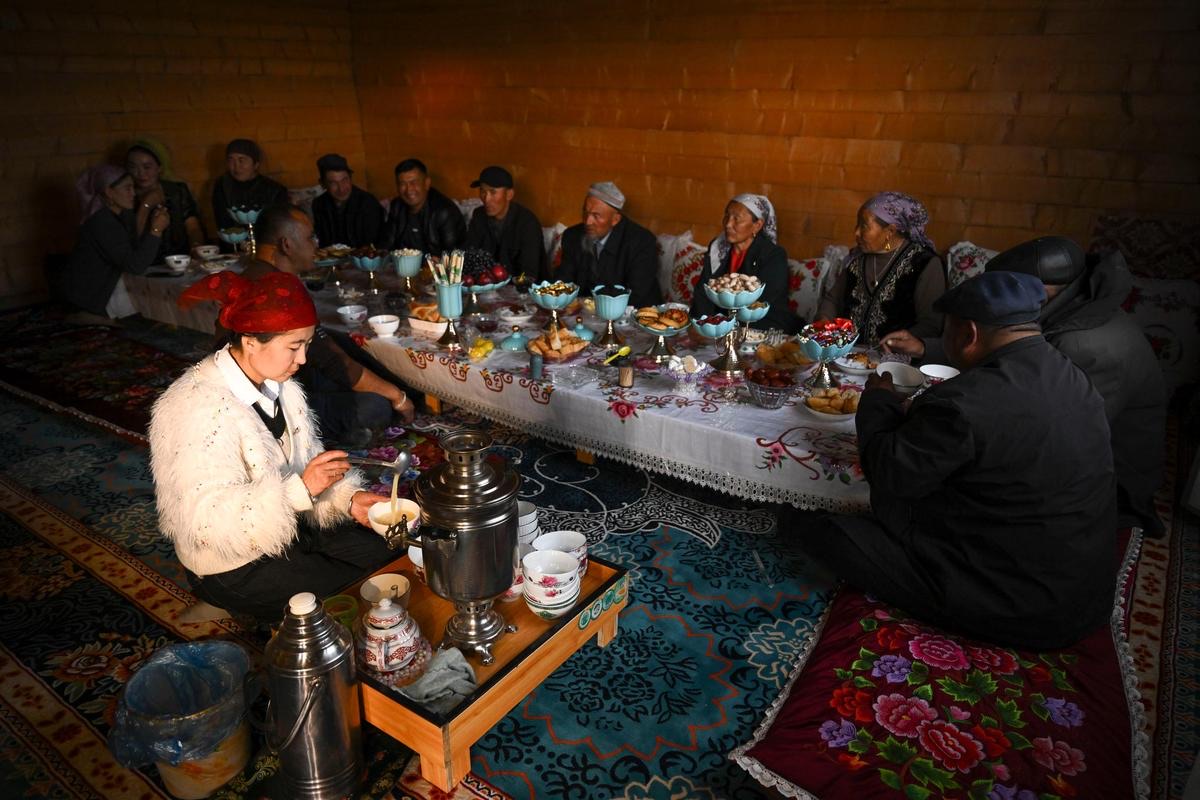
During a trip to Yili (Ili) Prefecture in northern Xinjiang, I stayed with a Kazakh family who made their own yogurt every morning. Watching the process gave me a whole new appreciation for what goes into each bowl.
Step 1: The Milk
It starts with fresh milk. In rural areas, this might be sheep’s milk, cow’s milk, or even camel milk (which has a slightly salty undertone that’s oddly addictive). The milk is heated gently — not boiled, just brought to a temperature where it’s warm to the touch. This is important because if the milk is too hot, it’ll kill the bacterial culture you’re about to add.
Step 2: Adding the Culture
Every family has their own “starter” — a small amount of previous batch’s yogurt that contains the active cultures. This is mixed into the warm milk. Some families have been using the same starter culture for generations, passing it down like a sourdough starter. The mixture is then poured into containers — traditionally clay pots, though glass jars are more common now — and left to ferment.
Step 3: The Fermentation
The containers are wrapped in cloth and left in a warm place (or sometimes in the sun, depending on the season) for 6-12 hours. In summer, fermentation happens faster. In winter, it might take all day. You know it’s ready when the milk has set into a solid (but jiggly) mass that pulls away slightly from the sides of the container.
The family I stayed with made a fresh batch every morning, and by evening, it was ready to eat. They never added sugar or flavoring to the yogurt itself — that’s always added at the table, which makes sense because different people like different levels of sweetness.
How to Eat Xinjiang Yogurt: Toppings and Traditions
Youngurt in Xinjiang is rarely eaten plain (unless you’re my friend who developed a taste for the pure sour version). Instead, it’s served with various toppings that balance the tartness:
Honey (Fengmi)
This is the most common addition. Xinjiang produces excellent honey, including wildflower honey from the Tianshan Mountains and mulberry honey from southern Xinjiang. A spoonful of dark, viscous honey mixed into a bowl of thick yogurt is one of life’s perfect combinations. The key is to mix it lightly so you get ribbons of honey rather than uniform sweetness.
Jam (Guojiang)
Many places serve yogurt with a dollop of fruit jam on top — apricot is common in southern Xinjiang, while strawberry or raspberry jam is more typical in the north. The jam in Xinjiang tends to be less sweet than Western preserves, which works well with the tart yogurt.
Nuts and Dried Fruits
This is my favorite way to eat Xinjiang yogurt. The version I had at a small shop in Yining (the capital of Yili Prefecture) came topped with crushed walnuts, raisins, and a sprinkle of dried goji berries. The crunch of the nuts against the smooth yogurt, plus the bursts of sweetness from the dried fruit, created a texture party in my mouth. Some upscale shops even add pistachios or almonds.
Sugar (For the Less Brave)
If you really can’t handle the sourness, you can always stir in white sugar. It’s not the most sophisticated option, but it works. I’ve seen locals do this, especially with kids who haven’t developed a taste for sour yogurt yet.
Where to Find the Best Yogurt in Xinjiang
After extensive “research” (i.e., eating a lot of yogurt), here are my top spots:
Kashgar Sunday Bazaar
The bazaar has several yogurt vendors, but there’s one particular stall near the spice section that makes what I consider the gold standard. The vendor (I never learned his name, but he recognizes me now) uses clay pots and ferments the yogurt for a full 24 hours, which gives it an incredible depth of flavor. A bowl costs 5-8 RMB depending on size and toppings. Go early (before 11 AM) because he often sells out by early afternoon.
Yining (Yili) Prefecture
If you’re in northern Xinjiang, Yining is famous throughout the region for its dairy products. The yogurt here tends to be slightly milder than the Kashgar version (possibly because they use cow’s milk rather than sheep’s milk), but it’s incredibly smooth and creamy. There’s a shop on Jiefang Road in Yining that I went to three times in one week — their yogurt comes with your choice of honey, jam, or nuts, and it’s all locally sourced.
Urumqi Night Markets
The night market near Hongshan Park in Urumqi has a few yogurt stalls that are solid options if you’re in the capital city. They’re not as good as the Kashgar bazaar versions (the yogurt is sometimes diluted to make it go further), but they’re convenient and still much better than supermarket yogurt. Expect to pay 10-15 RMB for a bowl with toppings.
Restaurant Yogurt
Many Uyghur restaurants serve yogurt as a dessert option. It’s usually slightly sweeter than bazaar yogurt (they add a bit of sugar during preparation to appeal to broader tastes), but it’s a good intro if you’re nervous about the super-tart versions. I had an excellent yogurt at a restaurant called “Tianshan Father” in Urumqi — they served it in a wooden bowl with a drizzle of honey and a sprinkle of crushed walnuts.
Yogurt as a Summer Survival Tool
One thing I didn’t expect: Xinjiang yogurt became my secret weapon for dealing with the region’s brutal summer heat. Temperatures in Turpan or Kashgar can hit 40°C (104°F) in July and August, and the combination of heat, spicy food, and rich lamb dishes can be… a lot. A bowl of cold, tart yogurt cuts through all of that.
Locals treat yogurt as a cooling food (in Traditional Chinese Medicine terms, it’s “yin” or cooling energy). I started following their lead and would have a bowl of yogurt in the mid-afternoon, and it genuinely helped me feel more comfortable in the heat. Plus, the probiotics are great for digestion, which is helpful when you’re eating rich foods and maybe not washing your vegetables as carefully as you should while traveling (not that I’d admit that to my doctor).
The Price: Incredibly Affordable
One of the best things about Xinjiang yogurt is the price. We’re talking:
- Bazaar stalls: 5-10 RMB for a generous bowl
- Small shops: 8-15 RMB for a bowl with toppings
- Restaurant portions: 10-20 RMB as a dessert
- Takeaway in a container: 10-15 RMB for 500ml
For context, that’s often less than a bottle of imported water in a tourist area, and it’s infinitely more satisfying. I probably spent about 200 RMB on yogurt during my two-week trip in 2023, and I have zero regrets.
Yili Prefecture: The Dairy Heartland
I need to give special mention to Yili (also spelled Ili) Prefecture in northern Xinjiang. This region, which borders Kazakhstan, is grassland country — think rolling green hills, herds of cattle and sheep, and a climate that’s perfect for dairy farming. The yogurt here is widely considered the best in Xinjiang, and after spending a week there, I’m not inclined to argue.
What makes Yili yogurt special? A few factors:
- The milk: Cattle in Yili graze on wild herbs and grasses, which some say gives the milk (and thus the yogurt) a more complex flavor.
- The tradition: Kazakh and Mongol communities in Yili have been making dairy products for centuries. They know what they’re doing.
- The climate: The temperature variation in Yili is less extreme than in southern Xinjiang, which makes for more consistent fermentation.
If you’re in Yining, the prefectural capital, look for shops advertising “Yili shougong suannai” (伊犁手工酸奶) — Ili handmade yogurt. It’s usually in glass jars with a simple label, nothing fancy, but the flavor is extraordinary.
Integrating Long-Tail Keywords Naturally
When I was trying to find authentic Xinjiang yogurt in Kashgar, I wished there was more detailed information online about specific vendors and what to expect. That’s part of why I’m writing this — so you don’t have to guess which stall at the bazaar has the best stuff. If you’re curious about the traditional yogurt making process in Xinjiang or wondering about the price of local yogurt at Xinjiang bazaars, hopefully my在具体s help you plan your own yogurt adventure.
For those interested in Yili Prefecture dairy products, the yogurt is just the beginning — they also make incredible butter, cheese, and a fermented drink called “kumiss” (horse milk wine) that’s… an acquired taste, let’s say. And if you’re trying to decide between Xinjiang yogurt vs Greek yogurt, I’d say Xinjiang yogurt is tangier and often thicker, though Greek yogurt is a closer comparison than the sugary stuff from supermarkets.
FAQ: Common Questions About Xinjiang Yogurt
Is Xinjiang yogurt safe to eat for travelers with sensitive stomachs?
Generally yes, but it depends on where you get it. Yogurt from established shops or restaurants is usually safe — they use pasteurized milk or have proper fermentation facilities. The concern might be with bazaar vendors who make yogurt at home and transport it without refrigeration. I have a fairly sensitive stomach, and I’ve never gotten sick from bazaar yogurt, but I also stick to vendors who have a high turnover (fresh stock daily) and keep their yogurt in some kind of cooled container (even if it’s just a clay pot buried in the ground, which is surprisingly effective).
Can I take Xinjiang yogurt home with me?
Technically, no — or at least not through airport security. Fresh yogurt is a dairy product, and agricultural customs regulations in most countries prohibit bringing it across borders. I learned this the hard way when I tried to pack a jar of Yili yogurt in my checked luggage (don’t do this, it will explode and ruin your clothes). Some shops near airports sell shelf-stable, commercially packaged Xinjiang yogurt that’s been pasteurized and sealed, and those are usually okay to take home, but the fresh stuff needs to be enjoyed on-site.
What’s the difference between Xinjiang yogurt and Russian/Eastern European yogurt?
There are similarities — both traditions favor thick, tart yogurt without added sugar. But Xinjiang yogurt tends to be even thicker (more strained) than most Russian versions, and the serving style is different. In Russia, you might eat yogurt with buckwheat or in soups. In Xinjiang, it’s almost always a sweet dish (with honey or jam) or a cooling side to rich, spicy meals. Also, Xinjiang yogurt sometimes incorporates camel or sheep milk, which gives it flavor notes you won’t find in cow’s milk yogurt.
Is there a non-dairy version of Xinjiang yogurt for vegans?
Traditionally, no. Yogurt by definition is a dairy product. I haven’t encountered any places in Xinjiang making plant-based yogurt alternatives, though with the rise of veganism globally, that might change. If you’re vegan and traveling in Xinjiang, you’ll miss out on the yogurt experience, unfortunately. The closest thing might be some of the fruit-based drinks sold at bazaars, but they’re not really a yogurt substitute.
How long does Xinjiang yogurt last?
Fresh, unpasteurized yogurt from a bazaar vendor should be eaten the same day you buy it. It has live cultures and no preservatives, so it will continue to ferment and eventually separate. I made the mistake of keeping a clay pot of yogurt in my hotel room for three days — on the third day, it had turned into something closer to cottage cheese, and not in a good way. Commercially packaged Xinjiang yogurt from supermarkets will have a shelf life of a few weeks if unopened and refrigerated, but it won’t taste as good as the fresh stuff.
Why is some Xinjiang yogurt yellow or green?
Don’t panic if your yogurt isn’t pure white. Some Xinjiang yogurt, especially from rural areas, has a slightly yellow tint from the cream in the milk (this is actually a sign of quality — it means they didn’t skim off the cream). Green yogurt usually means they’ve added something — maybe matcha powder, maybe herbs, maybe food coloring. I once had a pale green yogurt in Kashgar that turned out to have been mixed with crushed mint leaves, and it was surprisingly refreshing. When in doubt, ask what gives it the color, but usually it’s harmless.