
Kashgar Bazaar Bargaining Guide: How to Haggle Without Offending
My first attempt at bargaining in the Kashgar Sunday Bazaar was a disaster. I grabbed a felt rug, blurted a price half the asking, and the seller’s face closed like a door. A minute later an old man beside me took the same rug, poured tea, and twenty minutes later they were laughing and I was holding the rug at a third off — and a photograph with the family. The lesson stuck: in Kashgar, bargaining is a conversation, never a confrontation.
This guide is for travelers who want a fair price without burning the human connection that makes the bazaar worth visiting in the first place.
Why Bargaining Is Expected
In the bazaar, the first price is a starting point, not an insult and not a scam. Sellers expect negotiation; paying the asking price marks you as a tourist who doesn’t know the game — and paradoxically can feel rude, like you didn’t engage. Bargaining is the social glue of the market. Enter it in good spirit and you’ll often leave with tea, a story, and the item.
Start With a Greeting, Not a Price
Sit or stand, say “Salam,” ask how business is. Let the seller show you the goods. Only after some genuine interest do you ask “Baha?” (price?). This warm-up is not wasted time; it sets the tone for everything after.
The Pacing of a Good Haggle
A fair pattern I’ve used for years: the seller names a price, you counter at roughly half to two-thirds, they laugh and come down a little, you inch up, and you meet in the middle after a few rounds. The key is to move in small steps and keep smiling. If the gap is real, a friendly walk-away often brings a call-back with a better number.
| Step | What you do | What it signals |
|---|---|---|
| 1. Greet | Salam, small talk | Respect, not transaction |
| 2. Ask price | Baha? | Interest |
| 3. Counter | ~50–65% of ask | You know the game |
| 4. Converge | Small moves up | Good faith |
| 5. Close | Agree, shake, tea | Deal sealed as friendship |
Know Your Anchor Prices
Research before you go. A small carved knife, a felt keche, a packet of dried apricots — know the rough range so you don’t lowball absurdly or overpay. Our tipping and money etiquette guide covers carrying cash and reading prices across the region.

Manners That Win the Deal
Keep your voice even. Never shame the seller’s price. If you can’t agree, a polite “Rahmet, keyin” (thanks, maybe later) and a smile leaves the door open. Bringing a friend or accepting the offered stool signals you’re there to engage, not grab-and-go. And if you buy several items from one stall, ask for a “to’plam” (bundle) discount — it’s expected and appreciated.
When Not to Bargain
Fixed-price shops, supermarkets, and restaurant menus are not negotiable. Nor should you haggle over something handmade where the seller names a price with quiet pride — sometimes the right move is to pay it and thank them. Read the room.
Reading the Bazaar’s Layout
The Kashgar Sunday Bazaar is not one market but many: a livestock section on the outskirts, a timber and tool section, a clothing maze, and the famous food and handicraft rows. Each has its own tempo. The handicraft rows are where tourists bargain most, and where the social dance matters most. The produce section runs on thinner margins and lighter haggling. Knowing which zone you’re in prevents both overpaying and offending.
The Tea Test
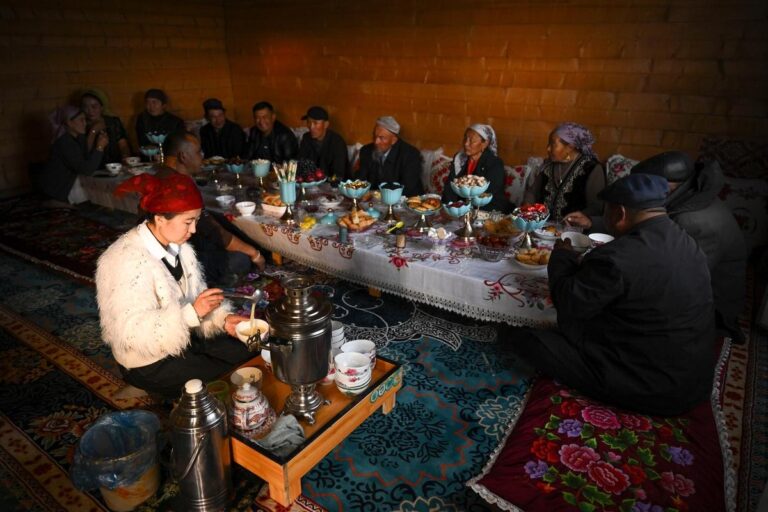
When a seller invites you to tea, accept. It costs them little and signals they see you as a person, not a wallet. The tea may come with no purchase at all — and that’s fine. I’ve drunk tea, talked for twenty minutes, and left without buying, and still been waved off warmly. Declining the tea while browsing, by contrast, can feel like a rejection of the relationship. The tea is the market’s social lubricant; use it.
Common Bargaining Mistakes
The first is the lowball slam — offering a quarter of the ask signals you’re not playing the game, just trying to win it. The second is the silent walk-away performed too early, before any rapport exists; a walk-away works after engagement, not before. The third is bargaining furiously then refusing to buy at your own final price — that’s the fastest way to earn a frown. Close the deal you made.
| Mistake | Fix |
|---|---|
| Lowball slam | Open at 50–65% with a smile |
| Early walk-away | Chat first, then step away |
| Backing out at your price | Honor the agreed number |
| Haggling food | Light touch only on produce |
Bundling and the Multi-Item Discount
If you’re buying several things from one stall — say a knife, a cap, and some dried fruit — ask for a “to’plam” (package) price. Sellers expect this and will usually trim 10–20%. It’s not greedy; it’s the local way of rewarding a loyal customer. I’ve furnished half a souvenir list this way, each item a little cheaper because I bought them together and drank the tea.
When the Price Is the Price
Some things aren’t negotiable: a bowl of laghman at a canteen, a bus ticket, a museum entry. Pushing there marks you as a novice and wastes everyone’s time. The art is knowing the difference between a market transaction and a fixed-price service — and the bazaar, with its tea and its patience, is where the former is meant to be enjoyed, not rushed.
Reading the Seller’s Signals
After enough mornings in the bazaar, you start reading sellers like a language. A seller who immediately drops 30% is telling you the ask was inflated for tourists. One who holds firm and offers tea is signaling the price is fair and the relationship matters more. A seller who laughs and waves you back as you walk away is confirming there’s room. None of these are tricks; they’re the negotiated choreography both sides know. Your job is to play it with goodwill rather than suspicion.
When the Deal Feels Unfair
Sometimes you’ll realize post-purchase you overpaid. In the bazaar that’s usually the cost of learning, not malice. Take it as tuition. The rare genuine scam — a switched item, a fake — is best avoided by buying from established stalls and trusting the tea-drinkers over the corner hawker. If something feels wrong, a calm walk-away costs you nothing. The bazaar is endless; another stall is ten steps away.
Small questions, honest answers
Is it rude not to bargain?
Paying the first price isn’t rude, but it misses the social point and can mark you as unaware. A light negotiation is the norm and usually enjoyed.
How much lower should I offer?
Start around half to two-thirds of the asking price for souvenirs, then converge. For staples like fruit, margins are thin and haggling is minimal.
Can I bargain in English?
Sometimes, but a few Uyghur or Mandarin numbers go far. Sellers respect the effort, and it softens the whole exchange.
What if we can’t agree?
Walk away kindly. In the bazaar that’s normal — no hard feelings. You can return later or just move to the next stall.
Should I bargain for food at the bazaar?
Lightly. Produce prices are often firm and margins small; a tiny discount for volume is fine, but aggressive haggling over a kilo of grapes reads as petty.