Kashgar Old Town: A Living Museum of Uyghur Culture and Architecture
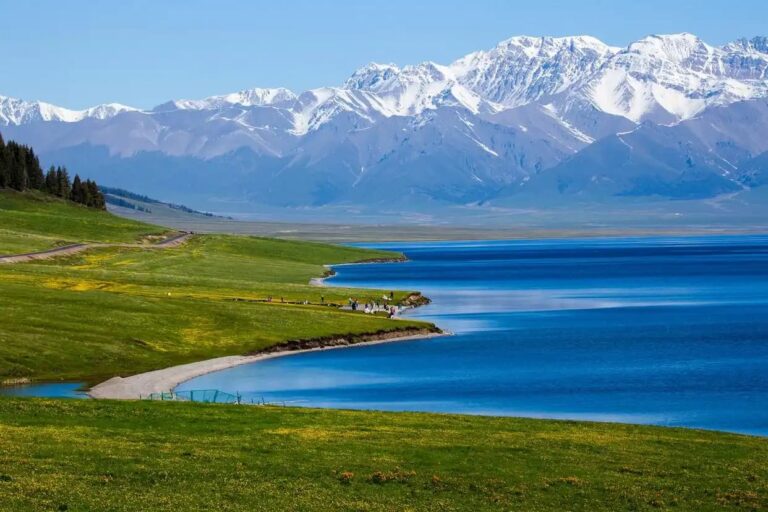
At the western end of China, where the Pamir Mountains fall toward the Taklamakan Desert, Kashgar has been a crossroads of the Silk Road for more than two thousand years. Its heart is the Old Town (Kashgar Lao Cheng, 琼斯啊古城) — a dense maze of sun-dried mud-brick courtyards, carved wooden doors, and shaded alleys where Uyghur daily life continues much as it has for generations. For most travelers it is the single most memorable stop in Xinjiang, and the natural base for any southern route toward the Pamir Highway.
I have lost count of how many afternoons I have spent simply wandering here. The Old Town is not a museum with velvet ropes — it is a neighborhood, and the best way to experience it is to walk slowly, get deliberately lost, and let the lanes surprise you.
At a glance
- Entry: Free. The Old Town is open to walk at any hour; there is no ticket gate.
- Best months: September–October (harvest light, comfortable temperatures) and April (apricot-blossom season in nearby Datong). Spring and autumn are mildest; summer is hot and crowded; winter is freezing but atmospheric.
- Time needed: At least two nights — one full day for the Old Town itself, a second for the Sunday livestock bazaar or a Pamir day trip.
- Getting around: The core is car-free. Walk, or take a “ma de” (horse carriage, about ¥10/person) along the ring road.
Start at the East Gate — and time it for 10:00
Most visitors enter through the East Gate (东门), and if you arrive around 10:00 in the morning you will catch the kaicheng yishi (开城仪式) — a short Uyghur song-and-dance welcome performed in the square. It is touristy, yes, but it is also a genuinely warm curtain-raiser and a good photo opportunity before the crowds thicken.
Here is a trick the guidebooks miss: the Old Town’s floor tiles are a navigation system. Hexagonal tiles mark the main through-routes; diagonal (slanted) tiles mean you are heading into a residential dead-end. When you inevitably get turned around, look down.
Id Kah Mosque (艾提瓣尔清真小小)
A few steps from the East Gate is Id Kah, the largest mosque in Xinjiang and the spiritual center of Kashgar. Non-Muslims cannot enter the prayer hall, but the vast yellow-tiled courtyard is open to all. A ticket costs around ¥30 (confirm the current price at the gate). Women are asked to cover their hair and wear long clothing — scarves are rented at the entrance. One practical note: the mosque closes to visitors during the midday prayer (roughly 14:00–16:30), so plan your visit for early morning or late afternoon.
Lose yourself in the residential quarters
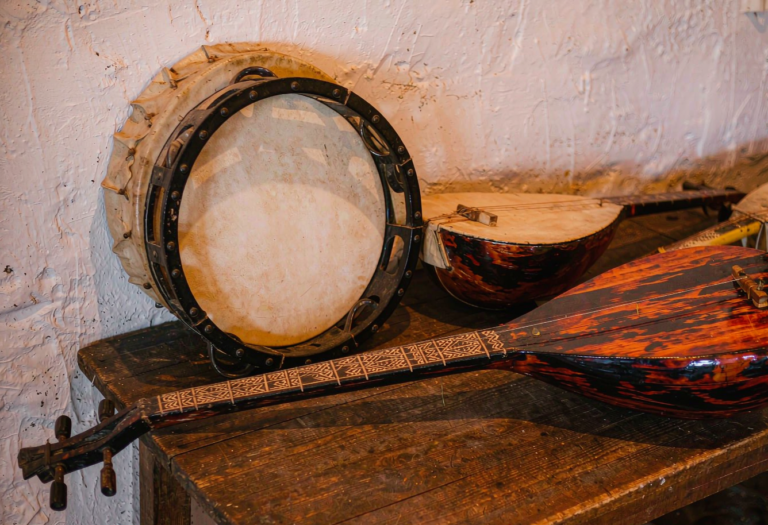
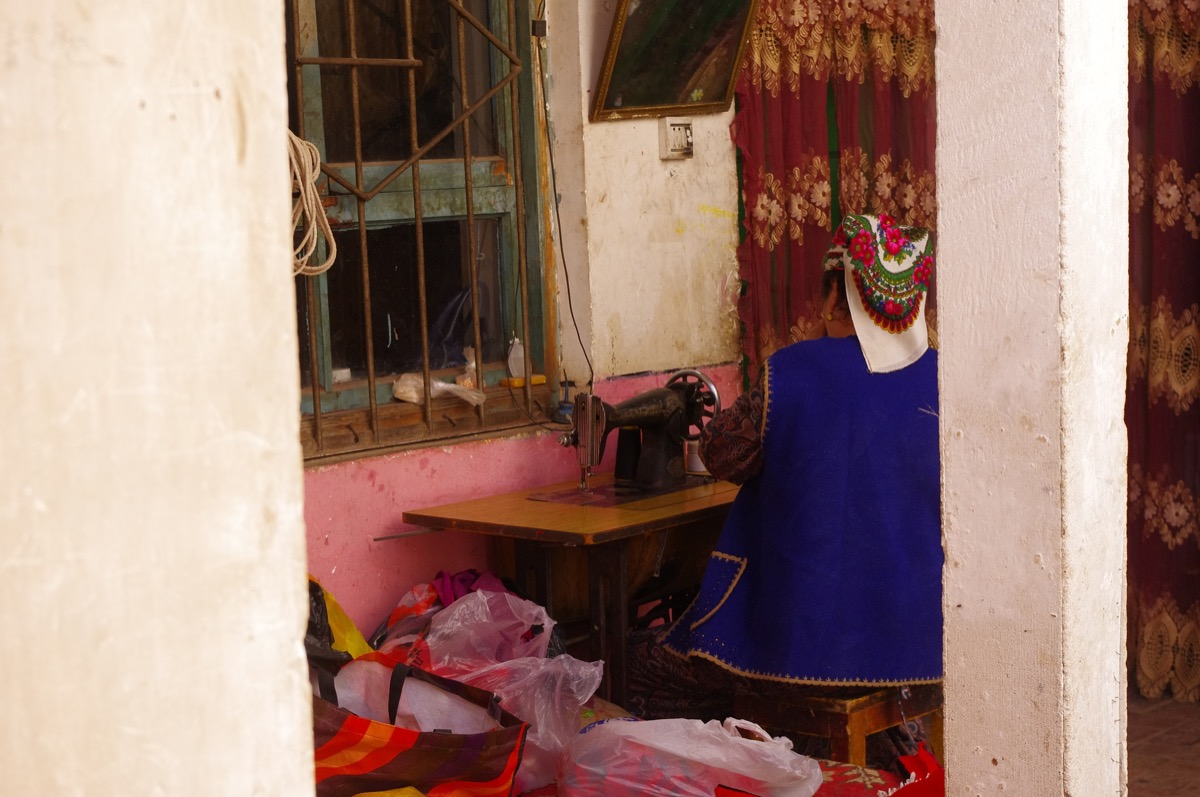
The real magic is away from the main drag. Wander the side alleys and look up: many homes have faded blue and green painted doors, and second-story wooden galleries overhang the lanes. Elderly men play dominoes on low tables; children kick balls between courtyards; the knock of the naghra drum drifts out from a courtyard.
Pause at one of the century-old teahouses (百年老茶駜) for a bowl of xiang cha (fragrant milk tea) and, if you are lucky, a live muqam performance on the rooftop. These teahouses are where the Old Town’s social life still breathes.
Handicraft streets and the Gaotai residences
The lanes north of Id Kah are organized by trade — a very old bazaar logic. You will find doppa (embroidered skullcap) workshops, the clang of the coppersmiths’ bazaar, and woodcarvers shaping doors. The nearby Gaotai Residences (高台居民), a 600-year-old cluster of traditional mud-brick homes built into a hillside, is free to enter in its open sections and is excellent for photography.
A short drive out of town, the village of Ordam Padishah (奥尔达希布拉克) still produces mulberry-bark paper by hand — one of the last places in Xinjiang where this is done.
Eating in the Old Town
Food is half the reason to linger. The lanes off the main bazaar serve laghman (hand-pulled noodles), samsa (meat pastries baked in the tandoor), and bowls of sweet milky tea. In the evening, head to the Han Bazaar night market (汗布扗夜市) for grilled mutton skewers, gangzi rou (罐子肉, mutton stewed in a personal clay cup), suanna zongzi (yogurt with sticky rice), and fresh pomegranate juice. Come hungry and go by sight and smell rather than a menu.
The Sunday livestock bazaar
Kashgar’s Grand Bazaar runs daily, but the livestock section (牛羊大布扙) only comes alive on Sunday, and only in the morning. Arrive before 10:00 to watch sheep, cattle, and donkey trading at its most raw and real. It is free to enter and, for many travelers, the most unforgettable hour of their whole trip.
Real-world notes
- Pack layers. Kashgar swings hard between day and night temperatures, even in summer.
- Wear real shoes. The alleys are uneven packed earth and cobble — comfortable sneakers, not sandals.
- Border permit. If you plan to continue to Tashkurgan and the Pamir Highway, the county border permit (边境证) is free and can be issued in about ten minutes at the police station near the Old Town. Bring your passport and a photocopy.
- Etiquette. Greet people with “Assalamu alaykum,” ask before photographing faces, and keep your voice down near the mosque.
My take
Kashgar is the stop most travelers remember longest, and having spent time here across several trips, I think the reason is simple: it is one of the few places in western China where the “old town” is still genuinely lived in. Show up without a rigid plan, rent a room within walking distance of the East Gate, and let the alleys set the pace. The Old Town rewards lingering far more than it rewards a checklist.