Eid al-Fitr in Xinjiang: What Travelers Should Know
The morning after Ramadan ends in Kashgar is unlike any other. The night before, everyone watched for the new moon; the moment it was sighted, messages flew and the whole old town seemed to wake early, in good clothes, heading to the mosques. I was invited to a family breakfast that year and learned that Eid al-Fitr — called Roza Heyit locally — is less a single day than a three-day exhale after a month of fasting.
If you are in Xinjiang during Eid, you have stumbled into the warmest window of the year to meet people. This guide explains the rhythm so you can enjoy it without accidentally stepping on anyone’s holiday.
When Eid al-Fitr Happens
Eid al-Fitr falls on the first day of the Islamic month of Shawwal, immediately after Ramadan. Because the Islamic calendar is lunar, the date shifts roughly 10–11 days earlier each year on the Gregorian calendar, and the exact start depends on the local moon sighting. In practice, the holiday is announced the night before, so build flexibility into any itinerary that overlaps the likely window.
The Morning Prayer
The centerpiece is the Eid prayer, held in the open or in large mosques shortly after sunrise. Men attend in large numbers; women and children often gather at home or in separate sections. As a visitor, observe from the edges respectfully — this is not a tourist show. Arrive quietly, dress well, and keep cameras down during the prayer itself.
What Changes During the Holiday
For three days, the normally brisk pace of Xinjiang life softens. Shops may open late. Restaurants that stayed dark through Ramadan reopen with special menus. Streets fill with relatives hugging at gateways. Expect some closures on day one, especially government offices and banks, but markets and food stalls boom.
| Day | Typical mood | Traveler impact |
|---|---|---|
| Day 1 (Eid) | Family, prayers, big breakfast | Many closures; quiet streets until noon |
| Day 2 | Visiting, feasting, gifts | Markets busy; book transport early |
| Day 3 | Continued visiting | Gradual return to normal |
Food: The Breakfast of the Year
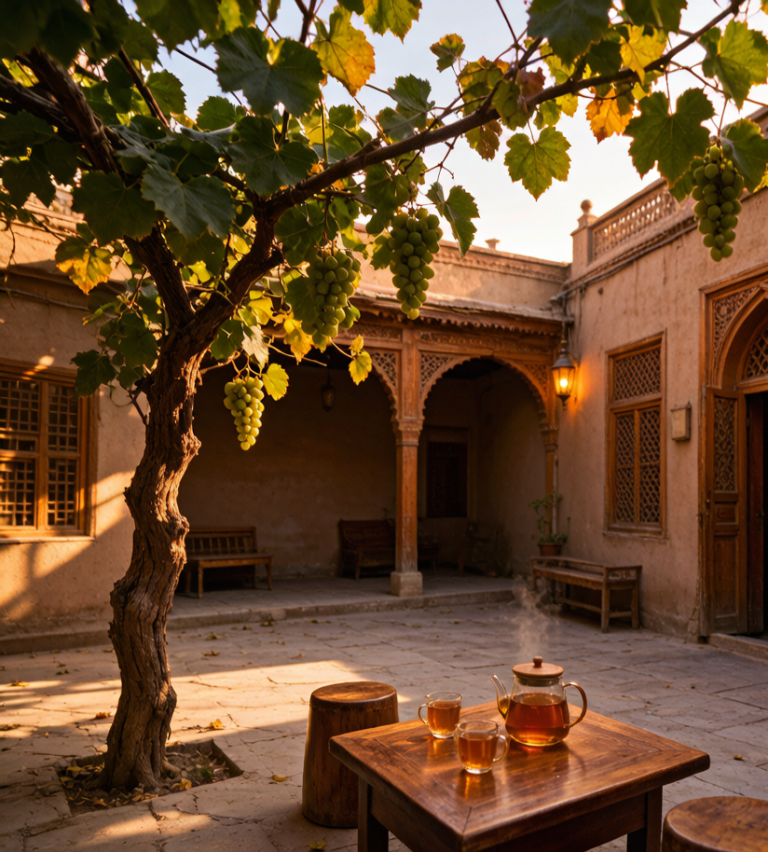
After a month of dawn-to-dusk fasting, the Eid breakfast is celebratory. Expect sangza (fried dough), polo, sweet halva, dried fruits, and weak milk tea. If invited, go hungry and arrive on time. Bringing a small box of dates or sweets is a gracious, low-cost gesture.
How to Be a Good Guest
If you are invited to an Eid meal — and you very well may be, especially in smaller towns — accept. Greet with “Eidlik mubarak bolsin” (happy Eid). Compliment the food. Offer to help clear, even if they wave you off; the offer is the politeness. Don’t overstay into family-only evening hours unless urged.
For the wider seasonal context, our Xinjiang festivals guide maps Eid alongside Nowruz and the grape harvest so you can plan a trip around celebration rather than around closure.
The Night of the Moon Sighting
The uncertainty of Eid’s exact start is part of its texture. Families gather after sunset on the 29th day of Ramadan, watching the sky. In Xinjiang, official announcements usually follow, but the grassroots excitement is real — children are kept up, phones buzz with rumours, and the moment the new moon is confirmed, the old town lights up with early greetings. As a visitor, you can feel the anticipation even if you don’t share the faith; it’s a good night to stay in a guesthouse in the old town and listen.
Zakat al-Fitr: Giving Before the Feast
Before Eid prayers, households give zakat al-fitr — a small charity so the poor can also celebrate. This quiet act of redistribution is why, on Eid morning, even the humblest lanes feel abundant. Travelers won’t be asked to contribute, but knowing the custom helps you read the generosity you’ll witness: it’s structured, not spontaneous, and that’s precisely its strength.
Visiting Etiquette During Eid
Eid is a visiting holiday. Families receive guests in a rolling open-house from late morning onward. If you’re lucky enough to be invited, bring a small sweet or fruit (see our gift and money etiquette guide). Remove shoes, greet the eldest, and let the children drag you toward the sweets table — that’s half the fun for them.
| Do | Don’t |
|---|---|
| Greet with Eid mubarak | Arrive empty-handed to a home |
| Compliment the food | Refuse the first offering |
| Photograph the street joy | Shoot private prayer without ask |
| Book transport ahead | Assume everything’s open day one |
Eid for Solo and Female Travelers
Solo travelers often find Eid especially welcoming — the open-house tradition means a friendly family may adopt you for a meal. Women should dress modestly (our Old Town culture guide has the dress notes) and can expect warm, protective hospitality rather than hassle. I’ve seen solo female friends taken in for an entire Eid lunch by a family they’d met an hour before.
After Eid: The Quiet Return
By day three, normal life resumes. Markets normalize, offices reopen, and the travel rhythm you planned around returns. If your trip overlaps Eid, treat the first day as a cultural holiday and the later days as transition — you’ll have seen the region at its most open-hearted and still kept your itinerary intact.
Eid Food Beyond the Breakfast
While the Eid morning breakfast gets the attention, the day’s later meals are where households show range. Expect pilaf heavy with sultanas, laghman dressed for guests, and trays of qoqi (layered fried pastry) in some homes. Sweets dominate — halva, baqlava, and date-filled pastries — because Eid is the one time sugar is morally obligatory. If you’re invited to an evening meal, arrive hungry; the spread is wider than breakfast and the host has been cooking for days.
Travel Logistics Around Eid
Because Eid drives domestic travel, intercity buses and flights near the holiday fill fast. Book three weeks ahead if your route crosses the south. Carry enough cash for the first day’s closures. And keep your schedule loose on day one — the region is operating on celebration time, not transport time, and fighting it only frustrates. Our budget guide has the cash-flow detail that helps around holidays.
Eid Morning: What to Expect
If you’re up at dawn on Eid, you’ll hear the special prayers broadcast and see families walking toward mosques in their best clothes. The energy is communal joy, not solemnity. As a respectful observer, watch from the edges, greet with “Eid mubarak,” and don’t photograph the prayer itself. The street scenes afterward — children in new clothes, families embracing — are fair game with a smile. It’s a morning that encapsulates the region’s warmth better than almost any other.
Carrying the Eid Spirit Forward
Eid’s generosity doesn’t have to end when the holiday does. Travelers who experienced it often carry its lesson — that sharing food is sharing self — into the rest of their trip, accepting invitations and offering small kindnesses in return. The money etiquette guide translates that spirit into practical daily generosity across the region.
What to do when it breaks
If this happens: Everything be closed during eid
Day one brings closures, especially offices and some restaurants. By day two, markets and eateries are busy. Plan transport and cash in advance and you’ll be fine.
When it goes sideways: Non-muslim travelers join eid celebrations
Yes, as an observer and guest. You won’t join the prayer, but shared meals and street festivities are welcoming if you are respectful and appropriately dressed.
If you run into this: Greet people on eid
“Eid mubarak” or the local “Eidlik mubarak bolsin” works everywhere. A smile and a handshake (right hand) are plenty.
On the ground: Fast before eid
No. Eid marks the end of fasting. Non-Muslim visitors are not expected to have fasted; just be mindful that the days before, during Ramadan, public eating in daylight may be limited in some areas.
If this happens: Eid a good time to visit xinjiang
For cultural travel, yes — the hospitality is at its peak. For logistics-heavy trips, the first-day closures and busy transport argue for flexibility. I’d pair it with a slower itinerary.