Xinjiang Embroidery: Pattern, Patience, and a Working Tradition
I used to read embroidery as decoration. In Xinjiang I learned to read it as a dialect, because the stitchwork changes by ethnicity and by valley, and a trained eye can place a piece by its pattern the way I place a dish by its spice.
The lineages
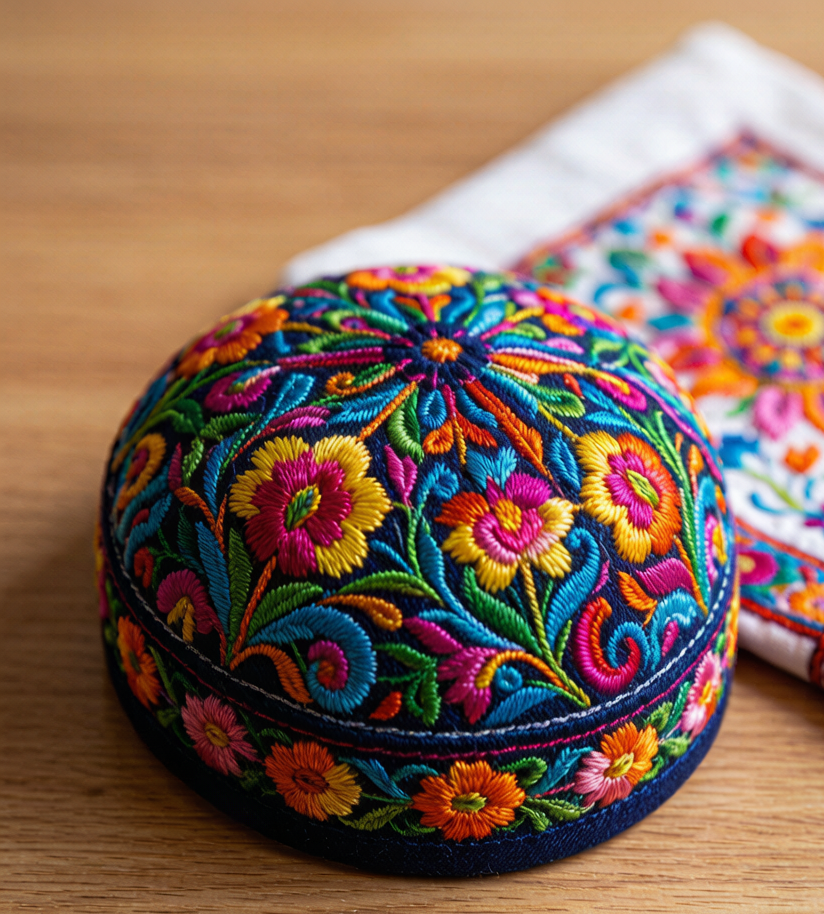
Uyghur embroidery leans to bright silk on caps and hangings, with floral and geometric motifs that echo the Dolan heartland. Kazakh work, from the north and the grasslands, is heavier, often on felt and wool, built for a nomadic life. The Xibe and other communities add their own hands. None of it is one style with a flag on it, which is the part guidebooks flatten.
Where the good pieces hide
The handicraft markets sell both the genuine and the imported, and telling them apart takes a look. Real work has slight irregularities that machine copying irons out. I have bought a cap from a maker who finished the last stitches while I waited, and that object carries the moment in a way a shelf item never does.
What to avoid
Mass-produced embroidery from outside the region gets relabeled constantly. The tell is uniformity and a price too smooth to be handwork. Near Hotan and the southern oases the older workshops still teach apprentices, and those are the rooms worth finding.
Why it holds up
Embroidery here is not framed and forgotten. It is worn, used, and reworked, which keeps the skill alive in a way museum pieces cannot. I keep a small Uyghur embroidered cloth on my wall and it has outlasted every other souvenir I brought back, because it was made to be kept.
If you want craft with a pulse, learn the stitches before you shop. The pattern will tell you where you are.
A second look on day two
If your itinerary has a spare morning, spend it here again rather than at the bigger name on the far side of town. I did, and the second visit was better, because the first had been spent working out where to stand. The second time you can skip the obligatory viewpoint and walk along the base of the ridge where the light comes in sideways, and that is the photograph you keep. Almost nobody does Xinjiang Embroidery twice. The short version, with the numbers, is in our [[how-to-go-to-xinjiang|How to Get to Xinjiang: Entry Requirements…]].
Not everyone should build a trip around this
There is a lot of unshaded ground, the altitude is real if you came from a low-altitude city, and the swing between the car and the viewpoints is enough to give you a headache on an empty stomach. Who it does not: anyone whose main goal is a relaxed few days, and anyone who has already done this same thing twice here. If you are short on days, this is the thing to cut, and no guidebook will tell you that. Xinjiang Embroidery is superb, but it is also an hour or more in each direction from everything else you planned, and the drives are what eat the schedule. Who it does suit: someone wanting one strong memory, someone driving the Xinjiang loop anyway, someone willing to be out before breakfast.
It suits people who like landscape and can walk a few kilometres at their own pace. It suits a traveller with a car and a flexible morning. It does not suit a family with a small child who needs a shade stop every forty minutes, and it does not suit anyone in week two of a high-altitude trip still feeling it. The honest version: take half a day if that is all the arithmetic allows, and save the full day for the thing that is genuinely once in a lifetime.
I am not going to pretend this is gentle.
Learning from a maker
The best embroidery lesson I got was watching a woman near Hotan finish a cap while we talked, her needle moving without her eyes dropping to it. She explained the pattern was her grandmother’s, and that was the whole value, a line of taste passed down and slightly changed each time. I bought that cap and have worn it thin. If you want to learn, ask at the older workshops rather than the mall, because the teachers are the ones with calloused fingers. Care is simple: keep it out of direct sun and fold it loosely, not rolled tight, or the thread memory creases. The piece you use is the piece that lasts, and that is the point of the craft.
Where to actually buy
For embroidery, the [[xinjiang-handicrafts-atlas-silk-carpets-copper-and-the-markets-that-sell-them|handicraft markets]] in the big cities are the easy stop, but the better pieces sit with makers in the old towns and southern oases. In Kashgar and Hotan I found the most honest work by asking at a tea house for the woman who embroiders, and following the gesture to a door. The price is fair when the maker names it, and a hard bargain there is poor manners. Small caps and cloths pack flat and survive a backpack; larger hangings need a tube. I buy one good piece rather than several weak ones, because the single honest work outlasts the pile. The embroidery is a dialect you learn by looking, and the buying is the last line of that lesson.