Felt in Xinjiang: The Quiet Craft Behind the Yurts
Most visitors notice felt only when they step inside a yurt and feel the floor underfoot. I did the same, then spent a morning watching women beat wet wool into a mat and realized I had been standing on a whole tradition without seeing it.
How felt is made
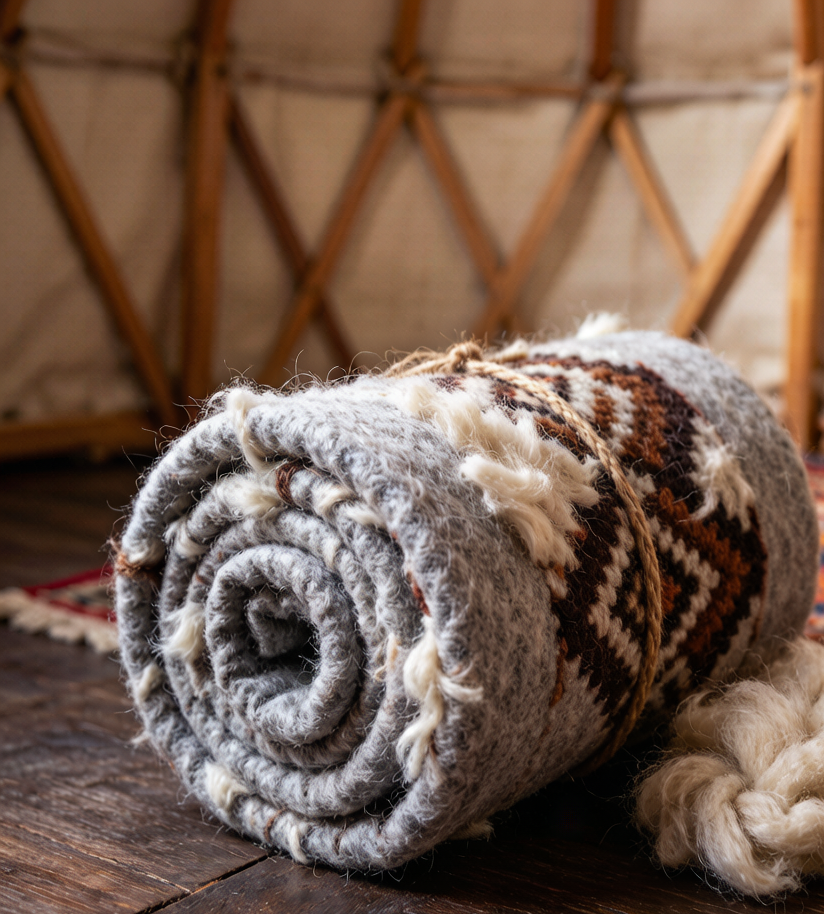
Felt is wool, water, and pressure. Roll the fibres, soak them, and work them until they lock into a sheet. No loom, no weave, just the oldest textile logic we have. The result lines the floors and walls of Kazakh yurts and turns a canvas tent into a warm room. I have slept on felt thicker than a mattress and woken warmer than in some hotels.
Where the craft lives
You see it among the Kyrgyz on the Pamir and the Kazakh herders of the north, wherever the nomadic life persists. It is not staged in a museum, though the handicraft markets sell the results. The best pieces I have found came from a family who made them for themselves first and sold the spare second.
What to look for
Real felt has uneven density and a smell of lanolin and sheep that no factory copy matches. The tourist version is often a printed rug with felt only in name. I buy from a herder’s stall over a gift shop every time, because the difference is in the hand, not the label.
Why it matters
Felt is the quiet infrastructure of a mobile life. It packs, it insulates, it lasts, and it asks little. A village homestay might have a felt mat at the door, and now I notice it. The craft is humble, which is exactly why it outlasted the flashier ones.
You will not seek felt out on a first trip. You should. It is the material the region was built to move with.
A second look on day two
I did, and the second visit was better, because the first had been spent working out where to stand. If your itinerary has a spare morning, spend it here again rather than at the bigger name on the far side of town. Almost nobody does Xinjiang Felt Craft twice. The second time you can skip the obligatory viewpoint and walk along the base of the ridge where the light comes in sideways, and that is the photograph you keep. I wrote the driving side up in our [[xinjiang-felt-carpets-craft|Xinjiang Felt Carpets: The Kazakh Shyrdak…]] as well.
A few minutes of background change the visit
The place only makes sense once you know its shape. Xinjiang Felt Craft was cut rather than built, which is why the walls are solid and the streets are the empty space between them, and why centuries of dust ended up acting as a roof. The history here is layered in a way the official signage compresses into names and dates. Read that the morning before rather than at the entrance, where the boards stand too far from the object to help. Knowing what you are standing on turns a pleasant walk into something you actually remember. Locals in Xinjiang will give you the short version in about a minute if you ask, and it is usually better than the panel at the gate. Where most people get the logistics wrong is covered in our [[xinjiang-pottery-ceramics-craft|Xinjiang Pottery and Ceramics: A 3,000-Year…]].
Watching it made
The making is the part guidebooks skip. I helped, badly, roll wet wool on a mat while a woman corrected my pressure with a look, and understood why the skill stays in families, because you learn it in the hands, not from a book. Some herder communities run small workshops where you can watch or even try, and buying there puts money straight into the household that keeps the knowledge. The [[kyrgyz-culture-on-the-pamir-herders-of-the-roof-of-the-world|Kyrgyz]] on the Pamir and the Kazakh north both keep distinct felt traditions, and the patterns tell you which is which if you ask. A purchased felt mat from a maker’s floor means more than any shop find, because you saw the hour it took.
Buying and packing
A felt mat or a small rug is light and rolls tight, which makes it one of the easier crafts to carry. Prices vary with size and density, and the hand-made piece costs more than the machine copy for good reason. I negotiate gently, because the maker sets the price with a year of skill behind it, and grinding them down feels wrong. Wrap it in cloth, not plastic, so it breathes in transit, and keep it out of direct sun in the car. The [[xinjiang-handicrafts-atlas-silk-carpets-copper-and-the-markets-that-sell-them|handicraft markets]] sell both grades, so look for the uneven, lanolin-smelling real thing. A felt piece you watched take shape is the souvenir that ages best, because it carries the hour you spent watching.